Mapping the Future: Gov-CDR Workshop Strengthens Climate and Disaster Resilience for Samar's Grassroots Groups

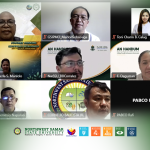
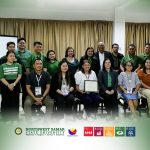
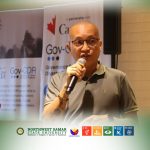
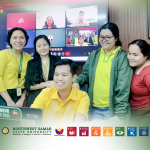
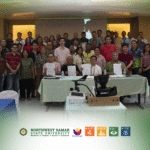
Community-based and women-led organizations from four Samar municipalities gathered at the NwSSU Hotel and Restaurant on September 1 and 2, 2026, for a workshop aimed at strengthening their capacity to respond to climate and disaster-related risks. The workshop, titled “Participatory Risk and Resource Mapping, Stakeholder Analysis and Capacity Assessment for Climate Disaster Resilience and Organizational Development.” brought together community-based organizations (CBOs) and women-led organizations (WLOs) to validate and deepen earlier profiling results, identify capacity development needs across the ecosystem’s local government units, and begin shaping a capacity building program suited to their context. The workshop unfolded in stages: participatory surfacing activities on Day 1, followed by consolidation and validation through key informant interviews on Day 2 morning, and concluding with the prioritization of training needs and the co-creation of a capacity building program on Day 2 afternoon. Ms. Gina Dean facilitated several of the workshop’s key sessions on Day 1. She led the discussion on understanding CDR and the salient points of Republic Act 10121, guided participants through participatory resource mapping and hazard identification, and co-facilitated the Social Network Analysis and Stakeholder Influence and interest sessions alongside with Mr. Ian Mark Nibalvos. By the end of the day, discussions were brought together in a synthesis session, consolidating the issues, capacities, gaps, and emerging training needs that surfaced throughout the day. The activity was conducted under the Governance for Climate and Disaster Resilience (Gov-CDE) Project, a six-year, a CAD-funded initiative running from 2024 to 2030 and implemented by Alinea International in partnership with the National Resilience Council and national government agencies to strengthen climate and disaster resilience across the Philippines. Samar Province is one of the project’s priority areas, implemented locally through Alinea Philippines. On the workshop’s second day, Dr. Teody Amatosa, NwSSU Vice President for Research, Innovation and Extension, welcomed the CBOs and WLOs of Gandara, Matuguinao, San Jorge, and Pagsanghan on behalf of NwSSU President Atty. Lorelie Fabillar-Tangaran, DM, together with the Gov-CDR team of Alinea Philippines. By opening its doors to the workshop, NwSSU lent its support to an effort that reaches beyond training; one that equips local organizations with the tools to face climate and disaster-related challenges on their own terms, long after the workshop tables are cleared.

NwSSU Research Spotlight | Unveiling the Soil Beneath Our Forest Through Agricultural Research

What lies beneath a thriving forest, and why does it matter? Beneath every thriving forest lies a story written in its soil. Bringing that story to light, Northwest Samar State University (NwSSU) proudly highlights another remarkable achievement in scientific research through the publication of the study titled: “𝐌𝐨𝐫𝐩𝐡𝐨-𝐩𝐡𝐲𝐬𝐢𝐜𝐚𝐥 𝐚𝐧𝐝 𝐍𝐮𝐭𝐫𝐢𝐞𝐧𝐭 𝐏𝐫𝐨𝐩𝐞𝐫𝐭𝐢𝐞𝐬 𝐨𝐟 𝐒𝐨𝐢𝐥𝐬 𝐢𝐧 𝐭𝐡𝐞 𝐏𝐥𝐚𝐧𝐭𝐚𝐭𝐢𝐨𝐧 𝐅𝐨𝐫𝐞𝐬𝐭 𝐨𝐟 𝐍𝐨𝐫𝐭𝐡𝐰𝐞𝐬𝐭 𝐒𝐚𝐦𝐚𝐫 𝐒𝐭𝐚𝐭𝐞 𝐔𝐧𝐢𝐯𝐞𝐫𝐬𝐢𝐭𝐲, 𝐒𝐚𝐧 𝐉𝐨𝐫𝐠𝐞 𝐂𝐚𝐦𝐩𝐮𝐬 (𝐍𝐰𝐒𝐒𝐔-𝐒𝐉𝐂), 𝐒𝐚𝐧 𝐉𝐨𝐫𝐠𝐞 𝐒𝐚𝐦𝐚𝐫, 𝐏𝐡𝐢𝐥𝐢𝐩𝐩𝐢𝐧𝐞𝐬.” The research was authored by DR. JESSIE R. SABIJON, Director of the Samar Integrated Organic Agriculture Research and Development Center (SIOARDC) and Former Dean of the College of Agriculture and Technology (CAT). The study was published in the prestigious Indian Journal of Agricultural Research in Volume 60 Issue 6 (June 2026). Focusing on the plantation forest of Northwest Samar State University in San Jorge, Samar, the study provides a comprehensive assessment of the soil’s morpho-physical characteristics and nutrient status. Its findings offer valuable baseline information for improving forest management practices, guiding sustainable land-use planning, enhancing soil fertility conservation, and supporting future agricultural and environmental research. Beyond advancing soil science, this publication reinforces the importance of understanding local ecosystems as a foundation for sustainable forestry, agricultural productivity, and environmental conservation. The study demonstrates how evidence-based research can help protect natural resources while strengthening resilience against environmental challenges. This achievement reflects Northwest Samar State University’s unwavering commitment to producing high-impact research that addresses local concerns with global relevance. Through scientific inquiry and innovation, NwSSU continues to generate knowledge that contributes to sustainable natural resource management and the advancement of agricultural and environmental sciences. Congratulations to Dr. Jessie R. Sabijon on this outstanding scholarly achievement. Your dedication to research excellence continues to strengthen NwSSU’s reputation as a hub for innovative and impactful research, inspiring future generations of scientists, researchers, and environmental stewards. Read the full publication: https://arccjournals.com/…/indian-journal-of…/AF-1021 #ASCENDNwSSU #NwSSUResearchSpotlight #ResearchExcellence #NorthwestSamarStateUniversity #SustainableAgriculture #EnvironmentalResearch #NaturalResourceManagement #ResearchForImpact #SDG2_ZeroHunger #SDG13_ClimateAction #SDG15_LifeOnLand

NwSSU Finalizes Futures Workshop; Produces HANDUM 2050 Roadmap

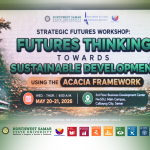
Northwest Samar State University (NwSSU) has successfully finalized its Strategic Futures Workshop: Futures Thinking Towards Sustainable Development Using the ACACIA Framework on May 21, 2026, at the Business Development Center. Spearheaded by the Research, Innovation, and Extension (RIE) Division through the Center for Futures Thinking and Strategic Foresight and in partnership with the Philippine Futures Thinking Society (PhilFutures), the activity gathered the entire university officials to embed anticipatory governance and innovation in its systems, culminating in the development of HANDUM 2050: The Futures of NwSSU under the theme “WE BUILD WHAT STORMS CANNOT BREAK.” Day 2 followed on May 12, 2026, continuing online with participants deepening their understanding of strategic foresight processes and engaged in collaborative visioning facilitated by PhilFutures Fellow Ms. Jalaine Joyce V. Malabanan. The activities produced refined, shared aspirations that became core building blocks for HANDUM (Hingyap, Andam, Naton, Dungog, Ungod, Marig-on) 2050, equipping the institution with a forward-looking foundation to guide its development and community impact. Held onsite on May 20, 2026, Day 3 opened with messages from Senators Pia S. Cayetano and Win T. Gatchalian, CHED Chairperson Dr. Shirley C. Agrupis, Dr. Tirso Ronquillo, President of the Philippine Association of State Universities and Colleges (PASUC), and PhilFutures’ Dr. Michville A. Rivera. Expert sessions included Dr. Bert J. Tuga’s analysis of trends in higher education, Dr. Michville A. Rivera’s discussion on the McKinsey 7S Framework, and workshops of Prof. Ramces M. Dili from the Polytechnic University of the Philippines (PUP) on reimagining the university’s VMOKRAPI and scenario planning, strengthening participants’ strategic capabilities and shared commitment. On May 21, 2026, the fourth and final day centered on presenting drafted vision and mission outputs from various units and division for the Samar community. Dr. Ruperto S. Sangalang presented the PATRES framework and the unified planning architecture linking VMOKRAPI (Vision, Mission, Objectives, Key Result Areas, and Performance Indicators), SPATRES (Strategy, Programs, Activities, Tasks, Resources, Evaluation System), and PATRES (People, Academics, Technology, Research, Extension, and Stewardship), while Mr. Ramces M. Dili critiqued outputs using the ACACIA Framework, recognizing San Jorge Campus for meeting the “Samar test.” The four-day futures workshop successfully equipped NwSSU officials with essential foresight tools, methodologies, and a cohesive strategic direction. With HANDUM 2050 as its flagship output, the university now stands positioned as a future-ready institution, fully prepared to drive sustainable development, transformative education, and responsive governance across Samar for decades to come.

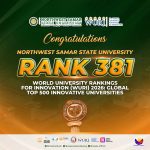
NwSSU Continues Global UpRISE, Secures Rank 381 in WURI 2026

Northwest Samar State University (NwSSU) has once again demonstrated its unwavering commitment to innovation and global impact, earning the 381st position in the World University Rankings for Innovation (WURI) 2026: Global Top 500 Innovative Universities. This achievement builds upon the university’s exceptional performance in previous rankings, solidifying its place among worldwide institutions dedicated to forward-thinking strategies and transformative contributions. NwSSU’s consistent position in these prestigious rankings highlights its dedication to fostering an institution of innovation, pertinence, and sustainable development. WURI is a global ranking system which evaluates universities by focusing on their real-world contributions and societal impact, emphasizing innovation, resilience, and responsiveness in its academic, research, and community engagement. NwSSU’s participation and continued recognition in WURI emphasize its success in adopting innovative practices that address contemporary global challenges. Reflecting on its performance in the 2025 WURI Rankings, NwSSU previously achieved remarkable placements, including 24th globally in the Environmental, Social, and Governance (ESG) Trend category. The university also secured 47th worldwide in Funding for Sustainability and 51st in Crisis Management. These past achievements exemplify NwSSU’s integrated approach to sustainability, ethical leadership, resourceful financial planning, and its agility in confronting disruptions and natural disasters. NwSSU’s sustained performance in the WURI rankings, now including its 381st spot in 2026, serves as a powerful testament to its UpRISE—progressive, inclusive, and impactful educational practices. By integrating sustainability, crisis resilience, and principled governance within its core, NwSSU continues to exemplify how state universities can drive transformative change, effectively serving both local communities and addressing broader global challenges. #WURI2026 #RISENwSSU

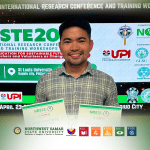
MAGNAYE WINS FIRST PLACE BEST PAPER AND BEST ORAL PRESENTER IN INTERNATIONAL RESEARCH CONFERENCE ON SCIENCE EDUCATION

Lj Magnaye, faculty member and College Research Coordinator of the College of Education, Northwest Samar State University (NwSSU), earned international recognition after winning First Place Best Paper and First Place Best Oral Presenter (Cluster 1: Culturally Responsive and Contextualized STEAM Education) at the 2026 NOSTE International Research Conference and Training Workshops held on April 23–25, 2026 at St. Louis University, Baguio City. Magnaye’s award-winning study, titled “Teaching Indigenous Science through Culturally Responsive Pedagogy: Shaping Environmental Perception and Cultural Resilience in Science Education,” centers on culturally responsive science education and the integration of indigenous knowledge systems. His research stood out among a diverse pool of local and international participants, highlighting the importance of contextualized teaching approaches in fostering environmental awareness, cultural resilience, and meaningful science learning. The conference was organized by the National Organization of Science Teachers and Educators, Inc. (NOSTE) in collaboration with St. Louis University (SLU), Universitas Pendidikan Indonesia (UPI), Central Luzon State University (CLSU), and West Visayas State University – Center for Research in Science and Mathematics Education (WVSU CRISMEd). NOSTE is a professional organization dedicated to advancing science education in the Philippines through research, innovation, and capacity-building initiatives. Its international conference serves as a platform for educators, researchers, and practitioners to share scholarly work and best practices in science and STEAM education. Anchored on the theme “STEAM Education for Sustainable Futures: Empowering Teachers and Volunteers as Change Catalysts,” the conference gathered experts and scholars from across the globe to promote transformative and sustainable educational practices. This achievement highlights NwSSU’s continued commitment to research excellence and its growing presence in the international academic community.

NwSSU Finalizes 40 Program Entries for World University Innovative Ranking

Northwest Samar State University (NwSSU) convened a deliberation meeting to finalize its institutional entries for the World University Innovative Ranking, consolidating 40 flagship programs aligned across 24 recognized categories. The meeting was presided over by the Officer-in-Charge Vice President for Academic Affairs, Mr. Niel Darryl Branzuela, and attended by designated focal persons representing each category. The deliberation aimed to validate program documentation, ensure alignment with global innovation indicators, and confirm the strategic positioning of NwSSU’s initiatives in relation to teaching innovation, research impact, sustainability, community engagement, and governance effectiveness. NwSSU’s participation underscores its commitment to benchmarking institutional performance against international standards, advancing a culture of innovation, and gaining global visibility for locally grounded solutions. By joining the ranking, the University seeks to objectively assess its competitiveness, identify areas for improvement, and affirm the relevance of its programs in addressing community and development challenges. The 40 programs demonstrate tangible impacts across instruction, research, extension, and innovation. These include technology-enabled learning initiatives, inclusive access to education, applied research responsive to regional needs, sustainable development projects, and partnerships that translate academic outputs into social and economic value. University officials emphasized that the exercise goes beyond compliance and recognition. It reflects NwSSU’s strategic direction to institutionalize innovation, scale high-impact programs, and position the University as a proactive contributor to national and global development agendas.

NwSSU, LGU Calbayog Seal MOA for Enhanced Flood RisK Management

Northwest Samar State University (NwSSU) and the Local Government Unit (LGU) of Calbayog formally strengthened their collaboration through the signing of a Memorandum of Agreement (MOA) on August 15, 2025, at the NwSSU Business Development Center. The agreement centers on the Flood Guard Calbayog initiative, a system designed to deliver accurate and dependable flood risk maps using Automated Weather Station (AWS) precipitation and weather data. The partnership outlines NwSSU’s commitment to ensure the system’s reliability, provide technical assistance, conduct training for LGU personnel, and share relevant data in compliance with privacy and security regulations. Meanwhile, the LGU commits to integrating the flood risk maps into disaster risk reduction plans, assigning trained personnel, and ensuring the responsible use of shared data. Present during the signing were Hon. Raymund C. Uy, City Mayor of Calbayog; Dr. Benjamin L. Pecayo, NwSSU President; Mr. Augusto L. Magdaraog, City Administrator; Dr. Riz Rupert L. Ortiz, Vice President for Research, Innovation, and Extension; and Dr. Sandro Daguman, City Disaster Risk Reduction and Management Officer. Their presence underscored the shared commitment of both institutions to building a more resilient community.

NwSSU Food Tech Student Bags Awards in International Summer Course in Indonesia

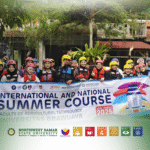
Northwest Samar State University (NwSSU) participated in the 2025 International and National Summer Course hosted by Universitas Brawijaya in Malang, Indonesia. Designed as a hybrid program combining online and onsite sessions, the course runs from June to August 2025, with the onsite sessions held from June 22 to 27. The program revolved around the theme “Innovative Agricultural Technologies for Future Food Security, Green Industry, and Environmental Sustainability,” delving into forward-looking frameworks and emerging technologies aimed at redefining sustainability within the agro-industrial landscape. Representing NwSSU was Jonathan M. Peru, a third-year Bachelor of Science in Food Technology student, accompanied by a BSFT faculty member – Ms. Maria Joana T. Nicolas. Their participation marked the implementation of the institutional collaboration between NwSSU and Universitas Brawijaya, reflecting a shared commitment to cross-border academic mobility and scholarly exchange. Mr. Peru made a remarkable impression during the summer course, hailed as the Champion for the Best International Group Presenter and earned the second place in the Artefact (Dance Competition). His commendable performance showcased not only individual aptitude but also the university’s growing imprint in international academic excellence. This engagement highlighted NwSSU’s commitment to global linkages and preparing students to be proactive contributors in solving global challenges, particularly in food security and environmental sustainability. By engaging in such initiatives, the university continues to build a strong presence in international academic communities.

NwSSU Joins Turnover of Foundational Governance Documents at ‘Padayon Samar’ 2025 Inauguration Ceremony

Northwest Samar State University (NwSSU), represented by University President Dr. Benjamin L. Pecayo, joined key stakeholders across Samar during the ceremonial turnover of three landmark provincial governance documents at Padayon Samar: The 2025 Inauguration and Oath-taking Ceremony for Newly Elected Officials held on June 30 at Tandaya Hall in Catbalogan City. Governor Sharee Ann Tan led the ceremonial turnover of the province’s updated long-term plans and values formation modules, underscoring the administration’s direction toward inclusive, sustainable, and values-driven development. “These are critical in reshaping the direction of the province in the years ahead,” Gov. Tan said, referring to the three documents: the Samar Province Sustainable Strategic Cultural Management and Development Plan of 2025, the Samar Province Sustainable Strategic Tourism Development Plan 2025–2034, and the One Values Program Modules. The Cultural Management and Development Plan outlines a ten-year roadmap for preserving Samar’s cultural heritage and strengthening the province’s creative industry. The Tourism Development Plan, meanwhile, lays out a framework for community-based and heritage-driven tourism, aiming to generate livelihood without compromising local identity. The third document, the One Values Program Modules, is a comprehensive and multidisciplinary values formation initiative targeting children and families. “This progress is not only about infrastructure or economic development. It is about preparing our people morally and socially to become responsible, value-driven citizens,” Gov. Tan emphasized. Standing alongside other key provincial institutions, NwSSU reaffirmed its continuing role as a key partner in shaping forward-thinking, research-informed, and community-rooted development policies. Also present were Vice President for Administration and Finance Dr. Rhio Dimakiling, Graduate School Dean Dr. Eliza V. Gamusa, and University Board Secretary Engr. Roy Montejo. Governor Tan also expressed gratitude to the framers and technical working group members who helped craft the plans. “Let us recognize their hard work, vision, and dedication in shaping a long-term path for Samar: one rooted in identity, integrity, and inclusion,” she said. In alignment with this vision, NwSSU’s participation in the ceremony affirms its commitment to a development agenda that goes beyond education. The university remains ready to contribute to initiatives that cultivate not only informed minds but also responsible, value-driven communities. The ceremony highlighted the need for synchronized leadership, policy alignment, and inclusive partnerships in addressing local challenges. With its growing involvement in regional policymaking and its strengthened public sector partnerships, NwSSU positions itself at the forefront of transformative governance: ensuring that research, innovation, and public service continue to benefit the people of Samar.

Elevating Impact: NwSSU Participates in Training-Workshop on High-Impact Extension Innovations with Field Exposure

Faculty and non-teaching personnel from Northwest Samar State University (NwSSU) participated in the Training-Workshop on High Impact Extension Innovations with Field Exposure held on June 17–19, 2025, at Igorota Hall, Benguet State University (BSU) in La Trinidad, Benguet. The event brought together extension professionals and scholars to strengthen their skills in designing, managing, and evaluating community-centered, high-impact extension initiatives. The initiative was born out of the NwSSU Graduate School’s commitment to revitalize its extension mandate. In recent years, particularly during and after the pandemic, the University acknowledged a gap in faculty- and learner-initiated extension projects. This led to a purposeful exploration led by the VP for Administration & Finance who was concurrently the GS Extension Coordinator, joined by the Office of the Dean of the Graduate School, Extension Services Office, and Project Development Unit. This has resulted in proposing the training-workshop in partnership with the Bamboo Impact Lab OPC, led by Dr. Anneth Singh, Affiliate Scientist at Ateneo de Manila University. The effort aligns with the Commission on Higher Education’s Memorandum Order No. 15, s. 2019, which mandates graduate schools to promote advanced competencies that support agro-industrial productivity, entrepreneurship, inclusive development, and environmental sustainability. The event opened with a ceremonial signing between NwSSU, Civica Knowledge Management Solutions, and Bamboo Impact OPC—formally establishing a tripartite linkage in support of innovative, partnership- driven extension work. This was followed by plenary sessions that set the tone for the workshop’s central themes. The session titled “SIGLAT: Innovations in Youth and Community Development” was delivered by Mr. Adrian Leung on behalf of Dr. Donna R. Tabangin, followed by Dr. Marren Adan’s presentation on “Blue Economy Breakthroughs: Research-Based Extensions in Countryside Maritime.” Dr. Anneth Singh led the session on “Bamboo Impact Breakthroughs: From Research-Based Innovations to Business-Based Extensions,” and the final talk, “Bridging Leadership: Connecting Leadership Innovations and High-Impact Extension,” was facilitated by Dr. Elmer Soriano. On the second day, NwSSU participants engaged in a field exposure activity at the BSU Institute of Highland Farming Systems and Agroforestry. Here, they interacted with project implementers and local stakeholders, gaining insights into how partnerships are initiated and sustained, how stakeholder relationships are nurtured, and how support systems, including funding mechanisms, are mobilized. These reflections guided the afternoon training-workshop, where participants crafted community involvement plans and designed partnership pipelines for extension projects. Outputs were presented, critiqued, and refined through collaborative feedback. The third day featured another field visit—this time to the BSU Agri-based Technology Business Incubator/Innovation Center (ATBI). Participants met with startup incubatees to learn about their entrepreneurial ventures, the institutional support provided by ATBI, and the importance of research- driven enterprise in rural development. The culminating training session back at Igorota Hall focused on developing impact assessment tools for extension programs. Participants shared their drafts and received constructive critiques to enhance effectiveness and applicability. The workshop concluded with a closing program that reinforced key insights and celebrated the participating institutions’ collective commitment to inclusive, sustainable, and high-impact extension practices. For NwSSU, the event significantly enhanced the competencies of its faculty and non-teaching staff in building strategic community linkages and responsive extension frameworks. It also enriched their professional growth and bolstered the University’s capacity to spearhead transformative, partnership- centered development in the region.