NwSSU ASBAO Finalizes Manual for Income-Generating Projects

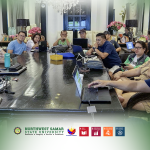
CALBAYOG CITY, Samar – Northwest Samar State University (NwSSU) has finalized a manual that sets the rules for its income-generating projects (IGPs). The Auxiliary Services and Business Affairs Office (ASBAO) led a four-day, closed-door write-shop from November 3 to 7, 2026 to validate the manual. ASBAO Director Rodolfo Corrales headed the effort in collaboration with the Project Development Office. Following the Higher Education Modernization Act (RA 8292) and the NwSSU Charter (RA 9719), the review and revision of the IGP manual aims for its immediate implementation to augment the university’s resources. Almost half of the income (40%) that will be generated from the IGPs will be used to support the university’s instruction, research, extension, and innovation activities, while around 30% is set to augment the university’s administrative operations.  The team reviewed whether a first-time proponent could follow the process from idea to approval, whether every peso could be traced from collection to deposit to distribution, and whether figures were consistent across chapters. Vague provisions were tightened, and conflicting chapters were reconciled. Under the manual, every Auxiliary Service and Special Project follows the same path: feasibility study, proposal, approval, then operation on a budget with collections deposited and reported. The manual also lets research, instruction and extension outputs become University-managed projects. These include products from faculty research, fee-based training and media services, and community-built products and services. Intellectual property is protected, and a feasibility check comes first. Projects involving indigenous communities or traditional knowledge require Free and Prior Informed Consent, and original beneficiaries must keep access to the service. The manual is aligned with the UN Sustainable Development Goals on decent work and economic growth (SDG 8), quality education (SDG 4), industry, innovation and infrastructure (SDG 9), and partnerships (SDG 17). The ASBAO’s vision, as stated in the manual, is “an entrepreneurial NwSSU community that grows productive ventures” from instruction, research, extension and production, sustaining the University and Samar communities “from source to sea.”

CHED Inspects, Tags Equipment Acquired Through NwSSU Laboratory Upgrades

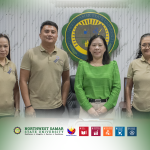
Officials of the Commission on Higher Education (CHED) inspected and tagged laboratory equipment of Northwest Samar State University (NwSSU) on November 10, 2026. The equipment was procured through the Higher Education Development Fund (HEDF). The activity, led by CHED’s Higher Education Development Fund Staff (HEDFS), began at the NwSSU President’s Board Room, where University President Atty. Lorelie Fabillar-Tangaran, DM, received the delegation. The HEDFS team consisted of Rosanna B. Garcia, Administrative Officer V; Catherine M. Malapo, Administrative Assistant III; and Patrick James M. Arao, Project Technical Staff I. The team then proceeded to the laboratories for the physical inspection. They were accompanied by Dr. Teodoro A. Amatosa, Jr., Vice President for Research, Innovation, Extension, and External Affairs (RIEEA), and Dr. Leo Jesus M. Lacaba, Vice President for Administration and Finance. The inspection covered two HEDF-funded projects: the upgrading of the University’s engineering laboratories and the upgrading of the Technology, Engineering, Tourism and Hospitality Management laboratories at the Main Campus. Each item was verified against the University’s inventory report, which CHED had requested NwSSU to prepare in advance. The inspection is mandated under Chapter 10, Section 17 of the Government Accounting Manual, which requires that property and equipment acquired through grants to higher education institutions be inspected, tagged, and documented. CHED’s itinerary also included a focus group discussion with University stakeholders, forming part of the Commission’s efforts to strengthen the monitoring and evaluation of HEDF-funded projects. This ensures that public funds invested in the University’s laboratories are accounted for and that the equipment is in use by engineering, technology, and hospitality management students who train on it daily.

Help within reach: NwSSU, Monesit Open Mental Health Care Door.

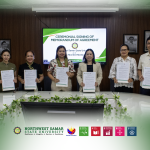
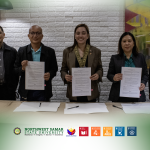
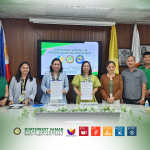
Northwest Samar State University (NwSSU) students, faculty, and staff can now get professional mental health care at a discount through a four-year partnership with Dr. Liberty Monesit Medical Clinic. The University and the clinic formalized the partnership on November 3, 2026, through a ceremonial Memorandum of Agreement signing at the NwSSU President’s Board Room. University President Atty. Lorelie Fabillar-Tangaran, DM, and clinic proprietor Dr. Ofelia Amores Monesit, MD, signed the agreement. Under the agreement, members of the University community who are referred by NwSSU can access consultation, assessment, diagnosis, and treatment at the clinic, with a 25% discount on consultation fees. The clinic will also provide resource speakers for the University’s seminars, workshops, and other mental health activities. Both parties committed to comply with the Data Privacy Act of 2012 (R.A. 10173) and to safeguard sensitive medical and mental health information. By lowering cost barriers and linking the community to licensed professionals, the partnership supports students’ and employees’ well-being, which in turn supports how well they learn and work.

LGU Calbayog, NwSSU craft El Niño–La Niña preparedness plan in foresight, tabletop workshop

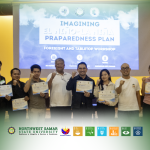
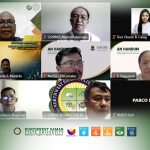
Northwest Samar State University (NwSSU) and the City Government of Calbayog conducted a foresight and tabletop workshop on El Niño–La Niña preparedness on Friday, Oct. 30, 2026, at the NwSSU Main Campus. The workshop comes as Samar is among the provinces PAGASA has placed under drought, with the current very strong El Niño expected to linger into 2027 and a La Niña possibly following. All four states of calamity Calbayog has declared since 2022 were for floods, which organizers said makes the shift from too little water to too much the city’s biggest blind spot. Participants from multisectoral agencies and civil society worked in five sector tables, each guided by NwSSU facilitators. The tables covered water; food and agriculture; health, education and social welfare; emergency response and public safety; and governance, budget and coordination. The day began with a “Worry Wall,” where participants posted their biggest concerns about too little and too much water. Emmanuel R. de Guia, resident futurist and consultant of the Senate Committee on SDGs, Innovation, and Futures Thinking, then gave a situation briefing on the El Niño outlook, from the global picture down to Calbayog. Participants were then guided through a Causal Layered Analysis to examine the deeper causes behind their concerns, followed by a session on four possible futures of Calbayog in 2036, which they presented through an “a day in the life in 2036” role-plays. In a backcasting session, the tables worked backward from a preferred 2036 vision to concrete first moves the city can take during the current El Niño. The highlight was the Pivot Drill, a tabletop exercise that tested the tables’ plans against fictional but realistic developments: drought at its peak, the regular dry season stacked on El Niño, and a sudden turn to La Niña flash floods and landslides. Dr. Sandro Daguman, head of the City Disaster Risk Reduction and Management Office (CDRRMO), played the council chair who approved or held requests for water, personnel and funds, testing the workshop’s guiding rule: “No owner, no commitment.” Lastly, each table pledged three commitments with a named lead office, deadline, and trigger. In the session, each participants signed personal 30-day commitment cards. Dr. Daguman said the next steps are to consolidate the outputs into a draft El Niño–La Niña Preparedness Plan, integrate its actions into the city’s existing plans and budgets, monitor PAGASA signals, and bring the approach to barangays and schools. In his closing message, City Councilor Marc Celino “Jormac” B. Tan thanked the facilitators and participants and said the commitments made at the tables are only the beginning. “We can do this together,” he said, adding that by acting early, working across offices and barangays, and holding one another to their promises, Calbayog can face both the drought and the floods ahead with confidence.

NwSSU, Calbayog, and San Jorge Plan El Niño-La Niña Preparedness Workshops

Northwest Samar State University (NwSSU), Calbayog City, and San Jorge will hold tabletop and scenario workshops this October to prepare for the El Niño–La Niña phenomenon. DOST-PAGASA has warned that the ongoing El Niño is expected to intensify into a very strong event and persist through the first half of 2027. El Niño generally brings warmer temperatures and below-normal rainfall across much of the country, increasing the risk of dry spells and drought, although heavy rainfall and flooding may still occur during tropical cyclones and other rain-bearing weather systems. The agreement came out of an October 12, 2026, coordination meeting among NwSSU’s Center for Futures Thinking and Strategic Foresight (CFTSF), the University Disaster Risk Reduction and Management (DRRM) Council, and officials from both local government units. Representatives from the water, agriculture and fisheries, energy, and health sectors, along with barangay officials and University representatives, will take part in the tabletop exercises and scenario-planning workshops. The Philippine Atmospheric, Geophysical and Astronomical Services Administration (PAGASA) has placed Samar under drought since September and expects it to last through March 2027, while still anticipating three to five tropical cyclones. Calbayog has declared a state of calamity four times since 2022, all because of floods. Dr. Jonah L. Salcedo, CFTSF Director and Head of the Planning Office, said the LGUs hold the authority to declare a state of calamity, release quick response funds, and order evacuations, while NwSSU contributes data, research, and a neutral venue for planning. Resident Futurist Emmanuel R. de Guia said the greatest danger lies in the handover between drought and flood, when a city must shift from saving water to evacuating families. “Foresight is not predicting the storm. It is deciding, while it is quiet, who will do what when it comes,” he said. The workshops will use scenarios, early-warning signals, and a map of who may declare rationing, begin flood readiness, or release funds, guided by the ground rule “No owner, no commitment.” NwSSU will provide weather-station data, research, and facilitation, building on its 2023 and 2025 flood-risk agreements with Calbayog and extending them to drought and to San Jorge. Both LGUs also asked for scenario planning, community information materials, and GIS mapping and climate modeling. The schedule and venues will be announced soon. Assigning clear owners before the next weather shock will help Calbayog and San Jorge turn forecasts into timely decisions for their communities.

NwSSU BSDevCom students bag 2nd Best Film for ‘Butig’ at DAR-8 film festival

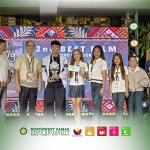
NwSSU BS in Development Communication students received the 2nd best Film Award in the Agrarian Reform Beneficiary Organization (ARBO) Category for their film “Butig” at the Department of Agrarian Reform (DAR) Eastern Visayas PelikuAgraryo Regional Film Festival 2026 Awards Night on October 12 in Palo, Leyte. PelikuAgraryo featured films from five participating schools across Eastern Visayas, which showcases stories the experience of agrarian reform beneficiaries and their organizations. With the theme “Tinig ng Lupang Malaya: Kwento at Aral-Agraryo, Butil na Pamana sa Kabataan,“ this year’s festival highlighted the importance of sharing agrarian reform stories with younger generations and promotes film as a medium for raising awareness of agrarian reform initiatives and sharing stories of rural communities.

Charting Shared Futures: NwSSU, MarSU Explore New Frontiers for Institutional Collaboration

CALBAYOG CITY, Samar — Looking beyond institutional borders, Northwest Samar State University (NwSSU), Marinduque State University (MarSU) and the Senate Committee on SDGs, Innovation, and Futures Thinking explored shared pathways in research, innovation, extension, and futures thinking during a three-day exploratory and benchmarking visit on October 5–7, 2026. The visit brought together the higher education institutions to exchange practices and explore areas for institutional collaboration, particularly in research, innovation, extension, futures thinking, and strategic foresight. The engagement was also designed to provide opportunities for technical presentations, roundtable discussions, and benchmarking of institutional programs and initiatives. The three-day activity began with a courtesy visit to the Calbayog City Mayor on October 5. On the second day, the MarSU delegation, led by Ms. Lenie P. Zulueta, Executive Assistant III of MarSU, together with Mr. Emmanuel R. De Guia, Resident Futurist and representative of the Philippine Futures Thinking Society and Senator Pia S. Cayetano, proceeded to NwSSU for a courtesy visit with University President Atty. Lorelie Fabillar-Tangaran, DM, and key University officials. The program featured presentations on NwSSU’s research, innovation, and extension programs, as well as its planning, futures thinking, and strategic foresight initiatives. The latter was presented by Dr. Jonah L. Salcedo, Head of the Planning Office and Director for Futures Thinking and Strategic Foresight. Discussions then moved toward a roundtable on areas of mutual interest and collaboration, allowing the participating institutions to identify opportunities for joint initiatives and knowledge exchange. This was followed by the drafting of terms for the proposed Memorandum of Understanding (MOU) and its ceremonial signing, formalizing the institutions’ intent to pursue collaboration in identified areas. The second day also included a campus tour and site visits at the NwSSU Main Campus, giving the visiting delegation an opportunity to gain firsthand insights into the University’s facilities, programs, and institutional operations. On the final day, October 7, the delegation proceeded to the NwSSU San Jorge Campus for a site visit before concluding the activity with a send-off. The exploratory visit strengthens opportunities for inter-institutional exchange and sets the groundwork for future partnerships between NwSSU and MarSU in advancing research, innovation, extension, and futures-oriented institutional development.

NwSSU Strengthens School Partnerships through Field Study Orientation, MOA Signing

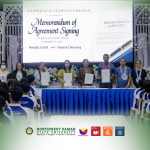
Northwest Samar State University (NwSSU), through the College of Education, held its School-Based Field Study Orientation and Memorandum of Agreement (MOA) Signing for School Year 2026–2027, bringing together university officials, representatives of the DepEd Schools Division of Calbayog City, school principals, faculty members, field study advisers, and student-teachers. The activity prepared student-teachers for their deployment to cooperating schools, where they will observe actual classes and learn directly from teachers, learners, and school communities. NwSSU President Atty. Lorelie Fabillar-Tangaran, DM urged the student-teachers to uphold professionalism and integrity, ensure safety and respect, and practice adaptability and empathy throughout their field study. Dr. Jun Nilo Dulfo, Assistant Schools Division Superintendent–OIC, delivered a message on behalf of Dr. Joel A. Zartiga, PhD, CESO VI, Assistant Schools Division Superintendent and Officer-in-Charge of the Office of the Schools Division Superintendent. Dr. Ma. Maria Lucil H. Dollado, Dean of the College of Education, welcomed the participants and underscored the importance of the field study experience. A highlight of the program was the MOA signing between NwSSU and its partner schools, formalizing their shared commitment to provide meaningful and guided school-based experiences for future teachers. Also taking part in the activity were Dr. Joy Saldaña, Education Program Supervisor for Science, representing Dr. Renato S. Cagomoc, CID Chief; Dr. Josephine L. Gallardo, Division Student Teaching Coordinator; and Atty. Ma. Cecil Candida Yabao-Rueda, University Legal Officer, who discussed the Safe Spaces Act. The student-teachers were formally endorsed to their cooperating schools and oriented on important policies, school concerns, and responsibilities they are expected to observe during their field study. Through the activity, NwSSU, the DepEd Schools Division of Calbayog City, and cooperating schools strengthened their partnership in preparing future teachers for the realities and responsibilities of the classroom.

More Than a Signature: NwSSU-CHR Partnership Set to Bring Human Rights Closer to Students, Families, and Barangay Oquendo

More Than a Signature For many students and residents, “human rights” can feel like a phrase reserved for textbooks and news headlines — important, but distant. That distance just got a little shorter. Northwest Samar State University (NwSSU) and the Commission on Human Rights (CHR) Region VIII formalized a renewed and strengthened partnership through a ceremonial Memorandum of Agreement (MOA) signing at the NwSSU President’s Board Room. Joining them was Barangay Oquendo, whose inclusion signals a shift from policy on paper to programs that reach real neighborhoods. Two agreements anchor this partnership, and together they point toward tangible, everyday benefits for the university community and the barangay it calls home. A Campus Where Rights Are Understood, Not Just Studied The first MOA establishes the Center for Human Rights Education (CHRE), a joint undertaking between NwSSU and CHR Region VIII. For students, this could mean human rights education woven more directly into campus life — through lectures, workshops, or activities that go beyond the classroom and help clarify what rights and responsibilities actually look like in practice. For faculty and staff, it opens the door to fresh resources and training that can enrich how human rights topics are taught and discussed across programs. The ambition behind the CHRE is straightforward but powerful: a campus culture where every member — student, teacher, or staff — has a clearer grasp of their own rights, and just as importantly, a stronger sense of responsibility to respect the rights of others. In a university setting, that kind of awareness often ripples outward, shaping how graduates carry themselves as professionals and citizens long after they leave NwSSU’s halls. Building Safer, More Responsive Communities The second MOA takes a more ground-level approach, focusing on capacity building for the response to Violence Against Women and their Children (VAWC), local policy development, crime prevention, and peace and order. This is where Barangay Oquendo’s role becomes especially meaningful. Local leaders and stakeholders stand to gain sharper skills and knowledge for handling VAWC cases, strengthening barangay-level policies, and supporting broader peace and order efforts. For a community, this translates into something very concrete: barangay officials and frontline workers who are better equipped to respond when someone needs help, and a local government more capable of preventing problems before they escalate. It also creates a natural bridge for NwSSU’s students and faculty — particularly those in social work, criminology, education, and related fields — to engage with real community issues, whether through extension programs, research, or future collaborative initiatives. Voices Behind the Partnership The signing ceremony brought together key figures from all three institutions: Atty. Marierose P. Alvero-Joaquin, OIC Regional Director of CHR Region VIII; Atty. Lorelie Fabillar-Tangaran, DM, University President of NwSSU; and Hon. Michael M. Loberiano, Barangay Chairperson of Oquendo, each of whom shared remarks underscoring the significance of the collaboration. Their presence at the same table reflects something the MOA itself cannot fully capture on paper — a shared understanding that human rights work is most effective when the academe, government agencies, and local communities move in step with one another. Turning Commitment Into Action An MOA signing is, in many ways, just the beginning. What follows next — the workshops, trainings, and outreach activities expected to emerge from the CHRE and the VAWC capacity-building initiative — will be where students, faculty, and Barangay Oquendo residents start to feel the partnership’s impact firsthand. For the NwSSU community, this collaboration represents an invitation: to learn more about their rights, to look out for one another, and to take an active part in shaping a safer, more rights-aware campus and barangay. As the partnership moves from agreement to action, the university looks forward to seeing how students, faculty, and community members alike will help bring this shared commitment to life.

NwSSU Gears Up Through Three-Day In-Service Training

Northwest Samar State University (NwSSU) brought its teaching and non-teaching staff together for a three-day In-Service Training from September 9 to 11, 2026, at Villa Cruz Resort, San Roque, Northern Samar. The training opened with a GCash orientation led by Mr. Amed Macabit, who introduced the platform’s features for faster, easier, safer, and cashless transactions for university services and personal errands. He shared that NwSSU is now one of the first State Universities and Colleges (SUCs) in Region 8, along with Eastern Visayas State University (EVSU), to partner with GCash, in line with the government’s vision to build a more digital Philippine nation under Executive Order 170. Mr. Macabit noted that the University’s own GCash QR code will be launched soon, enabling students to pay for services through GCash and supporting the disbursement of student subsidies, scholarship allowances, and personnel funds through an NwSSU institutional wallet with real-time reporting and monitoring. NwSSU constituents will also receive a free GCash card once launched. University President Atty. Lorelie Fabillar-Tangaran, DM, delivered a message and institutional updates centered on the “N” in the University’s ASCEND Framework — nurturing human resources. She emphasized the need to upskill in the age of AI to provide better, transformative, and globally competitive education, noting that competitiveness also means being relevant and responsive. She underscored that AI should be treated as a tool, not a replacement, calling for assessments and methods to be realigned to develop students’ critical thinking, alongside policies and guidelines that evolve with the times. She announced that the University’s new vision and mission statements will be launched soon, geared toward digital transformation — beginning with an assessment of processes that could be digitalized or automated, the establishment of a centralized digital platform, and updates to university manuals and the university code. She also called for stronger safety and security measures through preventive and proactive steps, guided by the ASCEND and ACHIEVE frameworks, and asked for the community’s support in performing their duties toward the University’s institutional targets. Dr. Teodoro A. Amatosa, Jr., Vice President for RIEEA, presented the Source-to-Sea Framework, anchored on NwSSU’s geographic and academic mandate along the ecological continuum of Samar, with focus areas in agriculture, forestry, natural resources, maritime affairs, fisheries, and advanced technologies. He identified gaps in infrastructure, leadership, and siloed academic operations, and outlined plans to streamline internal procurement systems, activate grant support and mentoring mechanisms, and create incentives for research productivity, envisioning NwSSU as a Research-Led University delivering on its mandate of Resilience, Integrity, Service, and Excellence. He also introduced the Triple Helix Ecosystem as the University’s guiding model for innovation and development programs, with NwSSU set to develop its own research and extension agenda harmonized with stakeholders and national R&D frameworks. Dr. Archie B. Lauderes, Director of Extension Services, discussed the DBM Joint Circular guidelines on faculty reclassification, common areas where faculty applications fall short, and ways to address them moving forward, alongside updated procedures under the revised Extension Manual. Mr. LJ A. Magnaye, Director of Research Services, guided participants on structuring research papers for publication, from establishing a clear research gap to presenting a solution, emphasizing clarity and simplicity over jargon. He also shared how AI tools can support research writing, literature review, and presentation, and walked participants through selecting appropriate journals based on scope, reach, indexing, metrics, article processing charges, peer review process, and turnaround and acceptance rates. He cautioned participants against predatory journals, citing red flags such as unusually rapid reviews or acceptance rates, hidden fees, fabricated editorial boards, and clone journals that falsely use the logos and names of legitimate organizations. Day 2 highlighted a keynote lecture on artificial intelligence in education, “From Prompt to Pedagogy: AI-Enabled Teaching, Learning & Assessment for the Future – Ready Educator,” delivered by resource speaker Dr. Las Johansen Caluza. The afternoon session covered key policy and compliance topics, including a talk on nihilistic violent extremism by PLtCol. Alden E. Dugan, the University’s gambling prohibition policy, an orientation on student off-campus requirements, and international travel guidelines, alongside updates on quality assurance and procurement processes for SUCs. The training concluded on September 11 with team building activities for the NwSSU teaching and non-teaching staff, capping a program designed to strengthen the knowledge, skills, and institutional alignment of the University’s workforce as NwSSU continues to advance its commitment to service, integrity, and excellence.     For more photos, view the full album here: https://drive.google.com/drive/folders/183EDbCmAGwXA4gNZ66bNb46kXNs2r9pt?usp=sharing