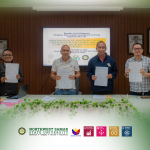
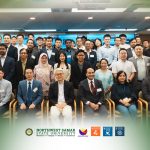
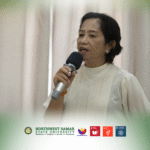
NOVEMBER 12, 2025 — Northwest Samar State University (NwSSU) and the Philippine Fiber Industry Development Authority (PhilFIDA) formalized a transformative partnership on Wednesday through the signing of a Memorandum of Agreement (MOA) at the NwSSU Board Room. The agreement marks the launch of a 2-hectare mulberry plantation project designed to strengthen the local silk industry and establish NwSSU as a hub for sustainable agricultural innovation. The signing ceremony was led by Dr. Benjamin L. Pecayo, University President, and Mr. Joseph S. Salas, PhilFIDA Regional Director for Region VIII. They were joined by key academic leaders including Dr. Riz Rupert L. Ortiz, Vice President for Research, Innovation, and Extension; Dr. Reynaldo R. Aquino, Campus Administrator of San Jorge Campus; Dr. Joseph Emil A. David, Director for Research and Development Services; and For. Eduardo G. Espejon, Director for Research and Extension at San Jorge Campus. At the heart of the initiative is the cultivation of mulberry leaves—an essential food source for silkworms—intended to revitalize silk production in the region. Yet the project’s impact extends beyond sericulture. Mulberry fruits, prized for their nutritional and medicinal properties, offer potential for diversified income streams and expanded research opportunities. Mr. Salas highlighted the plantation’s promise to unlock new avenues in medicine, agro-economics, and fiber research. The collaboration aligns with PhilFIDA’s mandate to advance the country’s fiber industry through education, innovation, and strategic partnerships. The MOA represents a significant stride in the region’s agricultural and academic landscape. By integrating PhilFIDA’s technical expertise with NwSSU’s research capabilities, the partnership seeks to foster sustainable development, empower local farmers, and position Samar as a leader in eco-friendly fiber production. Closing the ceremony, Dr. Pecayo expressed heartfelt gratitude to PhilFIDA, emphasizing the university’s commitment to the shared vision. The agreement signals a vibrant future—where government, academia, and agriculture converge to transform innovation into enduring progress.