NwSSU, PLGU-Samar Harmonize Agro-Industrial Initiatives for Samarnon Farmers

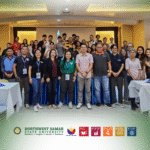
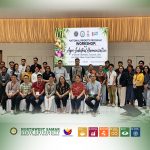
CATBALOGAN CITY, Samar — In a decisive move to revitalize the province’s agricultural landscape, the Northwest Samar State University (NwSSU) solidified its role as a key institutional partner of the Provincial Local Government Unit (PLGU) of Samar during the two-day Samar Agro-Industrial Harmonization Workshop, held from October 22 to 23, 2026, at the Samar Convention Center. Led by the Office of the Provincial Agriculturist and the Office of the Provincial Environment and Natural Resources Officer, the workshop brought together regional stakeholders, academic experts, and policymakers to streamline development efforts for Samar’s high-value agro-industries: coconut, bamboo, ube, and high-value crops (HVC) such as chili. Harmonizing a Shared Vision For years, the development of Samar’s primary agricultural commodities has occurred in silos, with agencies tackling problems independently. However, the workshop showed that the challenges facing Samar’s farmers are shared across commodities. Data consolidated during the sessions revealed six recurring gaps that hold back the provincial agro-industry. These are limited planting materials and seed stock, ranging from expensive bamboo material, scarce ube seedlings, and senile coconut trees to a lack of chili seed stock; limited farmer capacity and extension support; vulnerability to climate impacts, including typhoons, droughts, pests, and diseases; fragmented production and weak institutional coordination; a lack of shared processing, postharvest, and logistics facilities; and weak market linkages that leave farmers at the mercy of volatile trading prices. Rather than addressing these barriers commodity by commodity, the workshop successfully grouped these gaps into six strategic convergence initiatives. By anchoring interventions across specific segments of the value chains—such as clustering ube processing, upgrading chili facilities, and establishing robust marketing networks for coconut and bamboo—the PLGU and its partner agencies can now deploy targeted solutions that uplift multiple farming sectors simultaneously. NwSSU at the Helm of Facilitation and Expertise As an institution deeply committed to community transformation, NwSSU sent a powerhouse team of educators and researchers to orchestrate the event and contribute technical foresight. Mr. Redem D. Tingzon, Director of the NwSSU External Affairs Office, steered the strategic direction of the sessions as the Lead Workshop Facilitator, working hand-in-hand with Provincial Planning Officer Mr. Joel Mancol. Their collaborative moderation allowed diverse agency representatives to find common ground and synthesize complex farm-level data into actionable government policies. Lending academic and scientific weight to the workshop was Dr. Jessie Sabijon, Dean of the College of Agriculture & Forestry at the NwSSU San Jorge Campus. Serving as a Small Group Facilitator, Dr. Sabijon acted as the resident expert contributor for Ube Research & Development (R&D). His insights highlighted how academe-driven crop technology can directly mitigate the planting material scarcity that currently limits local ube growers. Assisting throughout the rigorous two-day convergence were personnel from the NwSSU Project Development Office, who served as official documenters, meticulously capturing the baseline findings that will shape Samar’s next comprehensive agro-industrial master plan. Empowering the Samarnon Farmer Samar’s smallholder farmers stand to benefit most from this partnership. By addressing systemic weaknesses like funding access and farm mechanization (gaps highlighted for bamboo, coconut, and ube), the convergence framework aims to move farmers toward more competitive agro-enterprise. When farmers are equipped with high-yield seed stocks, resilient farming practices, and shared processing facilities, their post-harvest losses drop, and their profit margins rise. Sustainable market linkages ensure that the sweat and labor poured into Samar’s soil translate into stable, premium household incomes. Shaping Samar’s Economic Future The collaboration between NwSSU and PLGU-Samar marks a shift in the province’s approach to agro-industry. By moving away from fragmented initiatives and embracing a synchronized value-chain approach, Samar positions itself as an emerging agro-industrial hub in the Eastern Visayas region. Through localized research, extension services, and policy facilitation, NwSSU continues to contribute to the province’s economic development. As this harmonized blueprint rolls out, the university and the provincial government stand united in building a resilient, food-secure, and economically vibrant Samar.
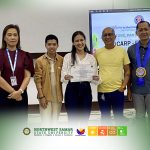
Fueling Innovation: NwSSU-RIEEA Team Wins 3rd Place at Regional RDE Review

Northwest Samar State University’s Office of Research, Innovation, Extension, and External Affairs (RIEEA) secured 3rd Place in the Applied Research Category at the ViCARP Level 2, Cluster 2 Research, Development, and Extension (RDE) Review, held September 16–17, 2026, at the University of Eastern Philippines, Catarman, Northern Samar. The team, composed of Vice President for RIEEA Teodoro A. Amatosa, Jr., together with RIEEA research staff Apollo L. Frivaldo and Aliah Zimone S. Luistro, was recognized for their paper titled “Valorization of Lead- and Copper-Contaminated Giant Bamboo (Dendrocalamus asper) into Solid Fuel Briquettes: Structural and Thermal Performance.” The study explores turning bamboo contaminated with heavy metals like lead and copper into solid fuel briquettes, offering a potential approach to sustainable energy production while addressing environmental contamination. The RDE Review was conducted under the Visayas Consortium for Agriculture, Aquatic, and Natural Resources Program (ViCARP), the regional arm of the National Agriculture and Resources Research and Development Network under the Philippine Council for Agriculture, Aquatic, and Natural Resources Research and Development (PCAARRD), which evaluates research outputs from institutions across Eastern Visayas. As RIEEA continues to expand its research portfolio, this recognition adds another marker of the office’s role in advancing science-driven solutions to real-world environmental challenges in the region.

NWSSU RECEIVES FOUR RECOGNITIONS FROM DBM REGION VIII

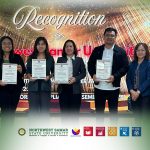
Northwest Samar State University (NwSSU) received four recognitions from the Department of Budget and Management (DBM) Region VIII during the FY 2026 Mid-Year Performance Dialogue for State Universities and Colleges (SUCs), CHED, and TESDA on August 19, 2026, at the DBM Regional Office VIII Conference Hall in Marasbaras, Tacloban City.   The recognitions were given in acknowledgment of the University’s performance in income collection, physical performance, income utilization, and reportorial compliance. NWSSU was recognized with the following: Income Collection Award – for achieving a 134.57% income collection rate, exceeding its target collection for FY 2025; Physical Performance Achiever – for attaining 100% of the Physical Performance Indicators under the FY 2025 General Appropriations Act; Income Utilization Performance Award – for achieving a 61.30% average income utilization rate for FY 2021–2025, placing 3rd among SUCs in Region VIII; and Reportorial Compliance Award for the 1st and 2nd Quarters of FY 2026 – for the complete and timely submission of the required Budget and Financial Accountability Reports (BFARs), with a 100% compliance rate covering all 24 required reports. The awards reflect the University’s continuing efforts in financial management, efficient utilization of resources, and compliance with government reporting requirements. NWSSU extends its appreciation to the administration, faculty, staff, and offices whose collective efforts contributed to these accomplishments. Congratulations, NWSSU!

NWSSU RESEARCH SPOTLIGHT ADVANCE SUSTAINABLE RICE PRODUCTION THROUGH SCIENCE

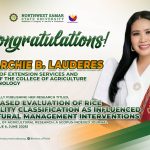
Northwest Samar State University proudly celebrates another significant research milestone as DR. ARCHIE B. LAUDERES, Director of Extension Services and Faculty of the College of Agriculture and Technology, successfully published her research entitled: “Field-Based Evaluation of Rice Suitability Classification as Influenced by Cultural Management Interventions.” Published in the Indian Journal of Agricultural Research (Volume 60, Issue 6, June 2026, DOI: 10.18805/IJARe.AF-1037), the study validates rice land suitability classifications through field-based experiments and demonstrates how site-specific cultural management practices and soil-based fertilizer recommendations can significantly improve rice productivity across varying land suitability conditions. The findings provide valuable scientific evidence that supports sustainable agriculture, efficient resource utilization, and improved crop yields for farming communities. This remarkable achievement reflects NwSSU’s unwavering commitment to producing impactful, globally recognized research that contributes to agricultural innovation, food security, and sustainable rural development. Congratulations to Dr. Archie B. Lauderes for bringing honor to Northwest Samar State University through this outstanding scholarly contribution! Read the full research article here:Indian Journal of Agricultural Research –Field-Based Evaluation of Rice Suitability Classification as Influenced by Cultural Management Interventions (https://demo.arccjournals.com/…/indian-journal…/AF-1037) #NwSSU#ResearchExcellence #AgricultureResearch #SustainableAgriculture#RiceProduction#GlobalResearch#NwSSUResearch #CollegeOfAgricultureAndTechnology

NwSSU and PhilFIDA Seal Innovation: MOA Signing Launches Multifaceted Mulberry Revolution

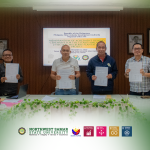
NOVEMBER 12, 2025 — Northwest Samar State University (NwSSU) and the Philippine Fiber Industry Development Authority (PhilFIDA) formalized a transformative partnership on Wednesday through the signing of a Memorandum of Agreement (MOA) at the NwSSU Board Room. The agreement marks the launch of a 2-hectare mulberry plantation project designed to strengthen the local silk industry and establish NwSSU as a hub for sustainable agricultural innovation. The signing ceremony was led by Dr. Benjamin L. Pecayo, University President, and Mr. Joseph S. Salas, PhilFIDA Regional Director for Region VIII. They were joined by key academic leaders including Dr. Riz Rupert L. Ortiz, Vice President for Research, Innovation, and Extension; Dr. Reynaldo R. Aquino, Campus Administrator of San Jorge Campus; Dr. Joseph Emil A. David, Director for Research and Development Services; and For. Eduardo G. Espejon, Director for Research and Extension at San Jorge Campus. At the heart of the initiative is the cultivation of mulberry leaves—an essential food source for silkworms—intended to revitalize silk production in the region. Yet the project’s impact extends beyond sericulture. Mulberry fruits, prized for their nutritional and medicinal properties, offer potential for diversified income streams and expanded research opportunities. Mr. Salas highlighted the plantation’s promise to unlock new avenues in medicine, agro-economics, and fiber research. The collaboration aligns with PhilFIDA’s mandate to advance the country’s fiber industry through education, innovation, and strategic partnerships. The MOA represents a significant stride in the region’s agricultural and academic landscape. By integrating PhilFIDA’s technical expertise with NwSSU’s research capabilities, the partnership seeks to foster sustainable development, empower local farmers, and position Samar as a leader in eco-friendly fiber production. Closing the ceremony, Dr. Pecayo expressed heartfelt gratitude to PhilFIDA, emphasizing the university’s commitment to the shared vision. The agreement signals a vibrant future—where government, academia, and agriculture converge to transform innovation into enduring progress.

NwSSU Food Tech Student Bags Awards in International Summer Course in Indonesia

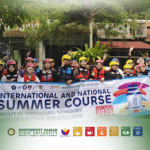
Northwest Samar State University (NwSSU) participated in the 2025 International and National Summer Course hosted by Universitas Brawijaya in Malang, Indonesia. Designed as a hybrid program combining online and onsite sessions, the course runs from June to August 2025, with the onsite sessions held from June 22 to 27. The program revolved around the theme “Innovative Agricultural Technologies for Future Food Security, Green Industry, and Environmental Sustainability,” delving into forward-looking frameworks and emerging technologies aimed at redefining sustainability within the agro-industrial landscape. Representing NwSSU was Jonathan M. Peru, a third-year Bachelor of Science in Food Technology student, accompanied by a BSFT faculty member – Ms. Maria Joana T. Nicolas. Their participation marked the implementation of the institutional collaboration between NwSSU and Universitas Brawijaya, reflecting a shared commitment to cross-border academic mobility and scholarly exchange. Mr. Peru made a remarkable impression during the summer course, hailed as the Champion for the Best International Group Presenter and earned the second place in the Artefact (Dance Competition). His commendable performance showcased not only individual aptitude but also the university’s growing imprint in international academic excellence. This engagement highlighted NwSSU’s commitment to global linkages and preparing students to be proactive contributors in solving global challenges, particularly in food security and environmental sustainability. By engaging in such initiatives, the university continues to build a strong presence in international academic communities.

Technopreneurs at the Helm: DICT Brings Startup Awareness Program to NwSSU

To cultivate a culture of innovation and prepare the next generation of technopreneurs, the Department of Information and Communications Technology (DICT) Region 8 conducted its Startup Awareness Program at Northwest Samar State University (NwSSU) on May 16, 2025, in partnership with the ICT Industry Development Bureau. Held at the NwSSU Business Development Center, the initiative gathered faculty mentors and students for an engaging session designed to introduce the fundamentals of startup development, inspire entrepreneurial thinking, and explore pathways for tech-based innovation The activity formed part of DICT Region VIII’s broader push to empower higher education institutions through startup education and support services. Through discussions and resource sharing, the program emphasized the importance of adaptive innovation in addressing real-world problems. The event aligns with NwSSU’s commitment to promoting entrepreneurship, research, and industry collaboration, contributing to the university’s vision of producing globally competitive and innovation-driven graduates.

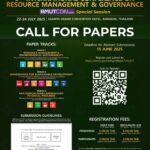
CALL FOR PAPERS!

Credits to NwSSU Research, Innovation and Extension Office Northwest Samar State University, together with Rajamangala University of Technology Phra Nakhon, will be hosting the 2nd International Conference on Resource Management and Governance (RMUTCON 2025 Special Session) on 22-24 July 2025 in Bangkok, Thailand. Do you want to present your paper? You may register and submit your Abstract through this form, or scan the QR code below, until 15 June 2025: https://forms.gle/HMKgm88a6A7nY3Z77(file name format: 2ICRMG-Last Name-First Name)

Prepare your research paper and your passport!

Credits to NwSSU Research, Innovation & Extention Office We are excited to announce that the 2nd International Conference on Resource Management & Governance, in collaboration with Rajamangala University of Technology’s RMUTCON2025, will be held on July 22-24, 2025, in Bangkok, Thailand. Would you like to present your paper at the conference? Like and follow now to stay updated. We will be posting the details soon.

Ensuring Excellence: NwSSU Conducts 9th Management Review Committee Meeting

Key officials of Northwest Samar State University (NwSSU), including deans and directors from various divisions, gathered on March 25, 2025, at the 2nd Floor of the Business Development Center (BDC) for the 9th Management Review Committee (MRC) Meeting. This meeting served as a crucial platform to evaluate the university’s Quality Management System (QMS), ensuring its alignment with institutional goals and adherence to quality standards. The meeting focused on multiple agenda which included assessing the university’s mandate and functions, reviewing the status of previous management reviews, and identifying changes in internal and external issues relevant to QMS. Discussions also tackled customer satisfaction and feedback from research, innovation, and public service activities from 2024 to the present, the conformity of processes, and the adequacy of resources. Officials analyzed the effectiveness of actions taken to address risks and opportunities, examined internal audit results from Cycle 2024, and discussed the performance of external providers. Opportunities for improvement were also explored, highlighting NwSSU’s continuous pursuit of institutional excellence. The gathering emphasized the importance of fostering a responsive, data-driven approach to achieving quality objectives and addressing non-conformities through proactive corrective actions. In addition, the university reaffirmed its commitment to improving operational processes and service delivery, ensuring that all actions align with its mission to provide high-quality education and public service. With the insights and evaluation drawn from the 9th Management Review Committee Meeting, NwSSU reinforces its commitment to delivering quality education, services, and administrative processes. This continuous commitment to quality assurance ensures that NwSSU remains adaptable, progressive, and aligned with its mission of fostering academic excellence and institutional innovation.