NwSSU Receives Higher Education Resource Partnership Award from DBM Region VIII

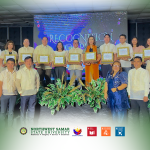
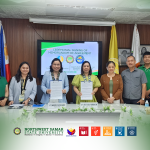
Palo, Leyte —Northwest Samar State University (NwSSU) was conferred the Higher Education Resource Partnership Award by the Department of Budget and Management (DBM) Regional Office No. VIII on September 17, 2026, at the Leyte Convention Complex, Brgy. Pawing, Palo, Leyte.   The recognition was given during Project BISIG (Bridging Institutions and Stakeholders for Inclusive Governance), a project under the Regional Open Government Program, held September 17–18, 2026 under the theme “Building Stronger Partnerships and Strengthening Citizen Participation for Inclusive Co-Creation and Sustained Collaboration on Public Financial Management.” The award cited NwSSU’s invaluable partnership in advancing accessible, responsive, and quality higher education through the effective and responsible management of public resources. Representing the university at the event were Atty. Lorelie Fabillar-Tangaran, University President; Dr. Jonah L. Salcedo, Head of Planning; and Mr. Clark Mujeres, Budget Officer, who accepted the award on behalf of the institution.   The certificate was signed by Imelda C. Laceras, CESO III, Director IV, and Wilford Will L. Wong, Undersecretary, of DBM Region VIII. The award underscores NwSSU’s continuing collaboration with government agencies in promoting transparency, citizen participation, and sound public financial management practices.

NwSSU Strengthens Regional Role in Futures Thinking and Strategic Foresight

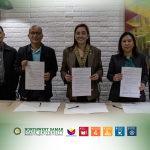
Northwest Samar State University (NwSSU) strengthened its role in advancing Futures Thinking and Strategic Foresight in Eastern Visayas following the signing of a Memorandum of Understanding (MOU) establishing a one-year preparatory partnership for the development of a regional futures and foresight framework. The MOU was signed on September 16 at the EVSU’s Graduate Programs Function Hall, bringing together NwSSU, Eastern Visayas State University (EVSU), the Department of Economy, Planning, and Development Regional Office VIII (DEPDev VIII), and the Department of Budget and Management Regional Office VIII (DBM VIII).   Representing NwSSU, University President Atty. Lorelie M. Fabillar-Tangaran signed the agreement alongside EVSU President Dr. Dennis C. De Paz, DEPDev VIII Regional Director Meylene C. Rosales, and DBM VIII Regional Director Imelda C. Laceras, represented by DBM VIII Budget and Management Specialist Carl Patrick H. Bernardo. The partnership establishes groundwork for coordination, capacity-building, and the proposed Eastern Visayas Futures and Foresight Framework (EVFFF). It is anchored on the Concept Paper, “The Paglusad, Pagsaka, and Pagsaad of Eastern Visayas: A Foresight-to-Policy Framework,” and responds to the policy directions under Republic Act No. 12145, or the Economy, Planning, and Development Act, as well as the Eastern Visayas Regional Development Plan 2023–2028 Midterm Update. For NwSSU, the partnership further advances the University’s institutional commitment to Futures Thinking and Strategic Foresight through its Center for Futures Thinking and Strategic Foresight (CFTSF). Leading the University’s foresight initiatives is Dr. Jonah L. Salcedo, Head of the Planning Office and Director of the Center for Futures Thinking and Strategic Foresight, who represented NwSSU’s institutional foresight work during the regional partnership. Through the CFTSF, NwSSU has been strengthening its capacity to apply Futures Thinking and Strategic Foresight to institutional planning, development, innovation, and decision-making. The University’s continuing efforts seek to cultivate an anticipatory approach to emerging challenges and opportunities and support more forward-looking strategies for institutional and regional development. The regional MOU provides NwSSU with an avenue to contribute its institutional experience in foresight while collaborating with academic institutions and government agencies in developing approaches that can support evidence-informed and future-oriented regional planning. The initiative brings together academic and government institutions in establishing groundwork for the proposed Eastern Visayas Futures and Foresight Framework, which aims to strengthen the integration of foresight approaches into regional development and policy processes. Also present during the signing were Dr. Jovito B. Madeja, Director of the EVSU Institutional Planning and Development Office; Jensen D. Rico, Supervising Economic Development Specialist of DEPDev VIII; and Emmanuel R. De Guia, Resident Futurist. The partnership reflects NwSSU’s continuing efforts to expand its role beyond traditional academic functions and contribute to strategic conversations on the future of Eastern Visayas. By strengthening Futures Thinking and Strategic Foresight, the University contributes to building institutional and regional capacities to anticipate change, examine alternative futures, and develop more responsive strategies for long-term development. Through the collaboration, NwSSU reaffirms its commitment to innovation, strategic planning, and partnerships that support sustainable and future-oriented development in Eastern Visayas.

More Than a Signature: NwSSU-CHR Partnership Set to Bring Human Rights Closer to Students, Families, and Barangay Oquendo

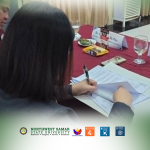
More Than a Signature For many students and residents, “human rights” can feel like a phrase reserved for textbooks and news headlines — important, but distant. That distance just got a little shorter. Northwest Samar State University (NwSSU) and the Commission on Human Rights (CHR) Region VIII formalized a renewed and strengthened partnership through a ceremonial Memorandum of Agreement (MOA) signing at the NwSSU President’s Board Room. Joining them was Barangay Oquendo, whose inclusion signals a shift from policy on paper to programs that reach real neighborhoods. Two agreements anchor this partnership, and together they point toward tangible, everyday benefits for the university community and the barangay it calls home. A Campus Where Rights Are Understood, Not Just Studied The first MOA establishes the Center for Human Rights Education (CHRE), a joint undertaking between NwSSU and CHR Region VIII. For students, this could mean human rights education woven more directly into campus life — through lectures, workshops, or activities that go beyond the classroom and help clarify what rights and responsibilities actually look like in practice. For faculty and staff, it opens the door to fresh resources and training that can enrich how human rights topics are taught and discussed across programs. The ambition behind the CHRE is straightforward but powerful: a campus culture where every member — student, teacher, or staff — has a clearer grasp of their own rights, and just as importantly, a stronger sense of responsibility to respect the rights of others. In a university setting, that kind of awareness often ripples outward, shaping how graduates carry themselves as professionals and citizens long after they leave NwSSU’s halls. Building Safer, More Responsive Communities The second MOA takes a more ground-level approach, focusing on capacity building for the response to Violence Against Women and their Children (VAWC), local policy development, crime prevention, and peace and order. This is where Barangay Oquendo’s role becomes especially meaningful. Local leaders and stakeholders stand to gain sharper skills and knowledge for handling VAWC cases, strengthening barangay-level policies, and supporting broader peace and order efforts. For a community, this translates into something very concrete: barangay officials and frontline workers who are better equipped to respond when someone needs help, and a local government more capable of preventing problems before they escalate. It also creates a natural bridge for NwSSU’s students and faculty — particularly those in social work, criminology, education, and related fields — to engage with real community issues, whether through extension programs, research, or future collaborative initiatives. Voices Behind the Partnership The signing ceremony brought together key figures from all three institutions: Atty. Marierose P. Alvero-Joaquin, OIC Regional Director of CHR Region VIII; Atty. Lorelie Fabillar-Tangaran, DM, University President of NwSSU; and Hon. Michael M. Loberiano, Barangay Chairperson of Oquendo, each of whom shared remarks underscoring the significance of the collaboration. Their presence at the same table reflects something the MOA itself cannot fully capture on paper — a shared understanding that human rights work is most effective when the academe, government agencies, and local communities move in step with one another. Turning Commitment Into Action An MOA signing is, in many ways, just the beginning. What follows next — the workshops, trainings, and outreach activities expected to emerge from the CHRE and the VAWC capacity-building initiative — will be where students, faculty, and Barangay Oquendo residents start to feel the partnership’s impact firsthand. For the NwSSU community, this collaboration represents an invitation: to learn more about their rights, to look out for one another, and to take an active part in shaping a safer, more rights-aware campus and barangay. As the partnership moves from agreement to action, the university looks forward to seeing how students, faculty, and community members alike will help bring this shared commitment to life.

NwSSU Gears Up Through Three-Day In-Service Training

Northwest Samar State University (NwSSU) brought its teaching and non-teaching staff together for a three-day In-Service Training from September 9 to 11, 2026, at Villa Cruz Resort, San Roque, Northern Samar. The training opened with a GCash orientation led by Mr. Amed Macabit, who introduced the platform’s features for faster, easier, safer, and cashless transactions for university services and personal errands. He shared that NwSSU is now one of the first State Universities and Colleges (SUCs) in Region 8, along with Eastern Visayas State University (EVSU), to partner with GCash, in line with the government’s vision to build a more digital Philippine nation under Executive Order 170. Mr. Macabit noted that the University’s own GCash QR code will be launched soon, enabling students to pay for services through GCash and supporting the disbursement of student subsidies, scholarship allowances, and personnel funds through an NwSSU institutional wallet with real-time reporting and monitoring. NwSSU constituents will also receive a free GCash card once launched. University President Atty. Lorelie Fabillar-Tangaran, DM, delivered a message and institutional updates centered on the “N” in the University’s ASCEND Framework — nurturing human resources. She emphasized the need to upskill in the age of AI to provide better, transformative, and globally competitive education, noting that competitiveness also means being relevant and responsive. She underscored that AI should be treated as a tool, not a replacement, calling for assessments and methods to be realigned to develop students’ critical thinking, alongside policies and guidelines that evolve with the times. She announced that the University’s new vision and mission statements will be launched soon, geared toward digital transformation — beginning with an assessment of processes that could be digitalized or automated, the establishment of a centralized digital platform, and updates to university manuals and the university code. She also called for stronger safety and security measures through preventive and proactive steps, guided by the ASCEND and ACHIEVE frameworks, and asked for the community’s support in performing their duties toward the University’s institutional targets. Dr. Teodoro A. Amatosa, Jr., Vice President for RIEEA, presented the Source-to-Sea Framework, anchored on NwSSU’s geographic and academic mandate along the ecological continuum of Samar, with focus areas in agriculture, forestry, natural resources, maritime affairs, fisheries, and advanced technologies. He identified gaps in infrastructure, leadership, and siloed academic operations, and outlined plans to streamline internal procurement systems, activate grant support and mentoring mechanisms, and create incentives for research productivity, envisioning NwSSU as a Research-Led University delivering on its mandate of Resilience, Integrity, Service, and Excellence. He also introduced the Triple Helix Ecosystem as the University’s guiding model for innovation and development programs, with NwSSU set to develop its own research and extension agenda harmonized with stakeholders and national R&D frameworks. Dr. Archie B. Lauderes, Director of Extension Services, discussed the DBM Joint Circular guidelines on faculty reclassification, common areas where faculty applications fall short, and ways to address them moving forward, alongside updated procedures under the revised Extension Manual. Mr. LJ A. Magnaye, Director of Research Services, guided participants on structuring research papers for publication, from establishing a clear research gap to presenting a solution, emphasizing clarity and simplicity over jargon. He also shared how AI tools can support research writing, literature review, and presentation, and walked participants through selecting appropriate journals based on scope, reach, indexing, metrics, article processing charges, peer review process, and turnaround and acceptance rates. He cautioned participants against predatory journals, citing red flags such as unusually rapid reviews or acceptance rates, hidden fees, fabricated editorial boards, and clone journals that falsely use the logos and names of legitimate organizations. Day 2 highlighted a keynote lecture on artificial intelligence in education, “From Prompt to Pedagogy: AI-Enabled Teaching, Learning & Assessment for the Future – Ready Educator,” delivered by resource speaker Dr. Las Johansen Caluza. The afternoon session covered key policy and compliance topics, including a talk on nihilistic violent extremism by PLtCol. Alden E. Dugan, the University’s gambling prohibition policy, an orientation on student off-campus requirements, and international travel guidelines, alongside updates on quality assurance and procurement processes for SUCs. The training concluded on September 11 with team building activities for the NwSSU teaching and non-teaching staff, capping a program designed to strengthen the knowledge, skills, and institutional alignment of the University’s workforce as NwSSU continues to advance its commitment to service, integrity, and excellence.     For more photos, view the full album here: https://drive.google.com/drive/folders/183EDbCmAGwXA4gNZ66bNb46kXNs2r9pt?usp=sharing

NWSSU Student Leaders, Advisers at Philippines I Transform! Leaders Convention 2026 in Baguio City

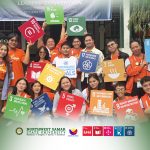
NwSSU Main Campus’ ISSC Officers and CSC Governors, together with 3 advisers, proudly joined the much-anticipated Philippines I Transform! Leaders Convention (PITLC) which gathered youth leaders from across the country in Baguio City, DepEd Teacher’s Camp this September 3-8, 2026. With the theme “COMBATING POVERTY, ACHIEVING PROSPERITY FOR ALL,” the convention focused on empowering leaders to advance the Sustainable Development Goals in their respective communities. The 13th PITLC welcomed participants from Sangguniang Kabataan, Local Youth Development Councils, Local Youth Development Offices, Higher Educational Institutions, and Community-Based Organizations. The NwSSU team was recognized with the MAGNUS AWARD for Biggest Delegation under the University Category, a testament to NWSSU’s strong commitment to youth leadership and service. Beyond the sessions and competitions, NWSSU delegates actively participated in different competitions, showcasing talent, teamwork, and the NWSSU spirit on a national stage. In line with this, two of the ISSC Leaders achieved recognitions in their different competitions: Alyzza Grace P. Errojo with her coach Ms. Jessabel C. Orongan – 3rd Place in Extemporaneous Speech Competition Amber Gebriel I. Nueva with her coach Ms. Jacquelyn V. Tapil – 3rd Place in Photo Advocacy Competition The experience reaffirmed the role of student leaders to lead with purpose, address poverty, and work toward prosperity for all.

Mapping the Future: Gov-CDR Workshop Strengthens Climate and Disaster Resilience for Samar's Grassroots Groups

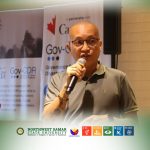
Community-based and women-led organizations from four Samar municipalities gathered at the NwSSU Hotel and Restaurant on September 1 and 2, 2026, for a workshop aimed at strengthening their capacity to respond to climate and disaster-related risks. The workshop, titled “Participatory Risk and Resource Mapping, Stakeholder Analysis and Capacity Assessment for Climate Disaster Resilience and Organizational Development.” brought together community-based organizations (CBOs) and women-led organizations (WLOs) to validate and deepen earlier profiling results, identify capacity development needs across the ecosystem’s local government units, and begin shaping a capacity building program suited to their context. The workshop unfolded in stages: participatory surfacing activities on Day 1, followed by consolidation and validation through key informant interviews on Day 2 morning, and concluding with the prioritization of training needs and the co-creation of a capacity building program on Day 2 afternoon. Ms. Gina Dean facilitated several of the workshop’s key sessions on Day 1. She led the discussion on understanding CDR and the salient points of Republic Act 10121, guided participants through participatory resource mapping and hazard identification, and co-facilitated the Social Network Analysis and Stakeholder Influence and interest sessions alongside with Mr. Ian Mark Nibalvos. By the end of the day, discussions were brought together in a synthesis session, consolidating the issues, capacities, gaps, and emerging training needs that surfaced throughout the day. The activity was conducted under the Governance for Climate and Disaster Resilience (Gov-CDE) Project, a six-year, a CAD-funded initiative running from 2024 to 2030 and implemented by Alinea International in partnership with the National Resilience Council and national government agencies to strengthen climate and disaster resilience across the Philippines. Samar Province is one of the project’s priority areas, implemented locally through Alinea Philippines. On the workshop’s second day, Dr. Teody Amatosa, NwSSU Vice President for Research, Innovation and Extension, welcomed the CBOs and WLOs of Gandara, Matuguinao, San Jorge, and Pagsanghan on behalf of NwSSU President Atty. Lorelie Fabillar-Tangaran, DM, together with the Gov-CDR team of Alinea Philippines. By opening its doors to the workshop, NwSSU lent its support to an effort that reaches beyond training; one that equips local organizations with the tools to face climate and disaster-related challenges on their own terms, long after the workshop tables are cleared.

Celebrating 126 Years of Public Service: NwSSU Joins the Philippine Civil Service Anniversary

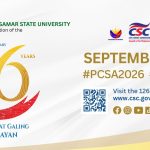
Northwest Samar State University joins the nation in celebrating the 126th Philippine Civil Service Anniversary this September 2026, with this year’s theme, “Bawat Kawani, Lingkod Bayani: Puso, Dangal, at Galing Para sa Bayan.” Led by the Civil Service Commission, the PCSA honors the enduring legacy of Filipino civil servants and their continued commitment to responsive, ethical, and excellence-driven public service. NwSSU extends its solidarity with public servants nationwide in upholding the values of service and integrity.   Visit the 126th PCSA microsite at www.csc.gov.ph/pcsa2026 or scan the QR code to learn more about the celebration and its lineup of activities. #PCSA2026 #PCSA126 #ASCENDNwSSU www.csc.gov.ph

3rd SUCs Executive Forum Commences at URS; Sets Path for Digital Transformation with Smart SUCs 2030 Framework

Leaders of State Universities and Colleges (SUCs) gathered at the University of Rizal System (URS) Morong Campus for the 3rd SUCs Executive Forum, which officially commenced on September 1, 2026, under the theme “Building Smart SUCs Through Collaborative Leadership, Digital Innovation, and Institutional Excellence.” Spearheaded by Commission on Higher Education (CHED) Commissioner Dr. Desiderio R. Apag III, the three-day forum runs until September 3, 2026, and aims to institutionalize modern frameworks and foster digital adaptation among among State Universities and Colleges (SUCs). The conference opened with a warm reception led by URS President Dr. Nancy T. Pascual, alongside kumustahay moments with other SUC leaders. Highlights of the opening sessions included the State of the Commissioner’s Address (SOCA), delivered by Commissioner Apag III, and the highly anticipated launch of the SMART SUCs 2030 Framework, which outlines a comprehensive digital ecosystem and development roadmaps for local public universities over the next decade. Key activities lined up for the executive forum include the OCDRA Election for Executive Officers, managed by PSAU President Dr. Anita G. David, and a dedicated “SMART SUCs Excellence Showcase” featuring institutional breakthroughs from Bukidnon State University, Davao Oriental State University, and the University of Antique. SUC leaders, including NwSSU President Atty. Lorelie Fabillar-Tangaran, DM, also joined the President’s Roundtable Discussion. NwSSU Vice President for Academic Affairs Dr. Romeo B. Santos, together with Mrs. Maria Lourdes Mae V. Billate, Ms. Jireh S. Fortaleza, Mr. Redem D. Tingzon, and Ms. Miel Rosse C. Solayao, participated in technical talks on the SMART University Ecosystem led by BEFIED GROUP Chief Executive Mr. Ryan Soh. The subsequent days of the forum will focus heavily on governance and compliance, covering technical workshops on board protocols, CHED-OIQAG universityhood status led by Dr. Lora L. Yusi, and Certificate of Program Compliance (COPC) guidelines under Dr. Jimmy G. Catanes. Technical staff will also run specialized presentation and workshop tracks covering crucial internal platforms, such as the Travel Authority System, E-Agenda, and the SUCs Profiling Integrated System, ensuring that operational and administrative efficiency scales uniformly across all participant institutions. The forum is scheduled to wrap up on September 3 following an open forum, a community exhibition networking night, and a general thanksgiving mass hosted by the University of Rizal System.

Opening Doors for Stakeholders: NwSSU – NAPOLCOM RO8 Partnership Paves the Way for New Opportunities

CALBAYOG CITY, SAMAR — This October 18, hundreds of applicants and police officers across Eastern Visayas will take the PNP Entrance Examination, PNP Promotional Examinations, and the Police Executive Service Eligibility–Written Examination (PESE-WE). For those taking the exams in Calbayog City, that journey will be made easier as Northwest Samar State University (NwSSU) opens its doors as an examination venue. The arrangement is made possible through a Memorandum of Agreement (MOA) between NwSSU and the National Police Commission Regional Office VIII (NAPOLCOM RO8), bringing together education and public service in a partnership that benefits not only the two institutions, but also the people they serve. Making the Journey Easier For examinees, one of the biggest benefits is simple: convenience. Applicants and police officers from Calbayog City and nearby communities can take their examinations closer to home. A more accessible testing venue means less travel time, lower transportation costs, and less stress—giving examinees more time and energy to focus on preparing for an important career milestone. A Stronger Partner for NAPOLCOM For NAPOLCOM RO8, having NwSSU as a partner provides a reliable and accessible venue for conducting examinations. Such partnership was forged during the ceremonial MOA signing on Augst 28 at the NwSSU’s President’s Boardroom which was executed by Atty.  Lorelie Facbillar-Tanagran, University President and Atty. Risty N. Sibay, NAPOLCOM 8 Regional Director.  With its classrooms and facilities, the university can help support a testing environment that is safe, orderly, and conducive to examinees. This partnership also strengthens NAPOLCOM’s connection with the academic community and creates an avenue for future collaboration.   Growing Through Service For NwSSU, the partnership is an opportunity to put its resources and academic environment in the service of the community. By hosting national examinations, the university strengthens its role as more than a place for learning. It becomes a space where people can take important steps toward their professional goals. The partnership also allows NwSSU to deepen its relationship with a government agency and gain greater exposure to the needs and realities of public service. These connections can open possibilities for future collaborative activities in education, training, research, community engagement, and other areas that can benefit students and the wider community.  In this way, the university’s involvement reflects its commitment to being an active partner in community and nation-building—using its facilities, people, and expertise to create opportunities for others.

NwSSU, DOJ-PPA Partner for Parolee Reintegration Program

CALBAYOG CITY, Samar — Northwest Samar State University (NwSSU) and the Department of Justice–Parole and Probation Administration (DOJ-PPA) Region VIII signed a Memorandum of Agreement on Thursday, August 13, 2026, to launch a reintegration program for parolees and probationers. The one-year initiative marks the second phase of a collaborative partnership designed to provide skills development, employment opportunities, and community support for rehabilitated individuals. NwSSU President Lorelie Fabillar-Tangaran and DOJ-PPA Region VIII Regional Director Ma. Beverly D. Ampo formalized the agreement. Under the said MOA, beneficiaries will undergo competency-based vocational training. Courses include food processing, agri-business, basic house wiring, and driving. The program also features certification opportunities, job search assistance, and direct linkages to local employers. NwSSU will provide project resources, including funding, manpower, training venues, and monthly learning sessions. The university has also committed on-campus space for hands-on work experience and entrepreneurial development. DOJ-PPA Region VIII will identify qualified clients, manage case supervision, and facilitate connections with families and partner organizations. The agency will handle all participant data in accordance with the Data Privacy Act of 2012. The initiative also includes individualized coaching, family reintegration sessions, mentoring, and community restorative service programs.