NwSSU ASBAO Finalizes Manual for Income-Generating Projects

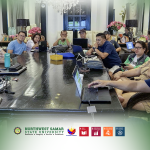
CALBAYOG CITY, Samar – Northwest Samar State University (NwSSU) has finalized a manual that sets the rules for its income-generating projects (IGPs). The Auxiliary Services and Business Affairs Office (ASBAO) led a four-day, closed-door write-shop from November 3 to 7, 2026 to validate the manual. ASBAO Director Rodolfo Corrales headed the effort in collaboration with the Project Development Office. Following the Higher Education Modernization Act (RA 8292) and the NwSSU Charter (RA 9719), the review and revision of the IGP manual aims for its immediate implementation to augment the university’s resources. Almost half of the income (40%) that will be generated from the IGPs will be used to support the university’s instruction, research, extension, and innovation activities, while around 30% is set to augment the university’s administrative operations.  The team reviewed whether a first-time proponent could follow the process from idea to approval, whether every peso could be traced from collection to deposit to distribution, and whether figures were consistent across chapters. Vague provisions were tightened, and conflicting chapters were reconciled. Under the manual, every Auxiliary Service and Special Project follows the same path: feasibility study, proposal, approval, then operation on a budget with collections deposited and reported. The manual also lets research, instruction and extension outputs become University-managed projects. These include products from faculty research, fee-based training and media services, and community-built products and services. Intellectual property is protected, and a feasibility check comes first. Projects involving indigenous communities or traditional knowledge require Free and Prior Informed Consent, and original beneficiaries must keep access to the service. The manual is aligned with the UN Sustainable Development Goals on decent work and economic growth (SDG 8), quality education (SDG 4), industry, innovation and infrastructure (SDG 9), and partnerships (SDG 17). The ASBAO’s vision, as stated in the manual, is “an entrepreneurial NwSSU community that grows productive ventures” from instruction, research, extension and production, sustaining the University and Samar communities “from source to sea.”

NwSSU, DHSUD Region VIII Establish Three-Year Partnership for Futures-Informed Land Use Planning

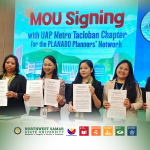
Northwest Samar State University (NwSSU) has formally joined the Department of Human Settlements and Urban Development (DHSUD) Region VIII Planner’s Network through a three-year partnership aimed at strengthening local land use planning and promoting sustainable, resilient, and futures-informed communities. The partnership was formalized through the signing of a Memorandum of Understanding (MOU) on October 29, 2026, during the 2026 Eastern Visayas Zoning Conference held in Palo, Leyte. Under the agreement, NwSSU will provide technical assistance to Local Government Units (LGUs) in the preparation of Comprehensive Land Use Plans (CLUPs) and Zoning Ordinances. The collaboration will also cover training and capacity-building initiatives, research development, policy dialogue, and the formulation of plans and projects that support sustainable community development. Through this partnership, NwSSU will contribute its academic expertise, research capabilities, and strategic foresight initiatives to help local governments strengthen their planning processes and transition from risk-informed to futures-informed land use planning. The collaboration highlights the University’s commitment to extending its knowledge and resources beyond the academe, supporting local institutions in anticipating future challenges and developing responsive, inclusive, and resilient communities. With this three-year partnership, NwSSU reinforces its role as an active partner in regional development, advancing forward-looking planning approaches that help shape a more sustainable future for communities across Eastern Visayas.

CHED Inspects, Tags Equipment Acquired Through NwSSU Laboratory Upgrades

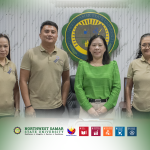
Officials of the Commission on Higher Education (CHED) inspected and tagged laboratory equipment of Northwest Samar State University (NwSSU) on November 10, 2026. The equipment was procured through the Higher Education Development Fund (HEDF). The activity, led by CHED’s Higher Education Development Fund Staff (HEDFS), began at the NwSSU President’s Board Room, where University President Atty. Lorelie Fabillar-Tangaran, DM, received the delegation. The HEDFS team consisted of Rosanna B. Garcia, Administrative Officer V; Catherine M. Malapo, Administrative Assistant III; and Patrick James M. Arao, Project Technical Staff I. The team then proceeded to the laboratories for the physical inspection. They were accompanied by Dr. Teodoro A. Amatosa, Jr., Vice President for Research, Innovation, Extension, and External Affairs (RIEEA), and Dr. Leo Jesus M. Lacaba, Vice President for Administration and Finance. The inspection covered two HEDF-funded projects: the upgrading of the University’s engineering laboratories and the upgrading of the Technology, Engineering, Tourism and Hospitality Management laboratories at the Main Campus. Each item was verified against the University’s inventory report, which CHED had requested NwSSU to prepare in advance. The inspection is mandated under Chapter 10, Section 17 of the Government Accounting Manual, which requires that property and equipment acquired through grants to higher education institutions be inspected, tagged, and documented. CHED’s itinerary also included a focus group discussion with University stakeholders, forming part of the Commission’s efforts to strengthen the monitoring and evaluation of HEDF-funded projects. This ensures that public funds invested in the University’s laboratories are accounted for and that the equipment is in use by engineering, technology, and hospitality management students who train on it daily.

NwSSU, PLGU-Samar Harmonize Agro-Industrial Initiatives for Samarnon Farmers

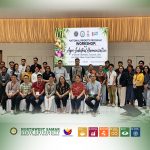
CATBALOGAN CITY, Samar — In a decisive move to revitalize the province’s agricultural landscape, the Northwest Samar State University (NwSSU) solidified its role as a key institutional partner of the Provincial Local Government Unit (PLGU) of Samar during the two-day Samar Agro-Industrial Harmonization Workshop, held from October 22 to 23, 2026, at the Samar Convention Center. Led by the Office of the Provincial Agriculturist and the Office of the Provincial Environment and Natural Resources Officer, the workshop brought together regional stakeholders, academic experts, and policymakers to streamline development efforts for Samar’s high-value agro-industries: coconut, bamboo, ube, and high-value crops (HVC) such as chili. Harmonizing a Shared Vision For years, the development of Samar’s primary agricultural commodities has occurred in silos, with agencies tackling problems independently. However, the workshop showed that the challenges facing Samar’s farmers are shared across commodities. Data consolidated during the sessions revealed six recurring gaps that hold back the provincial agro-industry. These are limited planting materials and seed stock, ranging from expensive bamboo material, scarce ube seedlings, and senile coconut trees to a lack of chili seed stock; limited farmer capacity and extension support; vulnerability to climate impacts, including typhoons, droughts, pests, and diseases; fragmented production and weak institutional coordination; a lack of shared processing, postharvest, and logistics facilities; and weak market linkages that leave farmers at the mercy of volatile trading prices. Rather than addressing these barriers commodity by commodity, the workshop successfully grouped these gaps into six strategic convergence initiatives. By anchoring interventions across specific segments of the value chains—such as clustering ube processing, upgrading chili facilities, and establishing robust marketing networks for coconut and bamboo—the PLGU and its partner agencies can now deploy targeted solutions that uplift multiple farming sectors simultaneously. NwSSU at the Helm of Facilitation and Expertise As an institution deeply committed to community transformation, NwSSU sent a powerhouse team of educators and researchers to orchestrate the event and contribute technical foresight. Mr. Redem D. Tingzon, Director of the NwSSU External Affairs Office, steered the strategic direction of the sessions as the Lead Workshop Facilitator, working hand-in-hand with Provincial Planning Officer Mr. Joel Mancol. Their collaborative moderation allowed diverse agency representatives to find common ground and synthesize complex farm-level data into actionable government policies. Lending academic and scientific weight to the workshop was Dr. Jessie Sabijon, Dean of the College of Agriculture & Forestry at the NwSSU San Jorge Campus. Serving as a Small Group Facilitator, Dr. Sabijon acted as the resident expert contributor for Ube Research & Development (R&D). His insights highlighted how academe-driven crop technology can directly mitigate the planting material scarcity that currently limits local ube growers. Assisting throughout the rigorous two-day convergence were personnel from the NwSSU Project Development Office, who served as official documenters, meticulously capturing the baseline findings that will shape Samar’s next comprehensive agro-industrial master plan. Empowering the Samarnon Farmer Samar’s smallholder farmers stand to benefit most from this partnership. By addressing systemic weaknesses like funding access and farm mechanization (gaps highlighted for bamboo, coconut, and ube), the convergence framework aims to move farmers toward more competitive agro-enterprise. When farmers are equipped with high-yield seed stocks, resilient farming practices, and shared processing facilities, their post-harvest losses drop, and their profit margins rise. Sustainable market linkages ensure that the sweat and labor poured into Samar’s soil translate into stable, premium household incomes. Shaping Samar’s Economic Future The collaboration between NwSSU and PLGU-Samar marks a shift in the province’s approach to agro-industry. By moving away from fragmented initiatives and embracing a synchronized value-chain approach, Samar positions itself as an emerging agro-industrial hub in the Eastern Visayas region. Through localized research, extension services, and policy facilitation, NwSSU continues to contribute to the province’s economic development. As this harmonized blueprint rolls out, the university and the provincial government stand united in building a resilient, food-secure, and economically vibrant Samar.

NwSSU Strengthens Research Integrity with PHREB-Led Ethics Training for Faculty

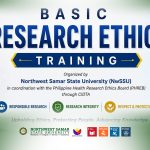
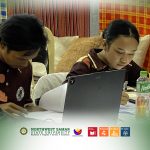
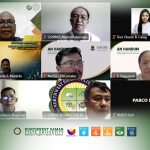
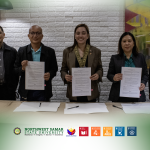
Faculty members from Northwest Samar State University (NwSSU) completed a two-day Basic Research Ethics Training on October 19-20, 2026, at the 3rd floor of the BDC Building, organized by the Research Integrity Office with the Philippine Health Research Ethics Board – Committee on Information Dissemination, Training, and Advocacy (PHREB – CIDTA) of the Philippine Council for Health Research and Development (PCHRD), under the Department of Science and Technology. Faculty members from the different colleges of the NwSSU Main Campus and the San Jorge Campus participated in the training which aimed to equip them  to apply research ethics principles, evaluate protocols, and navigate the national and institutional ethics process. PHREB’s Dr. Leslie Michelle M. Dalmacio and Prof. Maria Cecilia C.G. Conaco both served as resource speakers. The Day 1 lectures covered historical research abuses, protections for human participants, core ethics principles, informed consent, and justice. Through group work, participants applied these principles to cases and protocols, then reviewed a protocol, consent form, and relevant guidelines. On Day 2, the resource speakers discussed research ethics governance, the roles of institutional research ethics committees, types of ethics review, researcher responsibilities, and current issues such as “publish or perish” and artificial intelligence. Participants also had group discussions and shared their own experiences related to the topics covered. The training, spearheaded by Mr. Felix John Refamonte, Director of NwSSU’s Research Integrity Office, marks another step toward the full operationalization of the university’s Research Ethics Committee. A response to the need to uphold research integrity and scientific soundness in the work of both faculty and students.

Pixels with Purpose: NwSSU Students Shine in rSCENE 2026 Digital Poster Making

Northwest Samar State University (NwSSU) students Princess Paris G. Luciano and Raymond Jun B. Ortiz represented the University in the Digital Poster Making Competition at rSCENE 2026 in Catbalogan City, with Luciano placing first runner-up. Luciano is a second year Bachelor of Science in Entertainment and Multimedia Computing (BSEMC) student. The team was guided by coaches Ronald A. Amoguez and Dr. Rolly L. Ortiz. The Regional Smart Communities Exposition and Networking Engagement (rSCENE) 2026 was initiated by the City Government of Catbalogan in partnership with the Department of Science and Technology and ran from October 6 to 8. Held under the theme “The Living Tapestry: Weaving the Threads of Innovation and Heritage,” it brought together local officials, technology practitioners, educators, and other stakeholders to present innovations and explore technology-driven approaches to local governance and community development. Luciano competed on behalf of Calbayog City, which also placed second overall in the Smart LGU Overall Championship. The team’s performance puts NwSSU’s digital design talent on the regional stage and shows what student designers can contribute to the region’s smart community efforts.

NwSSU, Calbayog, and San Jorge Plan El Niño-La Niña Preparedness Workshops

Northwest Samar State University (NwSSU), Calbayog City, and San Jorge will hold tabletop and scenario workshops this October to prepare for the El Niño–La Niña phenomenon. DOST-PAGASA has warned that the ongoing El Niño is expected to intensify into a very strong event and persist through the first half of 2027. El Niño generally brings warmer temperatures and below-normal rainfall across much of the country, increasing the risk of dry spells and drought, although heavy rainfall and flooding may still occur during tropical cyclones and other rain-bearing weather systems. The agreement came out of an October 12, 2026, coordination meeting among NwSSU’s Center for Futures Thinking and Strategic Foresight (CFTSF), the University Disaster Risk Reduction and Management (DRRM) Council, and officials from both local government units. Representatives from the water, agriculture and fisheries, energy, and health sectors, along with barangay officials and University representatives, will take part in the tabletop exercises and scenario-planning workshops. The Philippine Atmospheric, Geophysical and Astronomical Services Administration (PAGASA) has placed Samar under drought since September and expects it to last through March 2027, while still anticipating three to five tropical cyclones. Calbayog has declared a state of calamity four times since 2022, all because of floods. Dr. Jonah L. Salcedo, CFTSF Director and Head of the Planning Office, said the LGUs hold the authority to declare a state of calamity, release quick response funds, and order evacuations, while NwSSU contributes data, research, and a neutral venue for planning. Resident Futurist Emmanuel R. de Guia said the greatest danger lies in the handover between drought and flood, when a city must shift from saving water to evacuating families. “Foresight is not predicting the storm. It is deciding, while it is quiet, who will do what when it comes,” he said. The workshops will use scenarios, early-warning signals, and a map of who may declare rationing, begin flood readiness, or release funds, guided by the ground rule “No owner, no commitment.” NwSSU will provide weather-station data, research, and facilitation, building on its 2023 and 2025 flood-risk agreements with Calbayog and extending them to drought and to San Jorge. Both LGUs also asked for scenario planning, community information materials, and GIS mapping and climate modeling. The schedule and venues will be announced soon. Assigning clear owners before the next weather shock will help Calbayog and San Jorge turn forecasts into timely decisions for their communities.

Charting Shared Futures: NwSSU, MarSU Explore New Frontiers for Institutional Collaboration

CALBAYOG CITY, Samar — Looking beyond institutional borders, Northwest Samar State University (NwSSU), Marinduque State University (MarSU) and the Senate Committee on SDGs, Innovation, and Futures Thinking explored shared pathways in research, innovation, extension, and futures thinking during a three-day exploratory and benchmarking visit on October 5–7, 2026. The visit brought together the higher education institutions to exchange practices and explore areas for institutional collaboration, particularly in research, innovation, extension, futures thinking, and strategic foresight. The engagement was also designed to provide opportunities for technical presentations, roundtable discussions, and benchmarking of institutional programs and initiatives. The three-day activity began with a courtesy visit to the Calbayog City Mayor on October 5. On the second day, the MarSU delegation, led by Ms. Lenie P. Zulueta, Executive Assistant III of MarSU, together with Mr. Emmanuel R. De Guia, Resident Futurist and representative of the Philippine Futures Thinking Society and Senator Pia S. Cayetano, proceeded to NwSSU for a courtesy visit with University President Atty. Lorelie Fabillar-Tangaran, DM, and key University officials. The program featured presentations on NwSSU’s research, innovation, and extension programs, as well as its planning, futures thinking, and strategic foresight initiatives. The latter was presented by Dr. Jonah L. Salcedo, Head of the Planning Office and Director for Futures Thinking and Strategic Foresight. Discussions then moved toward a roundtable on areas of mutual interest and collaboration, allowing the participating institutions to identify opportunities for joint initiatives and knowledge exchange. This was followed by the drafting of terms for the proposed Memorandum of Understanding (MOU) and its ceremonial signing, formalizing the institutions’ intent to pursue collaboration in identified areas. The second day also included a campus tour and site visits at the NwSSU Main Campus, giving the visiting delegation an opportunity to gain firsthand insights into the University’s facilities, programs, and institutional operations. On the final day, October 7, the delegation proceeded to the NwSSU San Jorge Campus for a site visit before concluding the activity with a send-off. The exploratory visit strengthens opportunities for inter-institutional exchange and sets the groundwork for future partnerships between NwSSU and MarSU in advancing research, innovation, extension, and futures-oriented institutional development.

Fueling Innovation: NwSSU-RIEEA Team Wins 3rd Place at Regional RDE Review

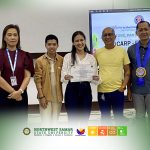
Northwest Samar State University’s Office of Research, Innovation, Extension, and External Affairs (RIEEA) secured 3rd Place in the Applied Research Category at the ViCARP Level 2, Cluster 2 Research, Development, and Extension (RDE) Review, held September 16–17, 2026, at the University of Eastern Philippines, Catarman, Northern Samar. The team, composed of Vice President for RIEEA Teodoro A. Amatosa, Jr., together with RIEEA research staff Apollo L. Frivaldo and Aliah Zimone S. Luistro, was recognized for their paper titled “Valorization of Lead- and Copper-Contaminated Giant Bamboo (Dendrocalamus asper) into Solid Fuel Briquettes: Structural and Thermal Performance.” The study explores turning bamboo contaminated with heavy metals like lead and copper into solid fuel briquettes, offering a potential approach to sustainable energy production while addressing environmental contamination. The RDE Review was conducted under the Visayas Consortium for Agriculture, Aquatic, and Natural Resources Program (ViCARP), the regional arm of the National Agriculture and Resources Research and Development Network under the Philippine Council for Agriculture, Aquatic, and Natural Resources Research and Development (PCAARRD), which evaluates research outputs from institutions across Eastern Visayas. As RIEEA continues to expand its research portfolio, this recognition adds another marker of the office’s role in advancing science-driven solutions to real-world environmental challenges in the region.

NwSSU Strengthens School Partnerships through Field Study Orientation, MOA Signing

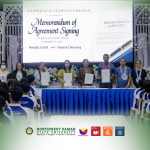
Northwest Samar State University (NwSSU), through the College of Education, held its School-Based Field Study Orientation and Memorandum of Agreement (MOA) Signing for School Year 2026–2027, bringing together university officials, representatives of the DepEd Schools Division of Calbayog City, school principals, faculty members, field study advisers, and student-teachers. The activity prepared student-teachers for their deployment to cooperating schools, where they will observe actual classes and learn directly from teachers, learners, and school communities. NwSSU President Atty. Lorelie Fabillar-Tangaran, DM urged the student-teachers to uphold professionalism and integrity, ensure safety and respect, and practice adaptability and empathy throughout their field study. Dr. Jun Nilo Dulfo, Assistant Schools Division Superintendent–OIC, delivered a message on behalf of Dr. Joel A. Zartiga, PhD, CESO VI, Assistant Schools Division Superintendent and Officer-in-Charge of the Office of the Schools Division Superintendent. Dr. Ma. Maria Lucil H. Dollado, Dean of the College of Education, welcomed the participants and underscored the importance of the field study experience. A highlight of the program was the MOA signing between NwSSU and its partner schools, formalizing their shared commitment to provide meaningful and guided school-based experiences for future teachers. Also taking part in the activity were Dr. Joy Saldaña, Education Program Supervisor for Science, representing Dr. Renato S. Cagomoc, CID Chief; Dr. Josephine L. Gallardo, Division Student Teaching Coordinator; and Atty. Ma. Cecil Candida Yabao-Rueda, University Legal Officer, who discussed the Safe Spaces Act. The student-teachers were formally endorsed to their cooperating schools and oriented on important policies, school concerns, and responsibilities they are expected to observe during their field study. Through the activity, NwSSU, the DepEd Schools Division of Calbayog City, and cooperating schools strengthened their partnership in preparing future teachers for the realities and responsibilities of the classroom.