


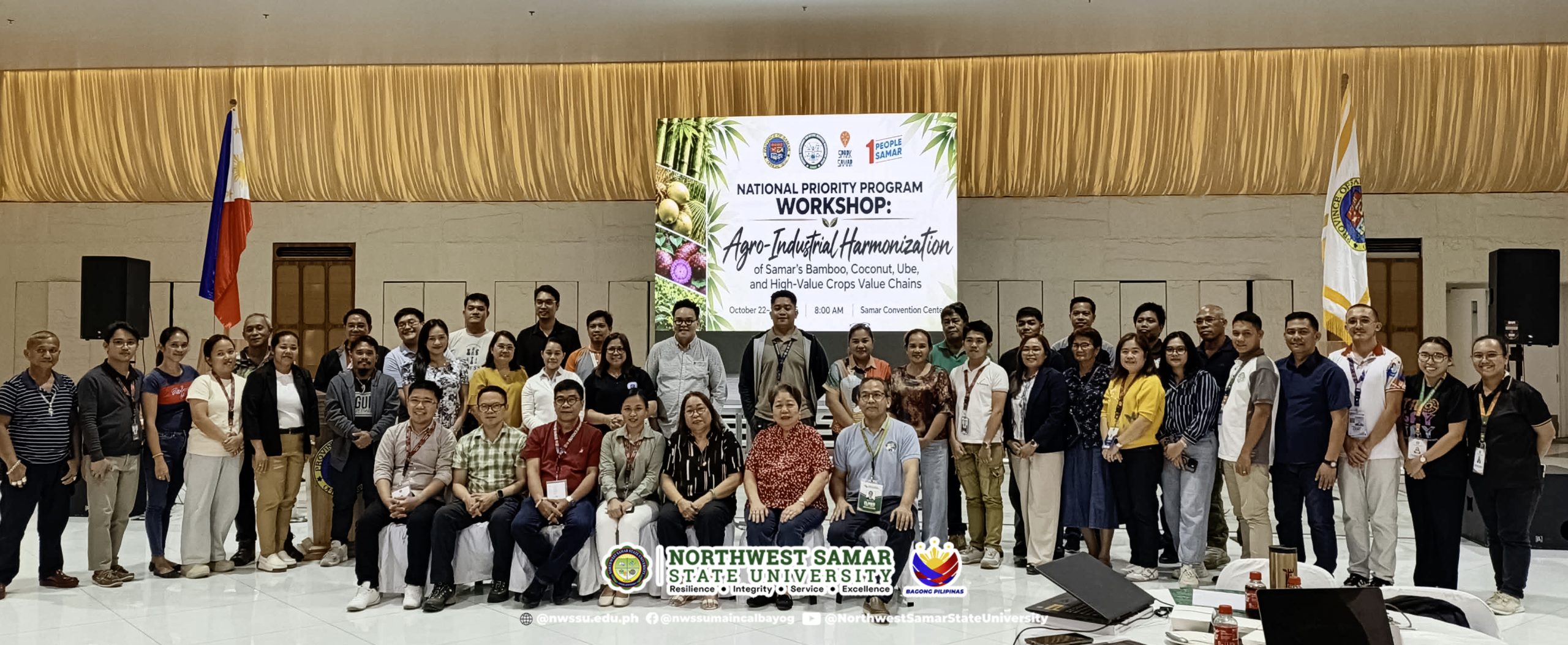
CATBALOGAN CITY, Samar — In a decisive move to revitalize the province’s agricultural landscape, the Northwest Samar State University (NwSSU) solidified its role as a key institutional partner of the Provincial Local Government Unit (PLGU) of Samar during the two-day Samar Agro-Industrial Harmonization Workshop, held from October 22 to 23, 2026, at the Samar Convention Center.
Led by the Office of the Provincial Agriculturist and the Office of the Provincial Environment and Natural Resources Officer, the workshop brought together regional stakeholders, academic experts, and policymakers to streamline development efforts for Samar’s high-value agro-industries: coconut, bamboo, ube, and high-value crops (HVC) such as chili.

Harmonizing a Shared Vision
For years, the development of Samar’s primary agricultural commodities has occurred in silos, with agencies tackling problems independently. However, the workshop showed that the challenges facing Samar’s farmers are shared across commodities.
Data consolidated during the sessions revealed six recurring gaps that hold back the provincial agro-industry. These are limited planting materials and seed stock, ranging from expensive bamboo material, scarce ube seedlings, and senile coconut trees to a lack of chili seed stock; limited farmer capacity and extension support; vulnerability to climate impacts, including typhoons, droughts, pests, and diseases; fragmented production and weak institutional coordination; a lack of shared processing, postharvest, and logistics facilities; and weak market linkages that leave farmers at the mercy of volatile trading prices.
Rather than addressing these barriers commodity by commodity, the workshop successfully grouped these gaps into six strategic convergence initiatives. By anchoring interventions across specific segments of the value chains—such as clustering ube processing, upgrading chili facilities, and establishing robust marketing networks for coconut and bamboo—the PLGU and its partner agencies can now deploy targeted solutions that uplift multiple farming sectors simultaneously.
NwSSU at the Helm of Facilitation and Expertise
As an institution deeply committed to community transformation, NwSSU sent a powerhouse team of educators and researchers to orchestrate the event and contribute technical foresight.
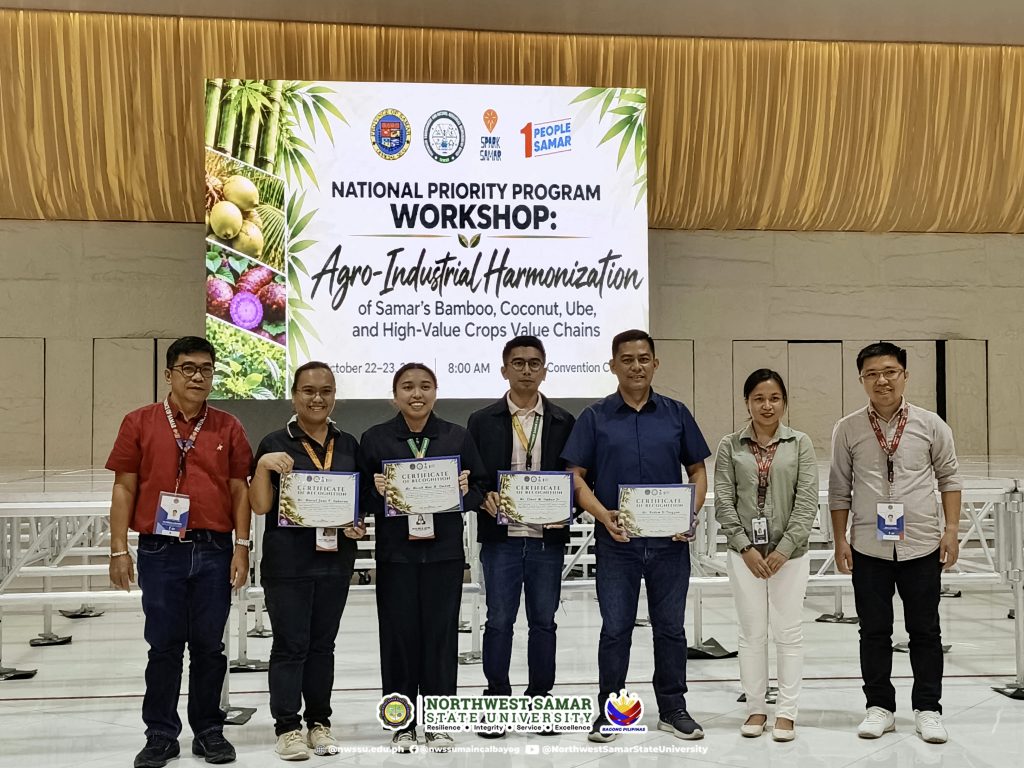
Mr. Redem D. Tingzon, Director of the NwSSU External Affairs Office, steered the strategic direction of the sessions as the Lead Workshop Facilitator, working hand-in-hand with Provincial Planning Officer Mr. Joel Mancol. Their collaborative moderation allowed diverse agency representatives to find common ground and synthesize complex farm-level data into actionable government policies.
Lending academic and scientific weight to the workshop was Dr. Jessie Sabijon, Dean of the College of Agriculture & Forestry at the NwSSU San Jorge Campus. Serving as a Small Group Facilitator, Dr. Sabijon acted as the resident expert contributor for Ube Research & Development (R&D). His insights highlighted how academe-driven crop technology can directly mitigate the planting material scarcity that currently limits local ube growers.
Assisting throughout the rigorous two-day convergence were personnel from the NwSSU Project Development Office, who served as official documenters, meticulously capturing the baseline findings that will shape Samar’s next comprehensive agro-industrial master plan.

Empowering the Samarnon Farmer
Samar’s smallholder farmers stand to benefit most from this partnership. By addressing systemic weaknesses like funding access and farm mechanization (gaps highlighted for bamboo, coconut, and ube), the convergence framework aims to move farmers toward more competitive agro-enterprise.
When farmers are equipped with high-yield seed stocks, resilient farming practices, and shared processing facilities, their post-harvest losses drop, and their profit margins rise. Sustainable market linkages ensure that the sweat and labor poured into Samar’s soil translate into stable, premium household incomes.
Shaping Samar’s Economic Future
The collaboration between NwSSU and PLGU-Samar marks a shift in the province’s approach to agro-industry. By moving away from fragmented initiatives and embracing a synchronized value-chain approach, Samar positions itself as an emerging agro-industrial hub in the Eastern Visayas region.
Through localized research, extension services, and policy facilitation, NwSSU continues to contribute to the province’s economic development. As this harmonized blueprint rolls out, the university and the provincial government stand united in building a resilient, food-secure, and economically vibrant Samar.