NwSSU Joins UNESCO World Heritage Nomination and Climate Conference for SINP

April 28, 2025 – Representatives from Northwest Samar State University (NwSSU) attended the UNESCO World Heritage Nomination and Climate Change Mitigation Conference for Community Leaders of Samar Island Natural Park (SINP) held at the Samar Convention Center. The event, organized by the Provincial Government of Samar in partnership with the University of Santo Tomas Graduate Studies – Center for Conservation of Cultural Property and Environment in the Tropics, brought together community leaders, environmental agencies, academic institutions, and government representatives to discuss the ongoing efforts to nominate SINP as a UNESCO World Heritage Site. As an academic partner of UST-CCCPET, NwSSU was among the participating institutions supporting the initiative. The university was represented by Vice President for Research, Innovation, and Extension Dr. Riz Rupert Ortiz, with Mr. Joshua Rosillon, and Mr. Novlloyd Celeste, head of the Innovation Technology and Support Office, who attended the program and engaged in discussions on conservation, climate change mitigation, and community participation in heritage protection. Building on a week of focused environmental initiatives, the April 28 conference served as the culmination of a series of preparatory activities aimed at advancing the SINP Climate Change Action Plan. These included a Research Training session on April 23 and Data Gathering Sessions held from April 24 to 25. The conference highlighted the critical role of the Samar Island Natural Park (SINP) in climate regulation, biodiversity conservation, and sustainable development. With its dense forests, unique flora and fauna, and cultural significance, SINP is recognized as a vital natural resource that warrants global recognition and protection. Among the highlights of the event were presentations from key agencies such as the Department of Environment and Natural Resources (DENR), Department of Tourism (DOT), and the National Commission for Culture and the Arts (NCCA), along with discussions on the ecological value of SINP, climate change challenges, and the responsibilities of barangays in environmental protection. With the continued support of institutions like NwSSU, the vision of elevating SINP to global recognition as a UNESCO World Heritage Site moves closer to reality, promising a more sustainable and resilient future for the people of Samar.
Innovation in Action: NwSSU’s SIPAG Project Approved by NEDA for 2024 Innovation Grant

Northwest Samar State University (NWSSU) has secured a significant milestone after its project, “SIPAG of Vegetable Farms: Solar-Powered Irrigation and BioPesticide Application Grid with Mobile Control,” was selected as one of the 13 recipients of the 2024 Innovation Grants from the National Economic and Development Authority (NEDA). This groundbreaking project was conceptualized and proposed by Mr. Felix John M. Refamonte, a faculty member of the College of Agriculture and Technology, who spearheaded the development of the SIPAG initiative.  SIPAG, which stands for Solar-Powered Irrigation and BioPesticide Application Grid, revolutionizes agricultural practices by integrating renewable energy and modern technology. The project focuses on utilizing solar-powered irrigation systems to provide a continuous and cost-effective water supply for vegetable farms. By harnessing solar energy, farmers can reduce their reliance on traditional fuel-powered machinery, decreasing operational costs and promoting environmental sustainability.  The initiative also emphasizes the application of biopesticides, offering an eco-friendly alternative to chemical pesticides. This approach enhances crop protection and production while maintaining soil health and biodiversity. Furthermore, the integration of mobile control systems enables farmers to monitor and manage irrigation and pest control processes remotely, increasing efficiency and productivity.  The approval of SIPAG aligns with the goals outlined in the National Innovation Agenda and Strategy Document 2023-2032, showcasing Filipino ingenuity in addressing local agricultural challenges. By adopting innovative solutions, NWSSU aims to enhance food security, improve farmers’ livelihoods, and promote sustainable agricultural practices nationwide.  The SIPAG initiative represents a significant step towards modernizing Philippine agriculture by integrating renewable energy and smart technologies. NWSSU’s SIPAG project is expected to serve as a model for sustainable agriculture, demonstrating how technology-driven solutions can transform traditional farming practices for a greener and more efficient future.

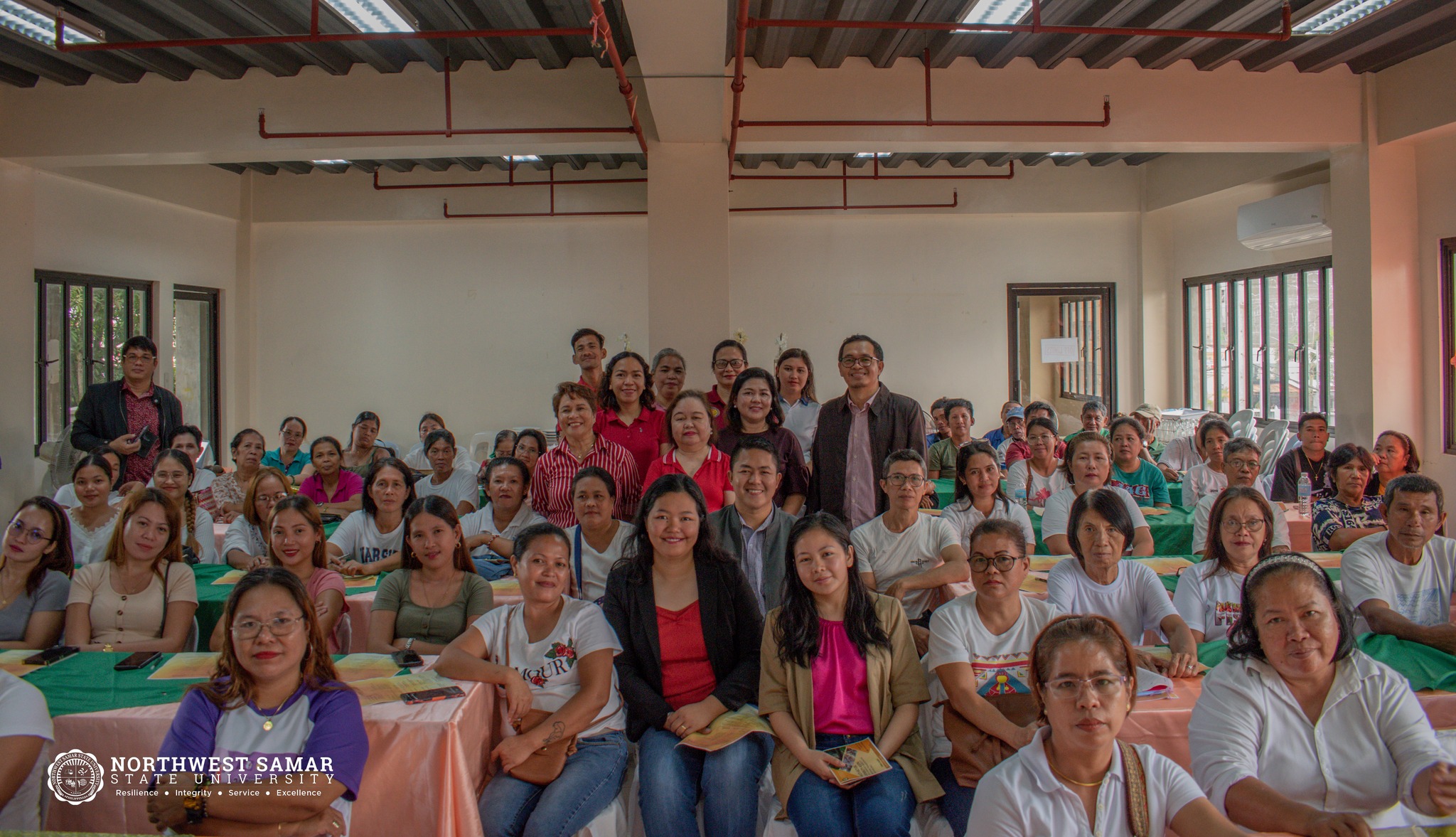
First Day of Multi-Sectoral Capability Building for Community Members of Brgy. Tinambacan, Malajog, and Malopalo

The initial session deals with plenary talks about Community-Based Tourism, Best Practices on CBET and Eco-Tourism, Product Features and Value, and Empathy Mapping at NwSSU Smart Room, CCIS Building, November 24. It was followed by parallel sessions to which the participants were grouped according to four topics: Lecture Demo on Cutlery and Burloloy Making for Women Sector, Crafting Policies and Resolutions for Brgy. Officials and Other Leaders, Seminar on Basic Life Support, Seminar on Solid Waste Management for Farmers, Fisherfolks, and Transport Group. The capability building covers until tomorrow, November 25.