


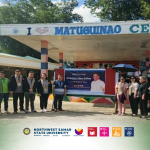
Tangaran, Iglesias Lead Project SAMAR Site Inspections
Your browser does not support PDFs. Click here to download the PDF.
NwSSU deepens strategic foresight through Day 2 of AN HANDUM
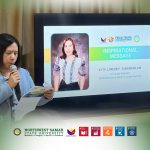
Northwest Samar State University (NwSSU) successfully concluded the second day of AN HANDUM: Paglusad ngan Pagsaka para sa NwSSU, para sa Samar – A Strategic Foresight and Development Planning Series on July 22, 2026, through an online platform, further advancing preparations for the formulation of the NwSSU Strategic Development Plan (SDP) 2027–2036. Focusing on practical strategic foresight tools, the second day equipped participants with methodologies for environmental scanning, horizon scanning, and strategic mapping in preparation for the University’s onsite planning workshops. The program opened with a Message of Support from University President Atty. Lorelie M. Fabillar-Tangaran, who underscored the importance of the HANDUM Strategic Development Planning Series in shaping NwSSU’s future. She emphasized that the Strategic Development Plan should serve not only as a planning document but as a shared roadmap that reflects the aspirations of the University community, responds to emerging challenges, and advances NwSSU’s commitment to transformative education, research, innovation, extension, and public service. She also encouraged participants to actively contribute, recognizing that every insight will help define the University’s direction over the next decade. The first technical session, “Environmental Scanning: Register HABI – Reading the Landscape,” was facilitated by Ms. Jalaine Joyce V. Malabanan, Fellow of the Philippine Futures Thinking Society (PhilFutures). Participants examined internal and external drivers influencing higher education and regional development, including social, technological, economic, environmental, and political trends. Ms. Malabanan also facilitated the LLLL Circle: Foresight Orientation – Register HANDUM: Scanning the Horizon, introducing participants to horizon scanning and futures thinking as essential tools for anticipating emerging issues, recognizing weak signals, and preparing for alternative futures. This was followed by the ASCEND Agenda Mapping Unit – Register HABI: Thread Assignment, facilitated by Mr. Ramces M. Dili, Fellow of PhilFutures, who guided participants in aligning their offices and units with the University’s strategic priorities and institutional transformation agenda. In the afternoon, participants took part in the Horizon Scanning Breakout, facilitated by Dr. Michville A. Rivera, Secretary General of PhilFutures, together with Mr. Ramces M. Dili and Ms. Jalaine Joyce V. Malabanan. Through collaborative discussions, participants identified emerging trends, disruptive forces, opportunities, and risks that may shape the future of Northwest Samar State University. The breakout outputs were consolidated during the workshop sessions, where participants synthesized their analyses into initial strategic insights. Facilitators provided guidance to ensure that the outputs remained evidence-based, context-driven, and aligned with the University’s long-term aspirations. To conclude the day’s activities, Dr. Jonah L. Salcedo, Head of the Planning Office and Director of the Center for Futures Thinking and Strategic Foresight, conducted the Pre-Onsite Briefing and Logistics, orienting participants on the objectives, expected outputs, workshop mechanics, and logistical arrangements for the face-to-face planning sessions. The second day reinforced NwSSU’s commitment to participatory, evidence-informed, and futures-oriented planning. The AN HANDUM Strategic Development Planning Series now transitions to the onsite workshops, where participants will translate these insights into strategic priorities, programs, and transformative initiatives that will shape the University’s development through 2036 and strengthen its contribution to the sustainable development of Samar.
NwSSU New Leadership Forges Ahead: Strengthening Ties with Mapua, TUP, and PUP
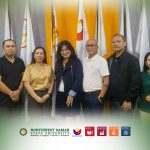
In a series of high-level engagements held on July 16, 2026, the new leadership of Northwestern Samar State University (NwSSU) took its first major steps toward reinforcing strategic partnerships with three of the country’s leading higher education institutions — Mapua University, Technological University of the Philippines (TUP), and Polytechnic University of the Philippines (PUP). University President Atty. Lorelie Fabillar-Tangaran and Vice President for Research, Innovation, Extension, and External Affairs (RIEEA) Dr. Teody Amatosa led the exploratory discussions, which were arranged by Mr. Tingzon as part of the Project and Development Office’s (PDO) continuing efforts to sustain and deepen NwSSU’s ties with fellow State Universities and Colleges (SUCs). The engagement with Mapua University served as a formal introduction of NwSSU’s new leadership to the Mapua team, opening the floor for a recalibration of existing collaborative ties. Central to the discussion was the review and strengthening of Project HARIGI, a co-creation initiative between NwSSU and Mapua, with both parties working toward its approval and eventual implementation. Beyond HARIGI, the two institutions explored possibilities for further co-creation, including micro-credentialing programs and transnational exchange initiatives — signaling a broader ambition to diversify the scope of their partnership. At the meeting with TUP, discussions centered on strengthening the long-standing relationship between the two universities, beginning with introductions of NwSSU’s new leadership to the TUP team. A key agenda item was the involvement of TUP’s Expanded Tertiary Education Equivalency and Accreditation Program (ETEEAP) in the certification process for NwSSU’s own ETEEAP assessors — a move expected to enhance the quality and credibility of NwSSU’s equivalency assessment mechanisms. The two institutions also opened talks on potential joint research initiatives, laying the groundwork for future academic collaboration. The engagement with PUP likewise began with an introduction of NwSSU’s new leadership, followed by discussions on recalibrating and strengthening the partnership between the two institutions. Echoing the conversation held with TUP, NwSSU and PUP explored the co-creation and co-implementation of a certification process for NwSSU-ETEEAP assessors. The discussion further extended to collaborative opportunities in establishing NwSSU’s Open and Distance eLearning (ODeL) program, Technology Business Incubator (TBI), and other emerging initiatives. Across all three engagements, a common thread emerged: the University’s commitment to sustaining and expanding meaningful collaborations that support its academic, research, and innovation agenda. With President Fabillar-Tangaran and VP Amatosa at the helm of these discussions, NwSSU signaled a clear intent to build on existing foundations while charting new areas of cooperation with its partner institutions. The engagements mark an early but significant milestone for the university’s new leadership, reflecting a proactive approach to institutional partnership-building.
NwSSU Delegates Join Day 1 of 2026 PASUC Annual Convention and General Assembly
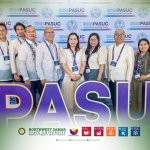
PASAY CITY — Delegates from Northwest Samar State University (NWSSU), led by University President Atty. Lorelie Fabillar – Tangaran alongside key university officials, attended the opening day of the 2026 Philippine Association of State Universities and Colleges (PASUC) Annual Convention and General Assembly. The three-day event kicked off today, July 13, 2026, at the SMX Convention Center Manila. Anchored on the theme, “Transformative Leadership and Strategic Governance: Empowering SUCs for Sustainable and Inclusive Futures,” this year’s convention coincides with PASUC’s 59th Founding Anniversary. The gathering brings together higher education leaders, policymakers, and industry partners to address systemic shifts and chart strategic directions for State Universities and Colleges (SUCs) across the country. Adhering to the prescribed cultural attire, the NWSSU delegation joined fellow academic executives from across the archipelago in wearing traditional Filipiniana and Barong Tagalog. Registration officially commenced, paving the way for a jam-packed Day 1 roster focused on setting the strategic direction for public higher education. The Opening Ceremonies formally began with a grand processional of PASUC regional chairs, national officers, and distinguished guests. Dr. Diosdado P. Zulueta, PASUC Auditor, introduced the delegates, followed by a formal welcome and opening declaration from PASUC President Dr. Tirso A. Ronquillo. Hon. Michelle A. Ong, Commissioner of the Commission on Higher Education (CHED), delivered an inspirational message, emphasizing collaborative governance and institutional excellence. The morning session reached its peak with an opening keynote address from Senate President Sherwin “Win” T. Gatchalian of the 20th Congress, who spoke comprehensively on how transformative leadership can empower SUCs to achieve sustainable and inclusive growth. Following a welcome luncheon, the afternoon transition shifted from ceremonial to rigorous policy dialogue. The NWSSU officials participated in a High-Level Dialogue featuring key national education agency heads, including Department of Education (DepEd) Secretary Juan Edgardo “Sonny” M. Angara and Technical Education and Skills Development Authority (TESDA) Director-General Jose Francisco “Kiko” B. Benitez. Moderated by Dr. Karol Mark R. Yee, Executive Director of the Second Congressional Commission on Education (EDCOM II), and council member Hon. Ma. Cynthia Rose B. Bautista, the dialogue zeroed in on “Navigating the Role of SUCs: Translating National Education Reforms into Institutional Transformation”. The discussion provided NWSSU and other member institutions with critical policy updates and structural frameworks aimed at aligning campus governance with the country’s long-term workforce and development goals.
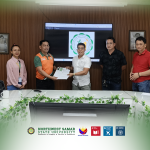
Building on Progress: ETTEAP Leadership Transition Marks New Chapter for NwSSU
The outgoing ETEEAP Director formally turned over the leadership of the Center to the incoming designated ETEEAP Director. The turnover highlighted a seamless transition of responsibilities through a comprehensive briefing on the Center’s current operations, the progress of its deputization, the documentary requirements for submission to CHED, and the official handover of relevant records and documents. This orderly transition reflects the University’s commitment to continuity, accountability, and excellence in delivering quality ETEEAP services. Present during the turnover ceremony were Mr. Redem D. Tingzon, PDO Head and outgoing NwSSU-ETEEAP Director; Dr. Rey James B. Roxas, Dean of the College of Management; Dr. Romeo B. Santos, Vice President for Academic Affairs; and Dr. Francis B. Toleza, incoming NwSSU-ETEEAP Director. Congratulations to the new leadership, and sincere appreciation to the outgoing Director for his dedicated service and commitment to advancing lifelong learning at NwSSU.
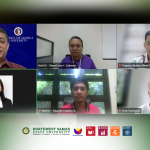
Laying the Groundwork for Innovation: NwSSU, AdMU Hold Strategic Exploratory Meeting
Northwest Samar State University (NwSSU) strengthened its collaboration with Ateneo de Manila University (AdMU) through a strategic exploratory meeting focused on advancing joint research and innovation initiatives. University President Atty. Lorelie M. Fabillar-Tangaran led the meeting with representatives from the Ateneo de Manila University Intellectual Property Office (AdMU-IPO) to discuss opportunities for the co-development of research projects and initiatives that may be supported through grants and other funding opportunities from credible funding agencies. The discussion builds on the partnership established between the two institutions in 2025 and reflects their shared commitment to expanding collaborative efforts in research, innovation, and intellectual property development. Present during the meeting were Dr. Proceso “Jon” Fernandez Jr., Director of the AdMU Intellectual Property Office; Dr. Teodoro A. Amatosa Jr., Vice President for Research, Innovation, and Extension; Mr. Luisito A. Magnaye Jr., Director of the Research and Development Services Office; Dr. Ervin L. Rodriguez, Director of the Innovation Office; Mr. Eduard G. Espejon, Research, Innovation, and Extension Director of the San Jorge Campus; and Mr. Redem D. Tingzon, Head of the Project Development Office. The initiative reinforces NwSSU’s continuing efforts to establish strategic partnerships that enhance research capability, foster innovation, and create opportunities for institutional growth.
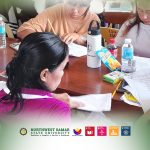
Empowering the Grassroots: NwSSU Conducts Competency-Based Training for Silvino Lubos Childcare Sector
Northwest Samar State University (NwSSU) co-facilitated a two-day Training of Trainers (TOT) for Silvino Lubos Child Development Workers (CDWs) and Teachers (CDTs) on June 11–12, 2026. The capacity-building initiative introduced the “Being the Best CDW I Can Be” toolkit and a system for competency-based professional development. It targeted frontline early childhood educators and municipal welfare personnel to improve local childcare delivery. The engagement served local daycare workers, childcare practitioners, and key leaders, including MSWDO Agner S. Sagonoy and Vice Mayor Melvin A. Jarito, to align municipal operations with provincial mandates. University resource persons led technical modules on Republic Act 12199, foundational competency standards, and Developmentally Appropriate Practice (DAP). Participants also completed training on disaster risk response, sanitary health protocols, and integrating creative activities using localized instructional materials. By extending technical expertise, this extension program addresses the distinct professional development needs of upland childcare providers. This localized implementation ensures that early childhood educators in Silvino Lubos possess standardized instructional competencies. The initiative reinforces the university’s role in supporting grassroots governance and securing educational equity for remote communities.
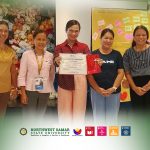
Foundations of Service: NwSSU Equips Catarman Daycare Sectors Through Competency Training
Northwest Samar State University (NwSSU) facilitated a five-day training on competency-based professional development for Child Development Workers (CDWs), teachers (CDTs), and social welfare personnel (MSWDO) from May 18 to 22, 2026, at the Diamond Hotel in Catarman, Northern Samar. The institutional extension project aimed to standardize public childcare operations and establish a benchmark for regional early childhood care. The sessions upgraded instructional and administrative skills through structured technical workshops. Frontline workers participated in hands-on training for designing creative learning experiences, practicing early literacy storytelling, and constructing teacher-made instructional materials. The curriculum also included practical exercises on child portfolio management, work sampling, anecdotal recording, and the formulation of localized daycare disaster risk and response plans. As the capital town and a major economic hub, Catarman serves as a model for educational standards in Northern Samar. Elevating the competencies of childcare providers in this central locality sets a higher standard that directly influences instructional practices in neighboring towns. The initiative reinforces the university’s commitment to community-driven development, ensuring that advancements made in the capital town help improve early childhood milestones throughout the wider region. #ASCENDNwSSU
NwSSU Achieves Global Recognition in Times Higher Education (THE) Sustainability Impact Ratings 2026
Northwest Samar State University (NWSSU) marks another milestone as it officially secures a spot in the prestigious 2026 Times Higher Education (THE) Sustainability Impact Ratings. This global ranking evaluates higher education institutions based on their commitment and contributions to the United Nations’ Sustainable Development Goals (SDGs). According to the performance metrics, NWSSU actively participated in 16 out of the 17 Sustainable Development Goals (SDGs), earning an overall score of 46.8 out of 100. This robust engagement has placed the institution in the 1501+ rank band globally out of 2,318 participating universities. Congratulations, NWSSU! #TogetherWeAscend