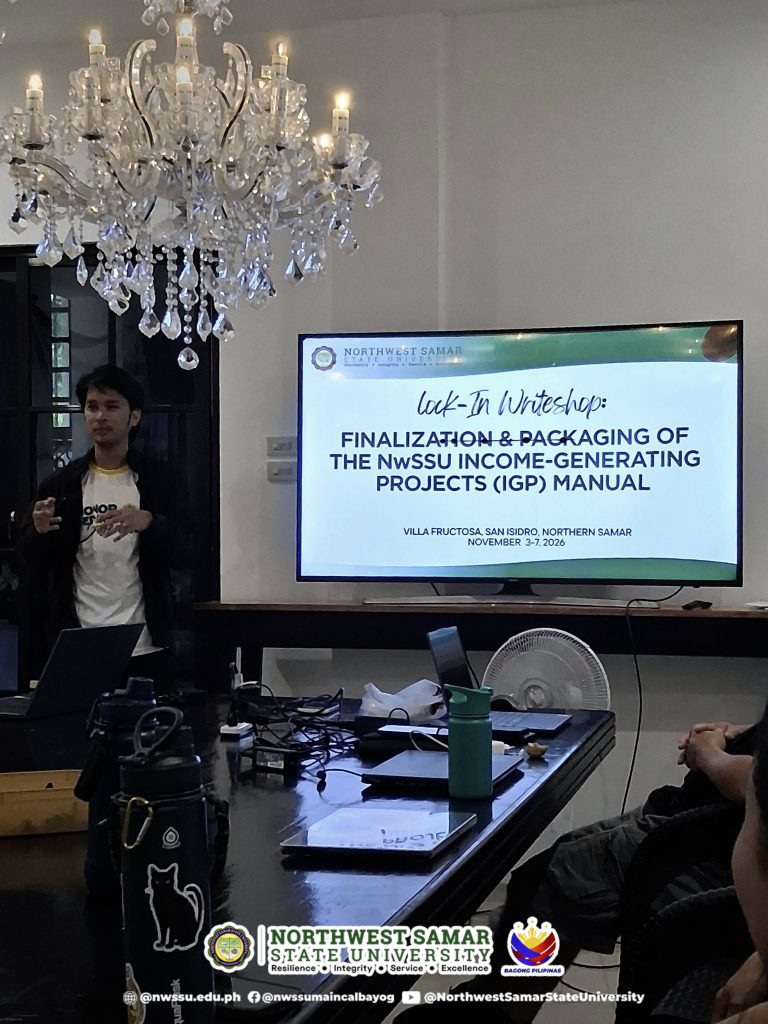
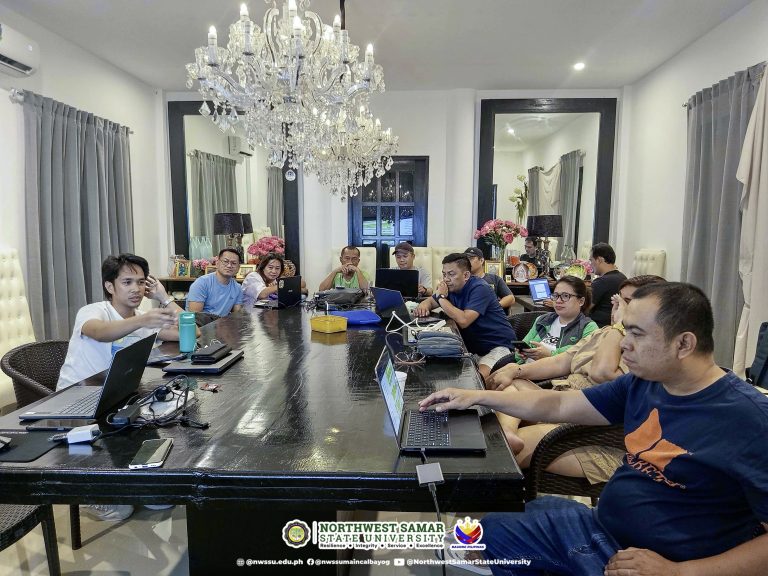
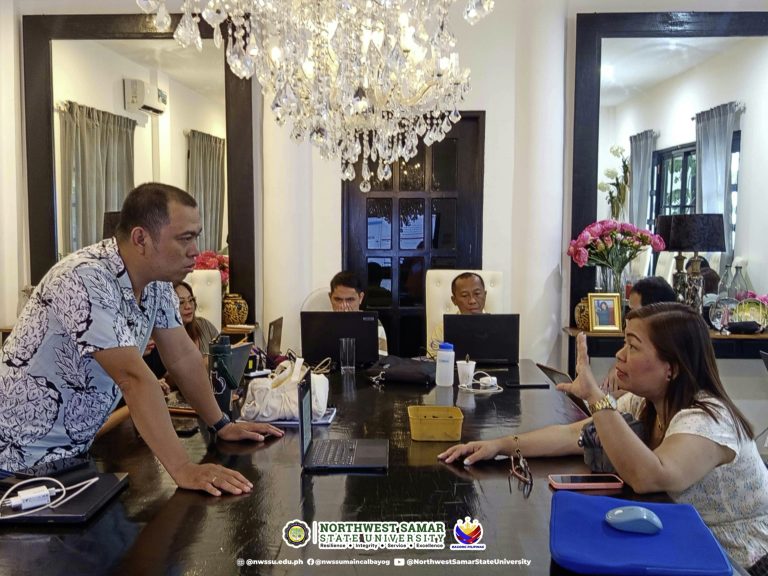
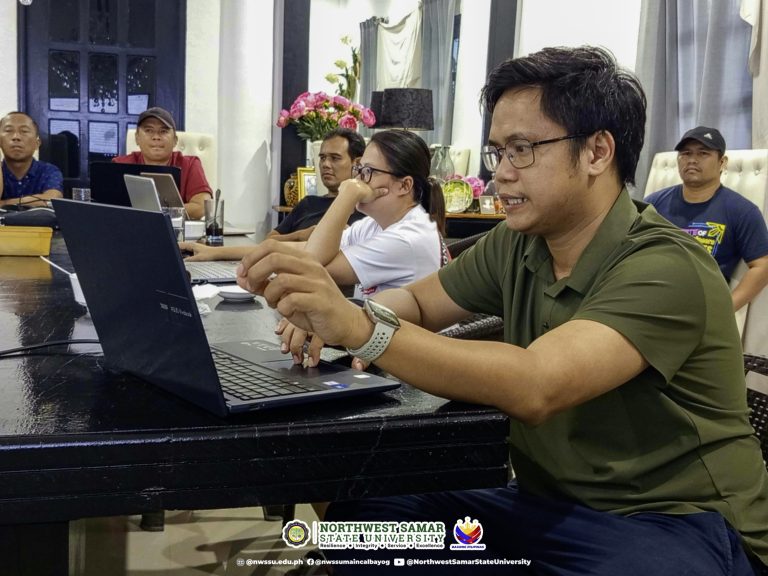
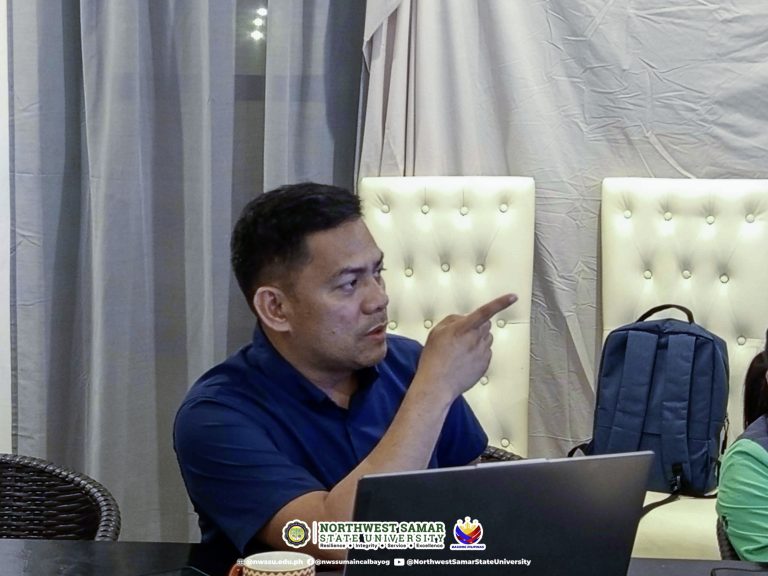
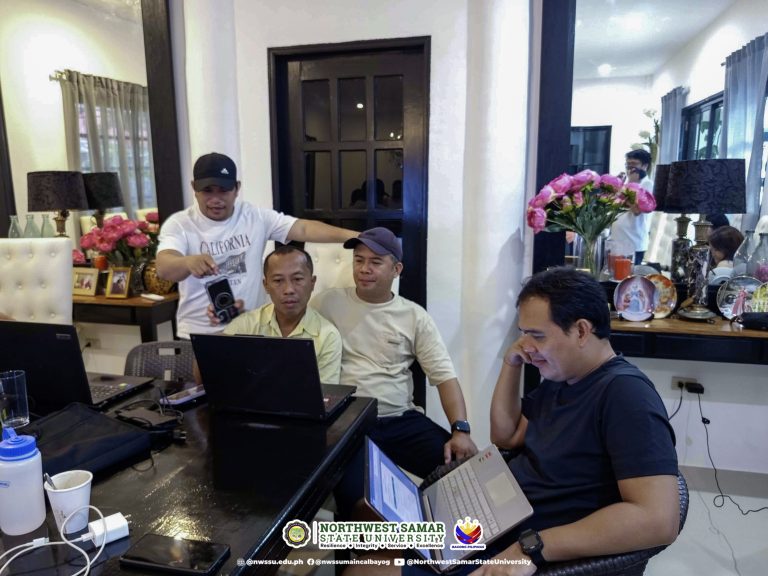
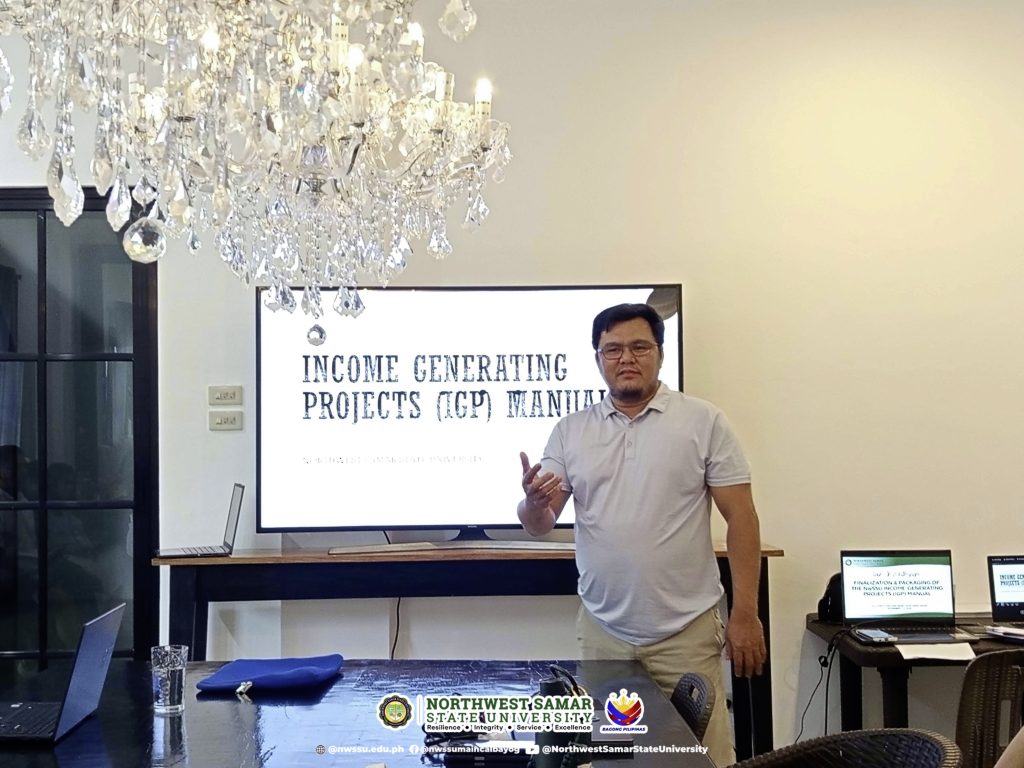
CALBAYOG CITY, Samar – Northwest Samar State University (NwSSU) has finalized a manual that sets the rules for its income-generating projects (IGPs). The Auxiliary Services and Business Affairs Office (ASBAO) led a four-day, closed-door write-shop from November 3 to 7, 2026 to validate the manual. ASBAO Director Rodolfo Corrales headed the effort in collaboration with the Project Development Office.
Following the Higher Education Modernization Act (RA 8292) and the NwSSU Charter (RA 9719), the review and revision of the IGP manual aims for its immediate implementation to augment the university’s resources. Almost half of the income (40%) that will be generated from the IGPs will be used to support the university’s instruction, research, extension, and innovation activities, while around 30% is set to augment the university’s administrative operations.
The team reviewed whether a first-time proponent could follow the process from idea to approval, whether every peso could be traced from collection to deposit to distribution, and whether figures were consistent across chapters. Vague provisions were tightened, and conflicting chapters were reconciled. Under the manual, every Auxiliary Service and Special Project follows the same path: feasibility study, proposal, approval, then operation on a budget with collections deposited and reported.
The manual also lets research, instruction and extension outputs become University-managed projects. These include products from faculty research, fee-based training and media services, and community-built products and services. Intellectual property is protected, and a feasibility check comes first. Projects involving indigenous communities or traditional knowledge require Free and Prior Informed Consent, and original beneficiaries must keep access to the service.
The manual is aligned with the UN Sustainable Development Goals on decent work and economic growth (SDG 8), quality education (SDG 4), industry, innovation and infrastructure (SDG 9), and partnerships (SDG 17). The ASBAO’s vision, as stated in the manual, is “an entrepreneurial NwSSU community that grows productive ventures” from instruction, research, extension and production, sustaining the University and Samar communities “from source to sea.”