More Than a Signature: NwSSU-CHR Partnership Set to Bring Human Rights Closer to Students, Families, and Barangay Oquendo

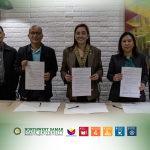
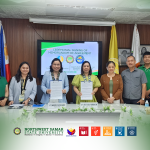
More Than a Signature For many students and residents, “human rights” can feel like a phrase reserved for textbooks and news headlines — important, but distant. That distance just got a little shorter. Northwest Samar State University (NwSSU) and the Commission on Human Rights (CHR) Region VIII formalized a renewed and strengthened partnership through a ceremonial Memorandum of Agreement (MOA) signing at the NwSSU President’s Board Room. Joining them was Barangay Oquendo, whose inclusion signals a shift from policy on paper to programs that reach real neighborhoods. Two agreements anchor this partnership, and together they point toward tangible, everyday benefits for the university community and the barangay it calls home. A Campus Where Rights Are Understood, Not Just Studied The first MOA establishes the Center for Human Rights Education (CHRE), a joint undertaking between NwSSU and CHR Region VIII. For students, this could mean human rights education woven more directly into campus life — through lectures, workshops, or activities that go beyond the classroom and help clarify what rights and responsibilities actually look like in practice. For faculty and staff, it opens the door to fresh resources and training that can enrich how human rights topics are taught and discussed across programs. The ambition behind the CHRE is straightforward but powerful: a campus culture where every member — student, teacher, or staff — has a clearer grasp of their own rights, and just as importantly, a stronger sense of responsibility to respect the rights of others. In a university setting, that kind of awareness often ripples outward, shaping how graduates carry themselves as professionals and citizens long after they leave NwSSU’s halls. Building Safer, More Responsive Communities The second MOA takes a more ground-level approach, focusing on capacity building for the response to Violence Against Women and their Children (VAWC), local policy development, crime prevention, and peace and order. This is where Barangay Oquendo’s role becomes especially meaningful. Local leaders and stakeholders stand to gain sharper skills and knowledge for handling VAWC cases, strengthening barangay-level policies, and supporting broader peace and order efforts. For a community, this translates into something very concrete: barangay officials and frontline workers who are better equipped to respond when someone needs help, and a local government more capable of preventing problems before they escalate. It also creates a natural bridge for NwSSU’s students and faculty — particularly those in social work, criminology, education, and related fields — to engage with real community issues, whether through extension programs, research, or future collaborative initiatives. Voices Behind the Partnership The signing ceremony brought together key figures from all three institutions: Atty. Marierose P. Alvero-Joaquin, OIC Regional Director of CHR Region VIII; Atty. Lorelie Fabillar-Tangaran, DM, University President of NwSSU; and Hon. Michael M. Loberiano, Barangay Chairperson of Oquendo, each of whom shared remarks underscoring the significance of the collaboration. Their presence at the same table reflects something the MOA itself cannot fully capture on paper — a shared understanding that human rights work is most effective when the academe, government agencies, and local communities move in step with one another. Turning Commitment Into Action An MOA signing is, in many ways, just the beginning. What follows next — the workshops, trainings, and outreach activities expected to emerge from the CHRE and the VAWC capacity-building initiative — will be where students, faculty, and Barangay Oquendo residents start to feel the partnership’s impact firsthand. For the NwSSU community, this collaboration represents an invitation: to learn more about their rights, to look out for one another, and to take an active part in shaping a safer, more rights-aware campus and barangay. As the partnership moves from agreement to action, the university looks forward to seeing how students, faculty, and community members alike will help bring this shared commitment to life.

Mapping the Future: Gov-CDR Workshop Strengthens Climate and Disaster Resilience for Samar's Grassroots Groups

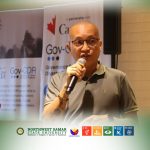
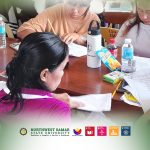
Community-based and women-led organizations from four Samar municipalities gathered at the NwSSU Hotel and Restaurant on September 1 and 2, 2026, for a workshop aimed at strengthening their capacity to respond to climate and disaster-related risks. The workshop, titled “Participatory Risk and Resource Mapping, Stakeholder Analysis and Capacity Assessment for Climate Disaster Resilience and Organizational Development.” brought together community-based organizations (CBOs) and women-led organizations (WLOs) to validate and deepen earlier profiling results, identify capacity development needs across the ecosystem’s local government units, and begin shaping a capacity building program suited to their context. The workshop unfolded in stages: participatory surfacing activities on Day 1, followed by consolidation and validation through key informant interviews on Day 2 morning, and concluding with the prioritization of training needs and the co-creation of a capacity building program on Day 2 afternoon. Ms. Gina Dean facilitated several of the workshop’s key sessions on Day 1. She led the discussion on understanding CDR and the salient points of Republic Act 10121, guided participants through participatory resource mapping and hazard identification, and co-facilitated the Social Network Analysis and Stakeholder Influence and interest sessions alongside with Mr. Ian Mark Nibalvos. By the end of the day, discussions were brought together in a synthesis session, consolidating the issues, capacities, gaps, and emerging training needs that surfaced throughout the day. The activity was conducted under the Governance for Climate and Disaster Resilience (Gov-CDE) Project, a six-year, a CAD-funded initiative running from 2024 to 2030 and implemented by Alinea International in partnership with the National Resilience Council and national government agencies to strengthen climate and disaster resilience across the Philippines. Samar Province is one of the project’s priority areas, implemented locally through Alinea Philippines. On the workshop’s second day, Dr. Teody Amatosa, NwSSU Vice President for Research, Innovation and Extension, welcomed the CBOs and WLOs of Gandara, Matuguinao, San Jorge, and Pagsanghan on behalf of NwSSU President Atty. Lorelie Fabillar-Tangaran, DM, together with the Gov-CDR team of Alinea Philippines. By opening its doors to the workshop, NwSSU lent its support to an effort that reaches beyond training; one that equips local organizations with the tools to face climate and disaster-related challenges on their own terms, long after the workshop tables are cleared.

Micro-credentials, CPD credits: Expanding Region 8 Engineers’ Opportunities

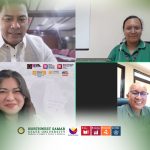
CALBAYOG CITY, Samar — Civil and mechanical engineers in Eastern Visayas may soon have greater access to flexible, industry-responsive learning opportunities as Northwest Samar State University (NwSSU) and Mapúa University move toward a collaboration on upskilling programs and micro-credentials. The proposed initiative is envisioned to provide engineers with more accessible pathways to strengthen their competencies while continuing their careers and professional responsibilities. Through online, face-to-face, or blended learning modalities, the planned programs seek to respond to the evolving needs of engineers and the industries and communities they serve. Flexible learning opportunities can help reduce geographic and logistical barriers that may prevent professionals from participating in specialized training programs traditionally concentrated in major urban centers. Micro-credentials can provide professionals with focused opportunities to develop specific competencies without necessarily having to enroll in lengthy academic programs. The planned offerings may also provide opportunities for Continuing Professional Development (CPD) credit, giving practicing engineers additional avenues to pursue professional growth and maintain relevant competencies. On September 1, representatives from NwSSU (Engr. Teodoro Amatosa Jr.) and Mapúa University (Engr. Eira Camus) met to review and refine the proposed Collaboration Agreement in preparation for its implementation. The Collaboration Agreement is targeted for completion within September, with the first possible program delivery eyed for February 2027. Initial offerings are expected to focus on civil and mechanical engineering professionals in Region VIII, with the potential for the programs to eventually reach professionals in other parts of the country. The potential benefits also extend to employers and other stakeholders. since engineering practice continues to evolve alongside emerging technologies, digitalization, sustainability requirements, advanced construction methods, automation, and changing industry standards.  A workforce equipped with current and specialized skills can help organizations adapt to technological developments, changing standards, and emerging demands in the engineering sector. For government agencies, private companies, and other organizations involved in infrastructure and development, stronger professional capacity can contribute to improved planning, design, implementation, and management of projects and services.   At the community level, the initiative could contribute to strengthening the capacity of professionals who play vital roles in infrastructure development, disaster resilience, transportation, water systems, energy, manufacturing, and other areas essential to regional growth. The proposed collaboration therefore goes beyond providing additional training options. It reflects an effort to make lifelong learning more accessible, flexible, and responsive to the realities of professionals in the region. As NwSSU continues to strengthen its role in advancing professional development and serving the needs of its communities, initiatives such as this can help create stronger connections between higher education, industry, and the workforce.

Empowering the Grassroots: NwSSU Conducts Competency-Based Training for Silvino Lubos Childcare Sector

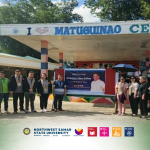
Northwest Samar State University (NwSSU) co-facilitated a two-day Training of Trainers (TOT) for Silvino Lubos Child Development Workers (CDWs) and Teachers (CDTs) on June 11–12, 2026. The capacity-building initiative introduced the “Being the Best CDW I Can Be” toolkit and a system for competency-based professional development. It targeted frontline early childhood educators and municipal welfare personnel to improve local childcare delivery. The engagement served local daycare workers, childcare practitioners, and key leaders, including MSWDO Agner S. Sagonoy and Vice Mayor Melvin A. Jarito, to align municipal operations with provincial mandates. University resource persons led technical modules on Republic Act 12199, foundational competency standards, and Developmentally Appropriate Practice (DAP). Participants also completed training on disaster risk response, sanitary health protocols, and integrating creative activities using localized instructional materials. By extending technical expertise, this extension program addresses the distinct professional development needs of upland childcare providers. This localized implementation ensures that early childhood educators in Silvino Lubos possess standardized instructional competencies. The initiative reinforces the university’s role in supporting grassroots governance and securing educational equity for remote communities.

Foundations of Service: NwSSU Equips Catarman Daycare Sectors Through Competency Training

Northwest Samar State University (NwSSU) facilitated a five-day training on competency-based professional development for Child Development Workers (CDWs), teachers (CDTs), and social welfare personnel (MSWDO) from May 18 to 22, 2026, at the Diamond Hotel in Catarman, Northern Samar. The institutional extension project aimed to standardize public childcare operations and establish a benchmark for regional early childhood care. The sessions upgraded instructional and administrative skills through structured technical workshops. Frontline workers participated in hands-on training for designing creative learning experiences, practicing early literacy storytelling, and constructing teacher-made instructional materials. The curriculum also included practical exercises on child portfolio management, work sampling, anecdotal recording, and the formulation of localized daycare disaster risk and response plans. As the capital town and a major economic hub, Catarman serves as a model for educational standards in Northern Samar. Elevating the competencies of childcare providers in this central locality sets a higher standard that directly influences instructional practices in neighboring towns. The initiative reinforces the university’s commitment to community-driven development, ensuring that advancements made in the capital town help improve early childhood milestones throughout the wider region. #ASCENDNwSSU

Prepared to Respond: NwSSU Holds Four-Day Standard First Aid Training

Northwest Samar State University (NwSSU), through its University Health Center, conducted a four-day Standard First Aid (SFA) Training from June 16 to 19, 2026, at the second floor of the Business Development Center (BDC) Building. The training aimed to strengthen participants’ knowledge and practical skills in responding to emergencies and providing immediate care during accidents and medical situations. The activity opened with a rationale from Dr. Ma. Cleta A. Santos, who underscored the importance of first aid preparedness in ensuring safety within the University community. Participants then engaged in discussions and demonstrations facilitated by Dr. Sandro C. Daguman, Mr. Joseph Von P. Catorce, Ms. Ma. Fatima Shaira D. Adona, and Ms. Jamaica A. Ultra, covering essential first aid principles and emergency response procedures. Throughout the training, participants gained hands-on experience through return demonstrations and skills evaluation activities designed to assess their competence in applying first aid techniques. The practical sessions allowed trainees to reinforce their learning and build confidence in responding to real-life emergency situations The final days of the training focused on continued return demonstrations and skills assessments, ensuring that participants met the required competencies in basic emergency care and response. The activity concluded with the awarding of certificates to participants who successfully completed the program. Dr. Ellery D. Daguman delivered the closing remarks, commending the participants for their commitment to learning skills that can help save lives and contribute to a safer University environment. Through initiatives such as the Standard First Aid Training, NwSSU continues to promote health and safety awareness while empowering members of the University community with practical competencies that support preparedness, resilience, and service.

NwSSU, UEP Forge Academic Partnership Through MOA Signing

CATARMAN, Northern Samar – Northwest Samar State University (NwSSU) and the University of Eastern Philippines (UEP) formalized an academic partnership through the signing of a Memorandum of Agreement (MOA) held during the International Conference on Science Uniting Social, Health, and Environmental Aims for Innovation and Networking (iSUSTAIN) on June 15–17. The agreement provides opportunities for both institutions to collaborate in areas such as faculty exchange, research, extension programs, and other academic initiatives that promote knowledge sharing and institutional growth NwSSU President Dr. Lorelie F. Tangaran expressed her gratitude to UEP President Dr. Cherry I. Ultra for facilitating the agreement and supporting stronger cooperation between the two universities. The MOA serves as a foundation for future joint undertakings that will enhance research collaboration, strengthen academic programs, and contribute to the development of the communities served by both institutions. Through this partnership, NwSSU continues to expand its academic linkages and strengthen its programs in instruction, research, and extension services.

NwSSU Finalizes Futures Workshop; Produces HANDUM 2050 Roadmap

Northwest Samar State University (NwSSU) has successfully finalized its Strategic Futures Workshop: Futures Thinking Towards Sustainable Development Using the ACACIA Framework on May 21, 2026, at the Business Development Center. Spearheaded by the Research, Innovation, and Extension (RIE) Division through the Center for Futures Thinking and Strategic Foresight and in partnership with the Philippine Futures Thinking Society (PhilFutures), the activity gathered the entire university officials to embed anticipatory governance and innovation in its systems, culminating in the development of HANDUM 2050: The Futures of NwSSU under the theme “WE BUILD WHAT STORMS CANNOT BREAK.” Day 2 followed on May 12, 2026, continuing online with participants deepening their understanding of strategic foresight processes and engaged in collaborative visioning facilitated by PhilFutures Fellow Ms. Jalaine Joyce V. Malabanan. The activities produced refined, shared aspirations that became core building blocks for HANDUM (Hingyap, Andam, Naton, Dungog, Ungod, Marig-on) 2050, equipping the institution with a forward-looking foundation to guide its development and community impact. Held onsite on May 20, 2026, Day 3 opened with messages from Senators Pia S. Cayetano and Win T. Gatchalian, CHED Chairperson Dr. Shirley C. Agrupis, Dr. Tirso Ronquillo, President of the Philippine Association of State Universities and Colleges (PASUC), and PhilFutures’ Dr. Michville A. Rivera. Expert sessions included Dr. Bert J. Tuga’s analysis of trends in higher education, Dr. Michville A. Rivera’s discussion on the McKinsey 7S Framework, and workshops of Prof. Ramces M. Dili from the Polytechnic University of the Philippines (PUP) on reimagining the university’s VMOKRAPI and scenario planning, strengthening participants’ strategic capabilities and shared commitment. On May 21, 2026, the fourth and final day centered on presenting drafted vision and mission outputs from various units and division for the Samar community. Dr. Ruperto S. Sangalang presented the PATRES framework and the unified planning architecture linking VMOKRAPI (Vision, Mission, Objectives, Key Result Areas, and Performance Indicators), SPATRES (Strategy, Programs, Activities, Tasks, Resources, Evaluation System), and PATRES (People, Academics, Technology, Research, Extension, and Stewardship), while Mr. Ramces M. Dili critiqued outputs using the ACACIA Framework, recognizing San Jorge Campus for meeting the “Samar test.” The four-day futures workshop successfully equipped NwSSU officials with essential foresight tools, methodologies, and a cohesive strategic direction. With HANDUM 2050 as its flagship output, the university now stands positioned as a future-ready institution, fully prepared to drive sustainable development, transformative education, and responsive governance across Samar for decades to come.