


CALBAYOG CITY, Samar — Civil and mechanical engineers in Eastern Visayas may soon have greater access to flexible, industry-responsive learning opportunities as Northwest Samar State University (NwSSU) and Mapúa University move toward a collaboration on upskilling programs and micro-credentials.
The proposed initiative is envisioned to provide engineers with more accessible pathways to strengthen their competencies while continuing their careers and professional responsibilities. Through online, face-to-face, or blended learning modalities, the planned programs seek to respond to the evolving needs of engineers and the industries and communities they serve. Flexible learning opportunities can help reduce geographic and logistical barriers that may prevent professionals from participating in specialized training programs traditionally concentrated in major urban centers. Micro-credentials can provide professionals with focused opportunities to develop specific competencies without necessarily having to enroll in lengthy academic programs.
The planned offerings may also provide opportunities for Continuing Professional Development (CPD) credit, giving practicing engineers additional avenues to pursue professional growth and maintain relevant competencies.
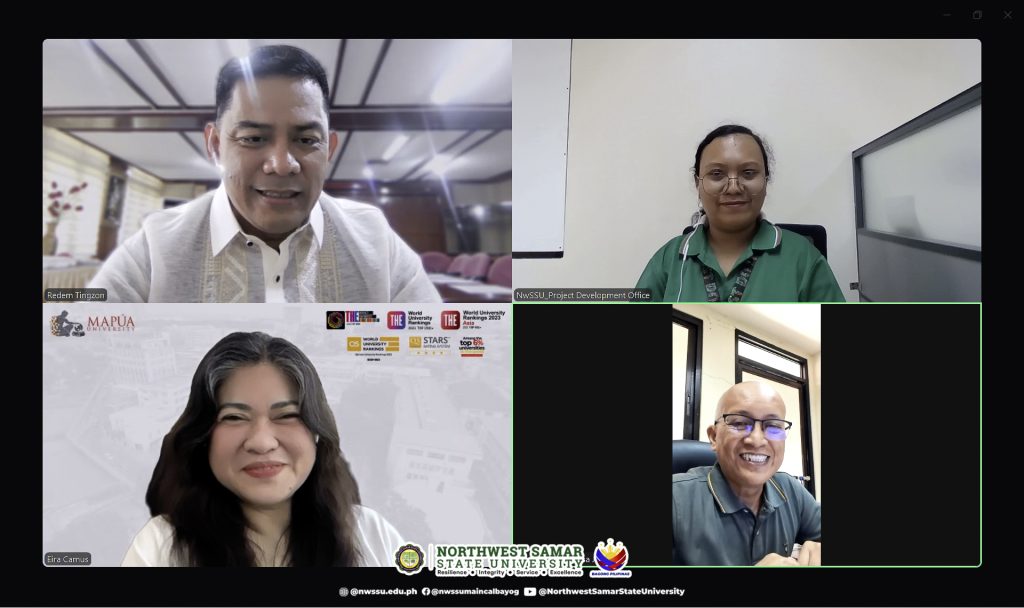
On September 1, representatives from NwSSU (Engr. Teodoro Amatosa Jr.) and Mapúa University (Engr. Eira Camus) met to review and refine the proposed Collaboration Agreement in preparation for its implementation. The Collaboration Agreement is targeted for completion within September, with the first possible program delivery eyed for February 2027. Initial offerings are expected to focus on civil and mechanical engineering professionals in Region VIII, with the potential for the programs to eventually reach professionals in other parts of the country.
The potential benefits also extend to employers and other stakeholders. since engineering practice continues to evolve alongside emerging technologies, digitalization, sustainability requirements, advanced construction methods, automation, and changing industry standards. A workforce equipped with current and specialized skills can help organizations adapt to technological developments, changing standards, and emerging demands in the engineering sector. For government agencies, private companies, and other organizations involved in infrastructure and development, stronger professional capacity can contribute to improved planning, design, implementation, and management of projects and services.

At the community level, the initiative could contribute to strengthening the capacity of professionals who play vital roles in infrastructure development, disaster resilience, transportation, water systems, energy, manufacturing, and other areas essential to regional growth. The proposed collaboration therefore goes beyond providing additional training options. It reflects an effort to make lifelong learning more accessible, flexible, and responsive to the realities of professionals in the region.
As NwSSU continues to strengthen its role in advancing professional development and serving the needs of its communities, initiatives such as this can help create stronger connections between higher education, industry, and the workforce.