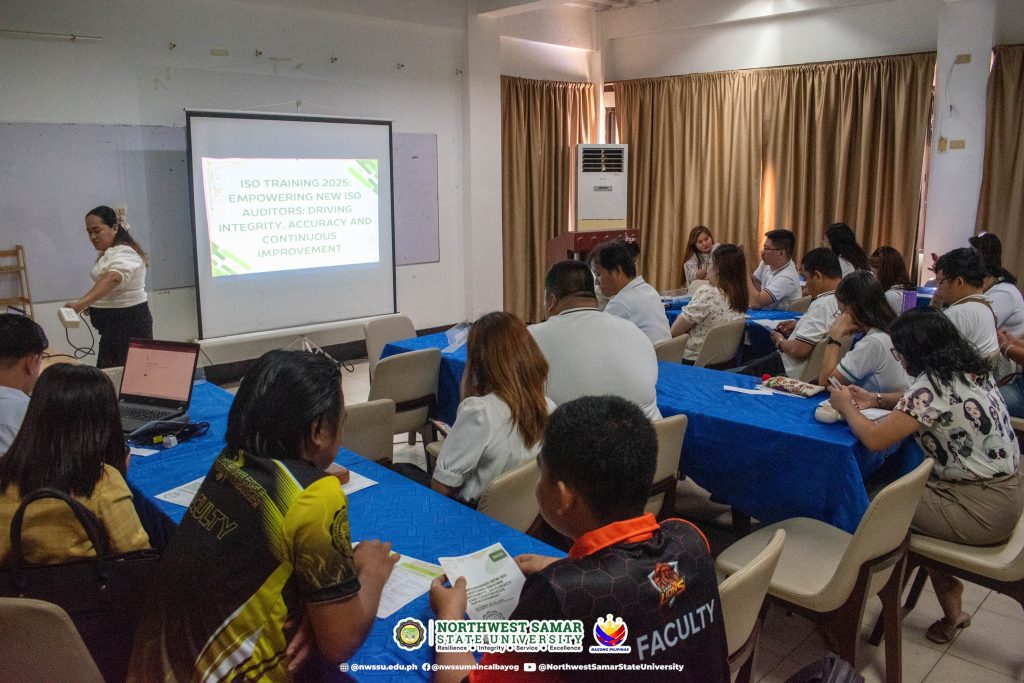
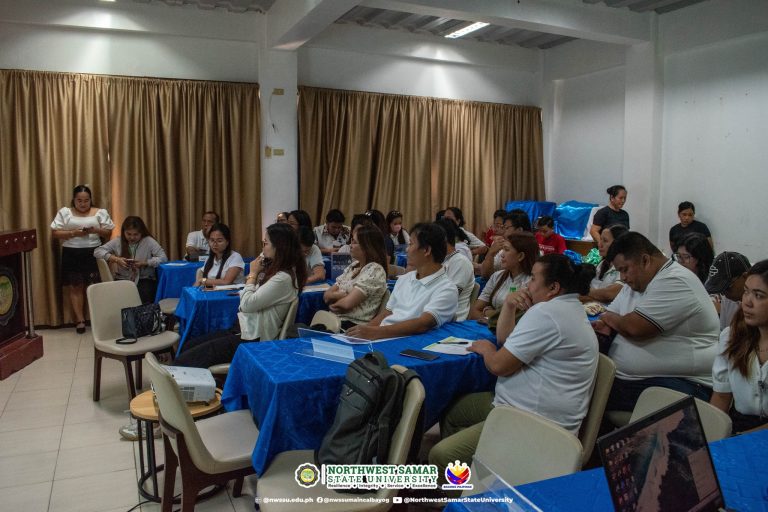
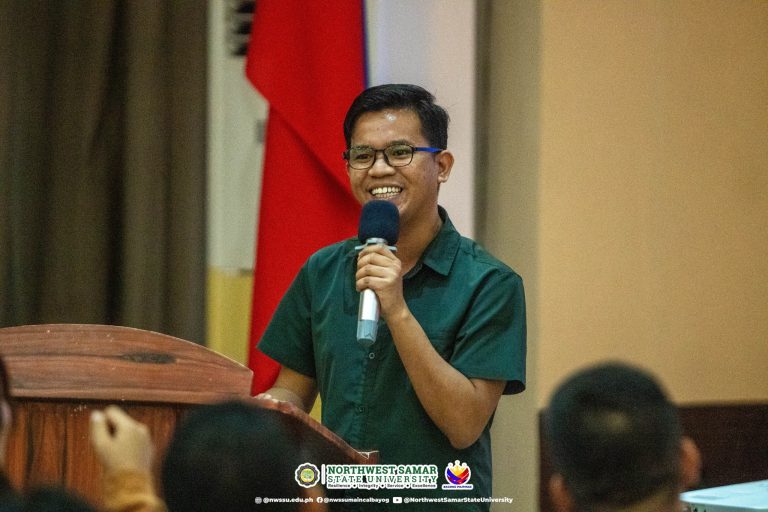
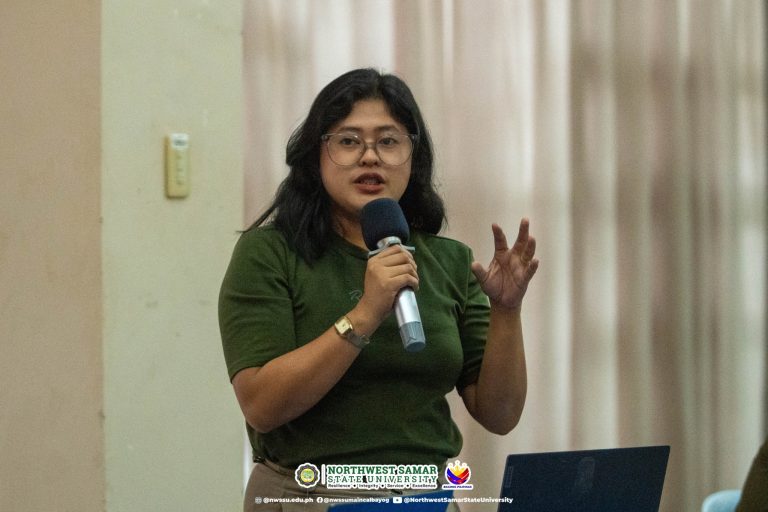
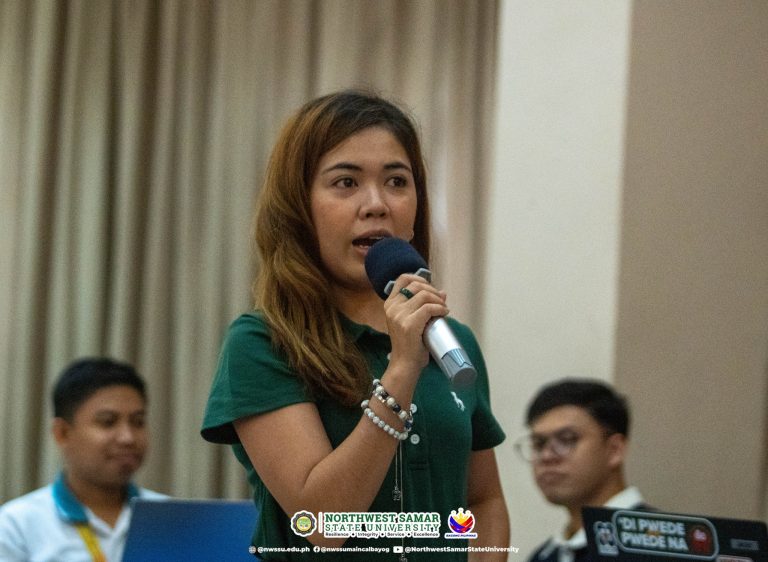
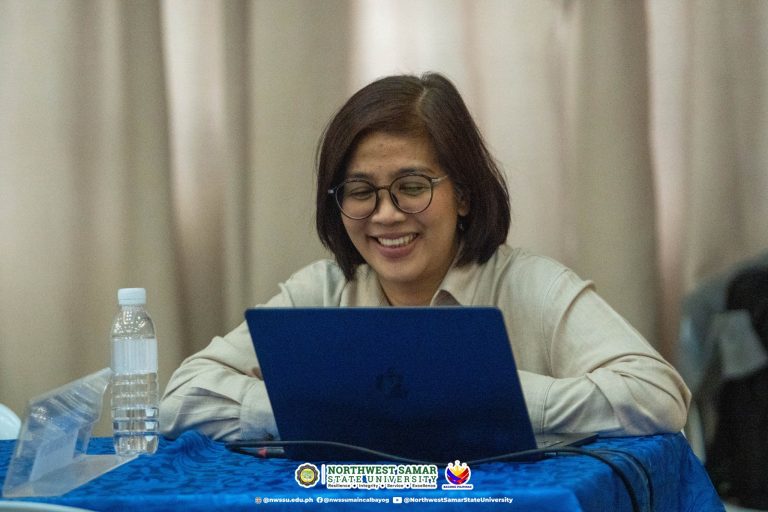
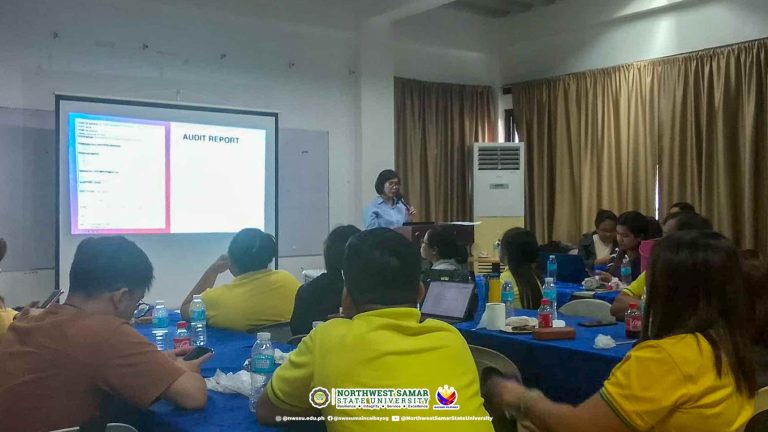
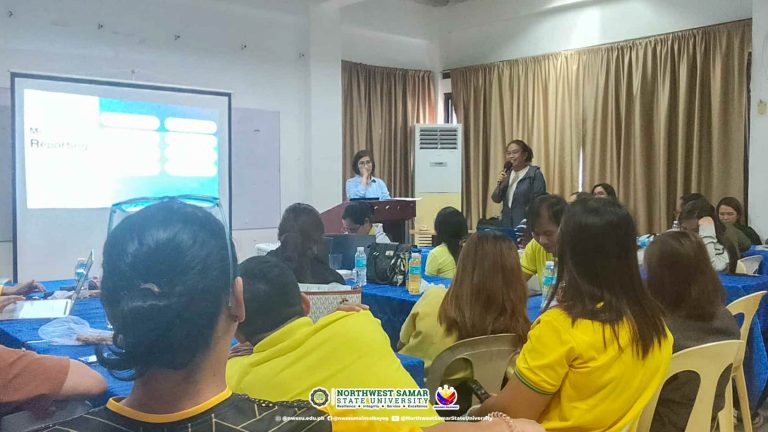
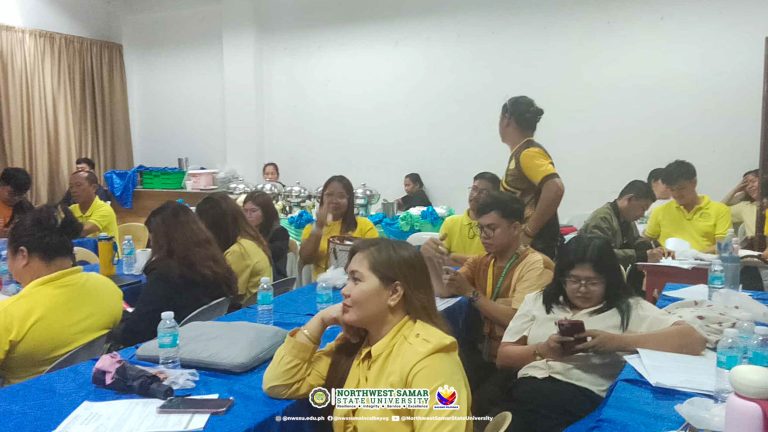
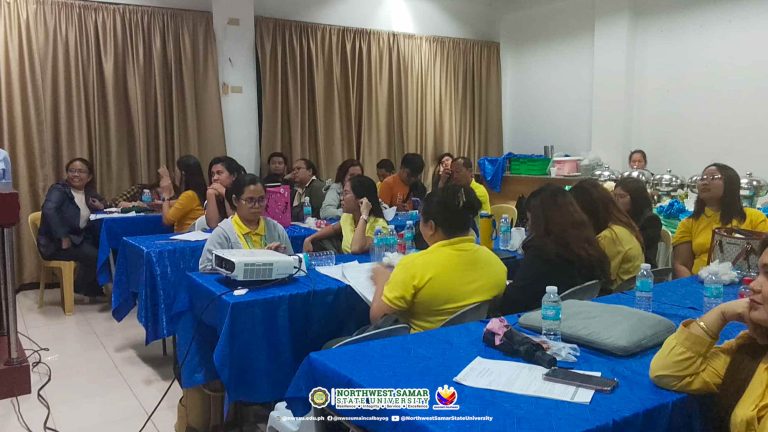
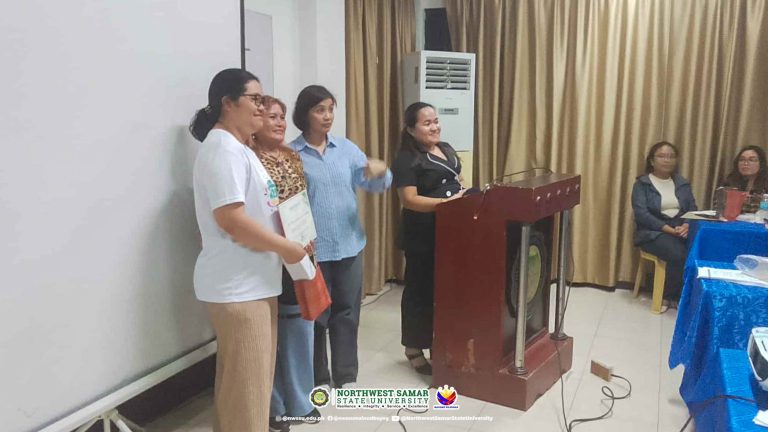
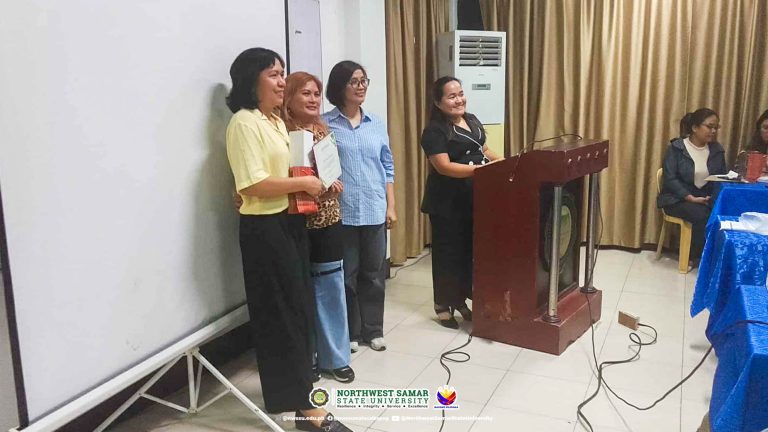
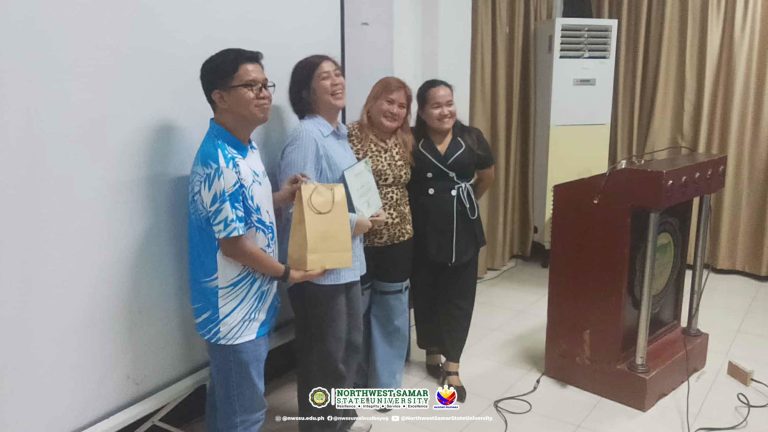
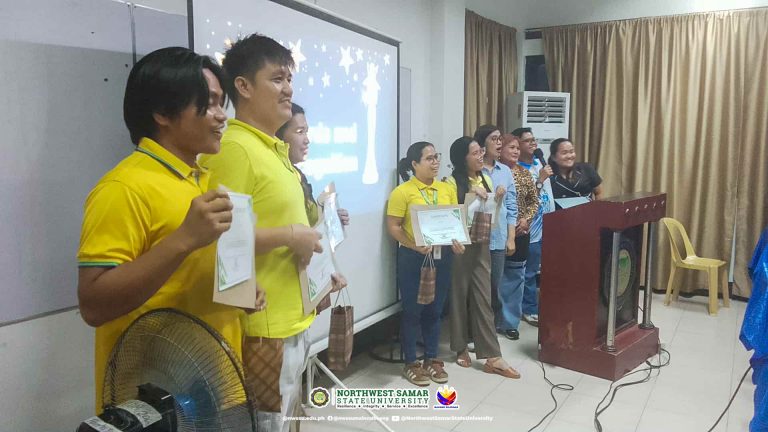
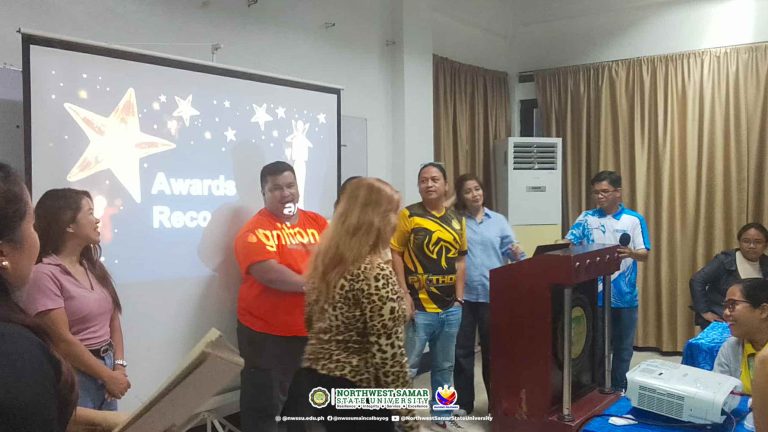
The Northwest Samar State University (NwSSU) successfully wrapped up its three-day ISO Training 2025 on October 22, 2025, at the University Hotel Function Room, marking a significant step in cultivating a group of selected auditors committed to the institution’s integrity, accuracy, and excellence. Designed to align with ISO 9001:2015 and ISO 19011:2018 standards, the training equipped teaching and non-teaching personnel from Main and San Jorge campuses with advanced auditing strategies to strengthen the university’s Quality Management Systems (QMS).
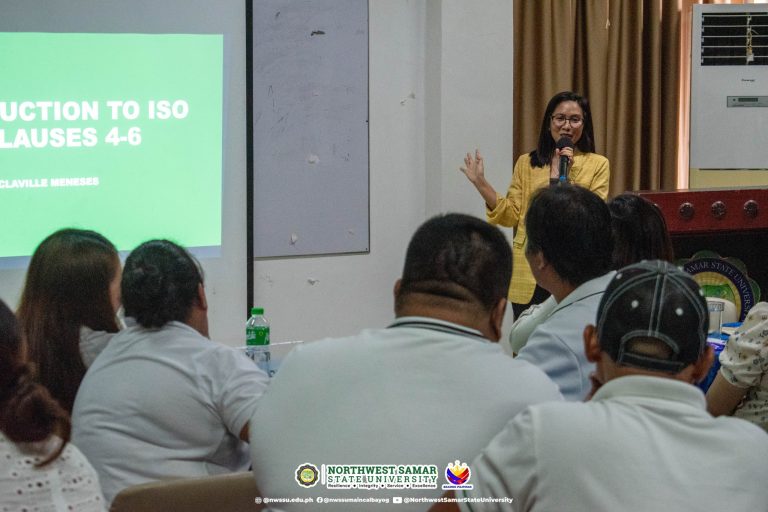
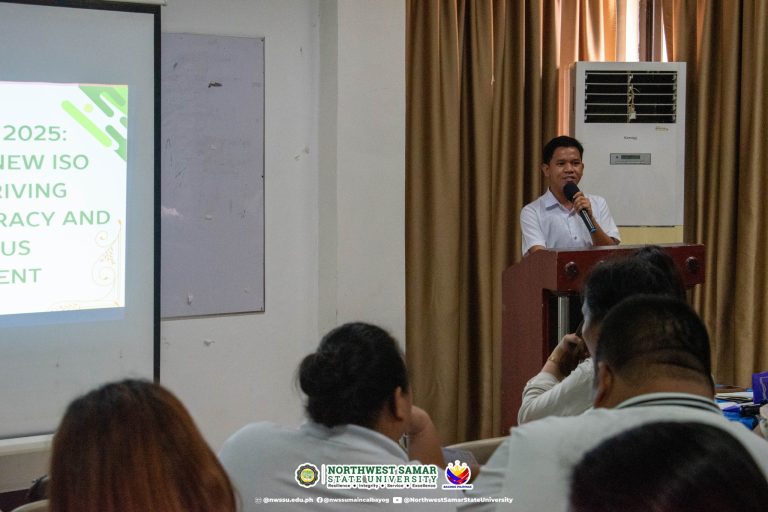
The first-day training launched on October 20 at the University Hotel Function Room, where participants delved into the core clauses of ISO 9001:2015. Mr. Niel Darryl Branzuela, ISO Focal Person, opened the session, followed by Ms. Claville Menesis’s breakdown of Clauses 4 (Context of the Organization), 5 (Leadership), and 6 (Planning). Mrs. Maria Lourdes Mae Vergara-Billate expanded on Clause 7 (Support), while Mr. Branzuela returned to detail Clause 8 (Operations). Ms. Florabel Canaman concluded the day with Clauses 9 (Performance Evaluation) and 10 (Improvement), emphasizing actionable auditing frameworks. Dr. Rolyn A. Catamora, Director for Quality Assurance, capped the day by highlighting NwSSU’s QMS milestones, setting the venue for the transformative days ahead.
On October 21, the training continued at the Business Development Center (BDC), where trainees honed practical auditing skills under the guidance of Ms. Ana Marisse Dalawis, QMS Technical Adviser. After a pre-training exam, Ms. Dalawis unpacked ISO 9001:2015 Clause 9.2 (Internal Audit) and ISO 19011:2018 guidelines, stressing audit planning, evidence collection, and alignment with institutional goals. The session featured hands-on workshops: trainees revised audit checklists, strategized mock audits, and practiced drafting evaluation plans, while bridging theory with real-world application and reinforcing accountability in QMS processes.
The final day focused on Modules 5 (Conducting the Audit) and 6 (Reporting Findings and Follow-Up). Ms. Dalawis guided trainees through audit techniques like evidence verification, and nonconformity identification. Trainees then practiced writing precise nonconformity statements, ensuring clarity and compliance. The Audit Follow-Up Exercise challenged them to evaluate corrective actions, simulating scenarios to assess effectiveness and sustainability. These sessions emphasized the auditors’ role not just in identifying gaps but in driving systemic improvements.
The training concluded with a post-assessment and integration session led by Mr. Branzuela, who synthesized key takeaways and commended trainees’ dedication. In his closing remarks, he emphasized the training’s role in fortifying NwSSU’s QMS culture. As attendees left equipped with auditing mastery and renewed skills, the event strengthened NwSSU’s commitment to producing leaders who will uphold global standards, foster transparency, and propel the university toward its vision as a beacon of quality education.