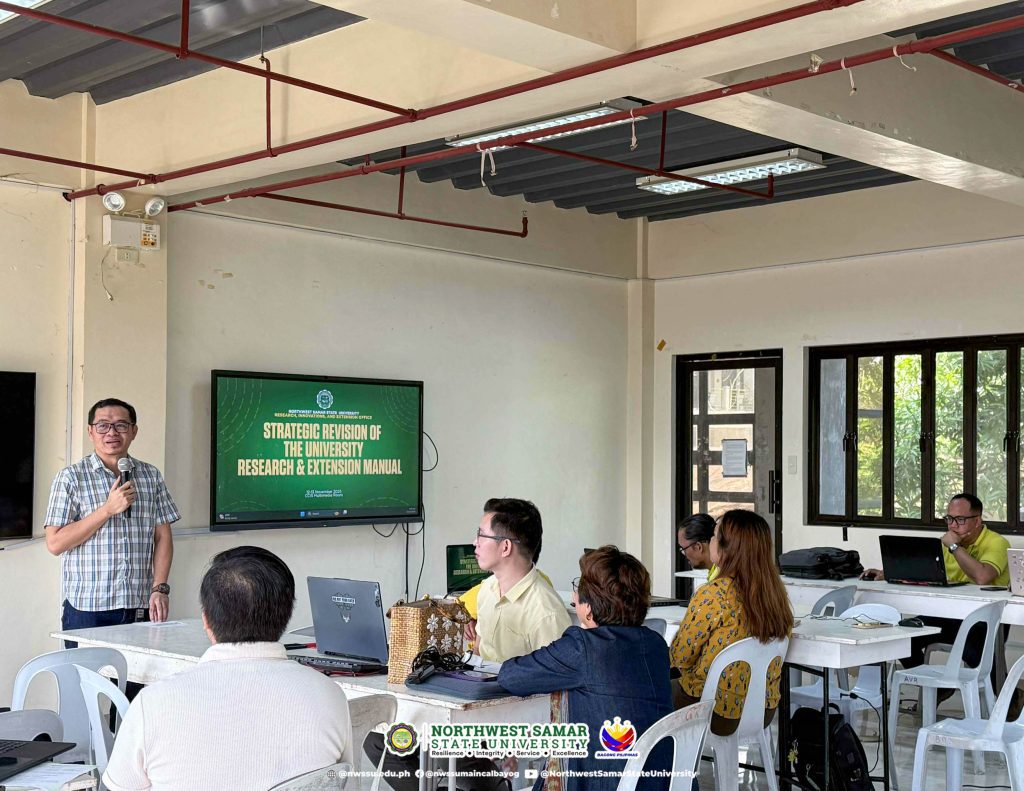
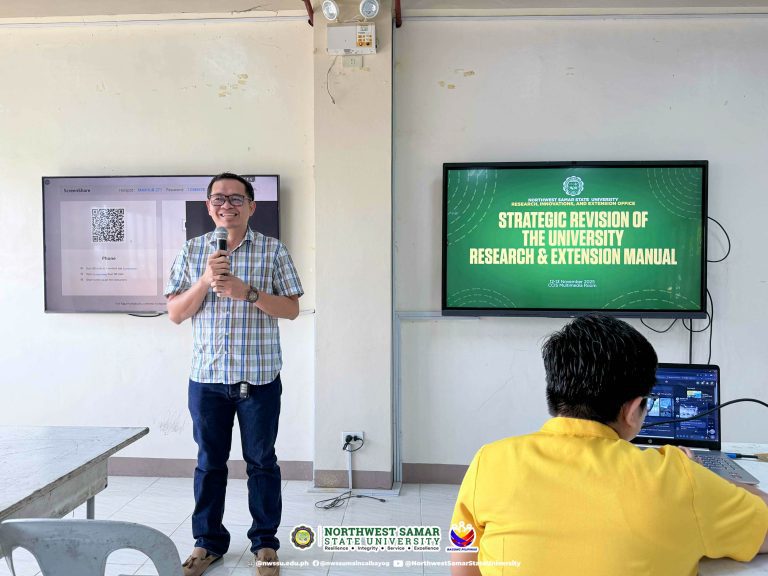
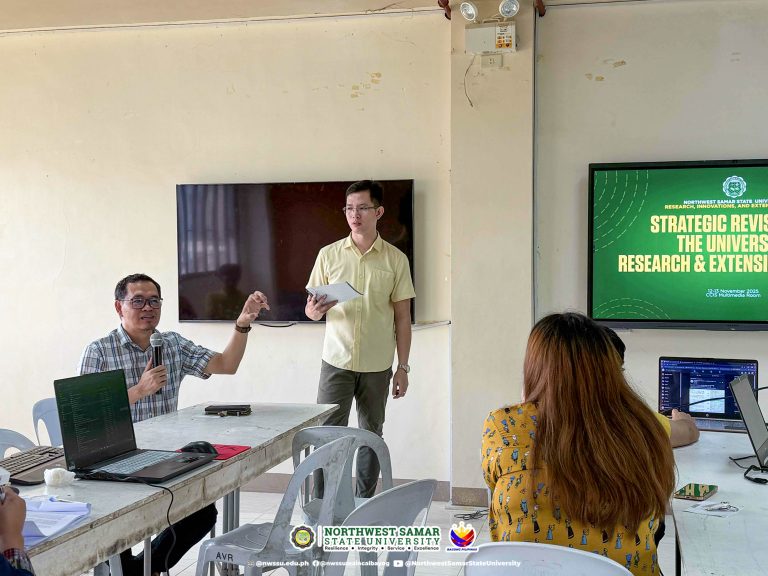
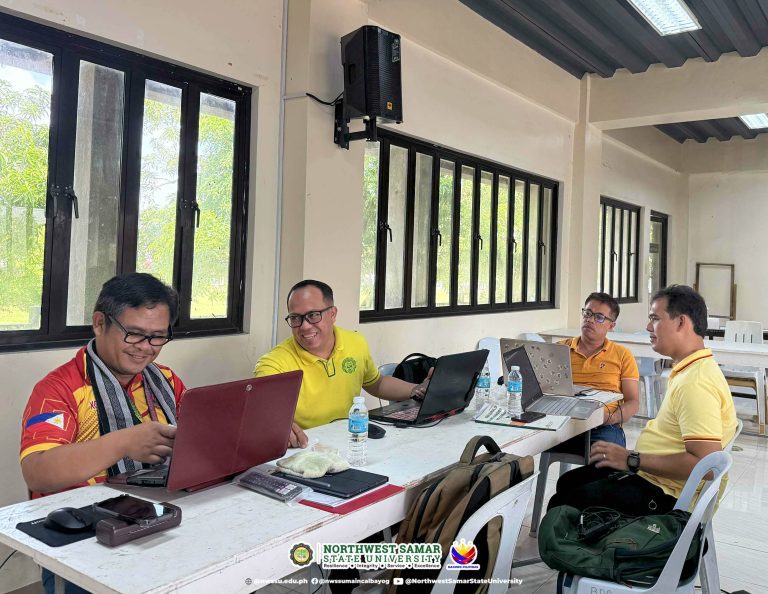
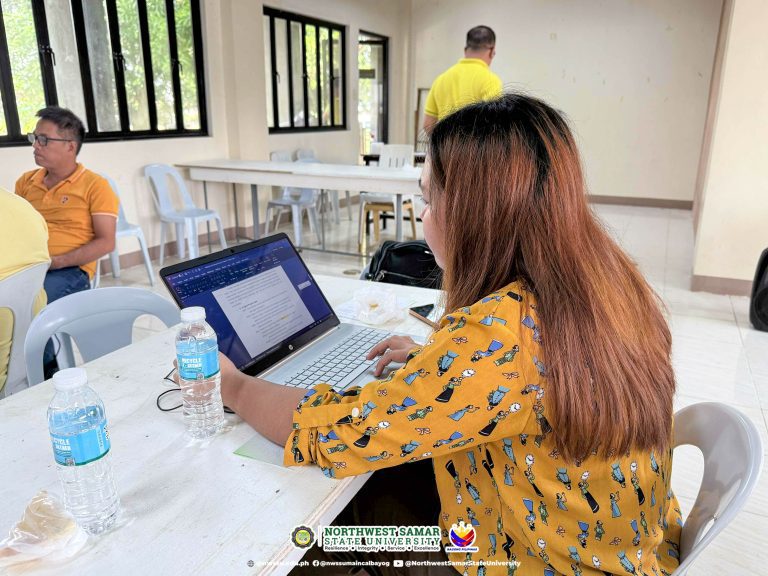
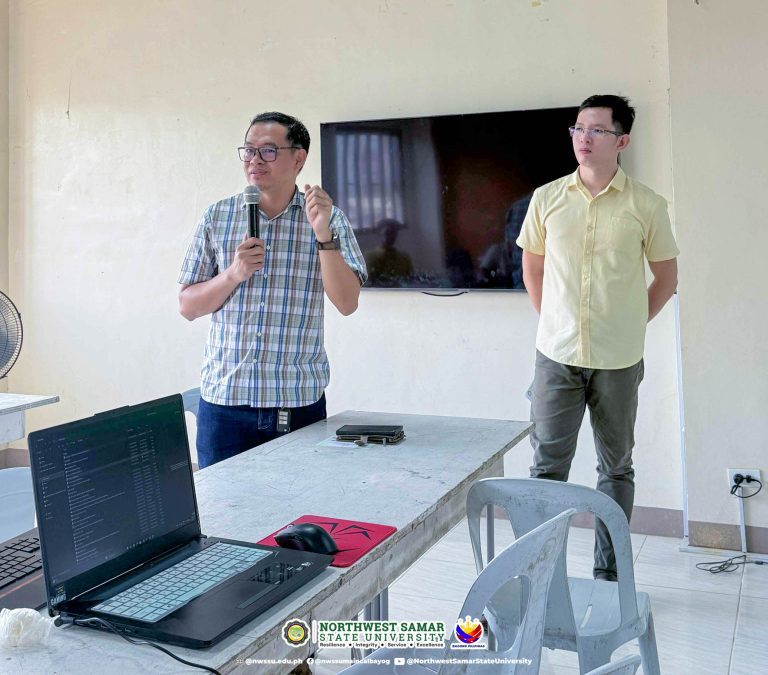
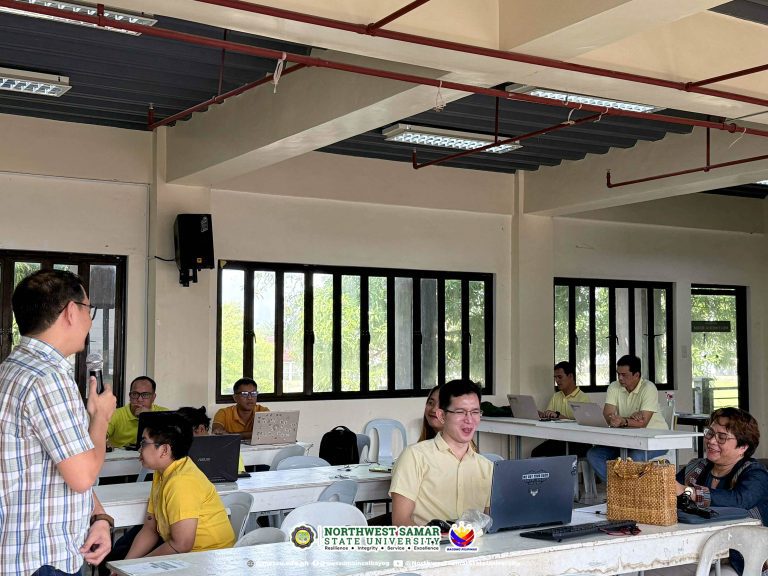
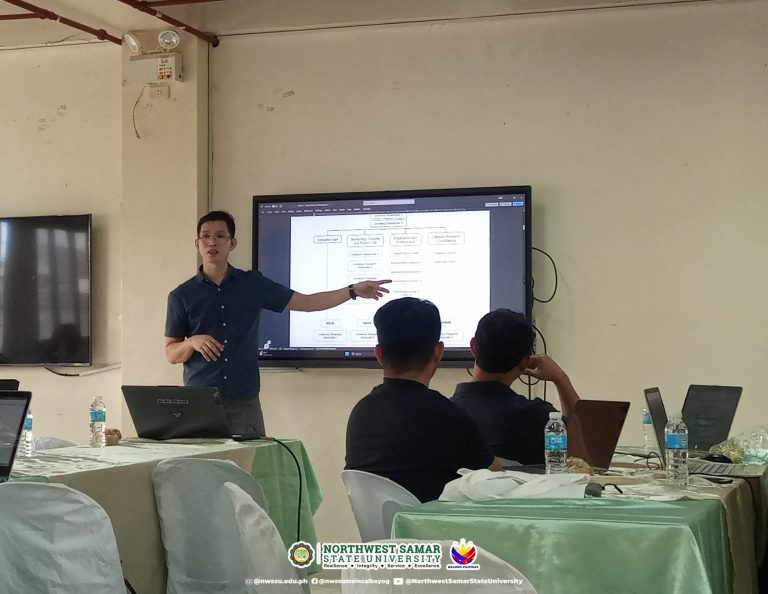
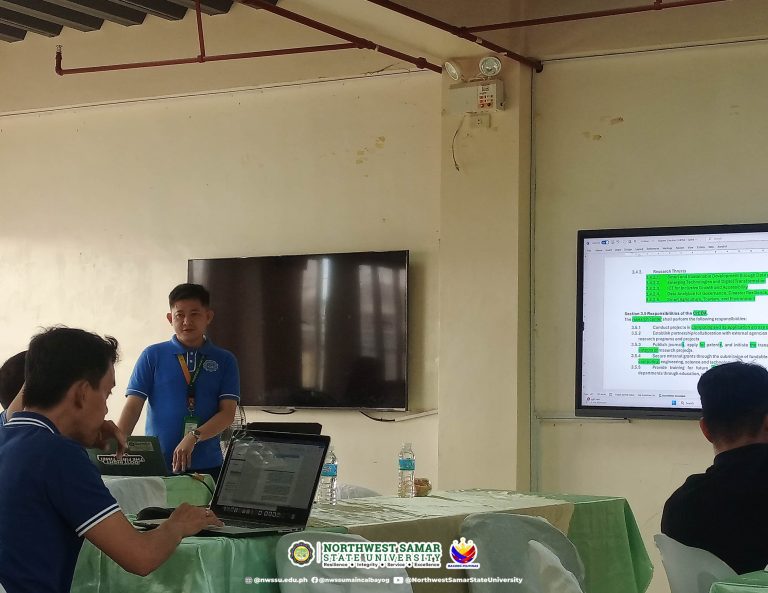
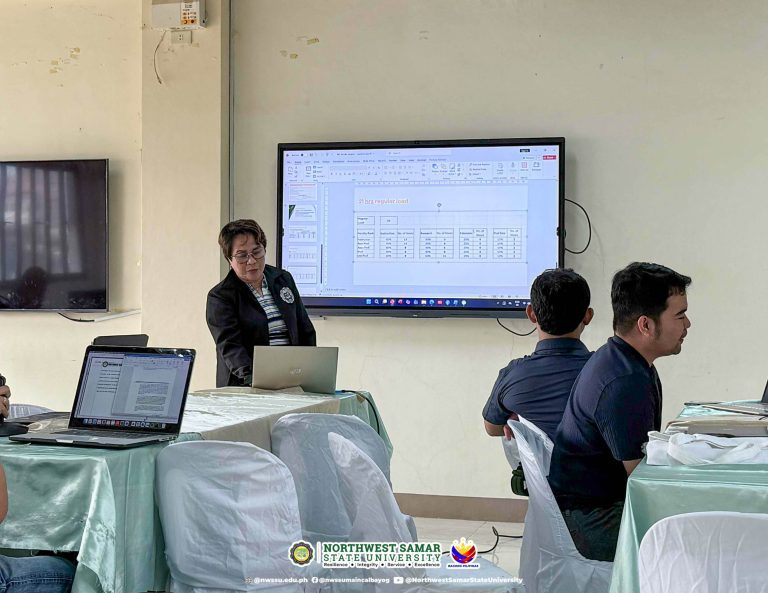
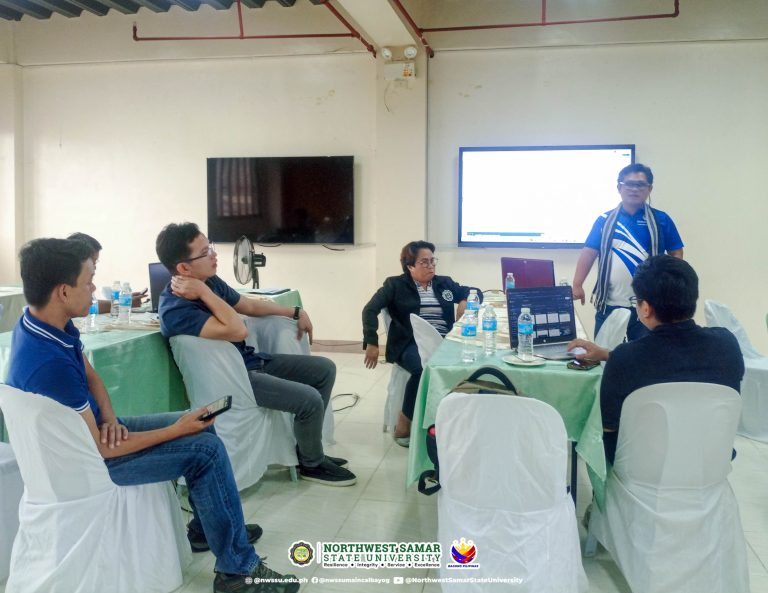
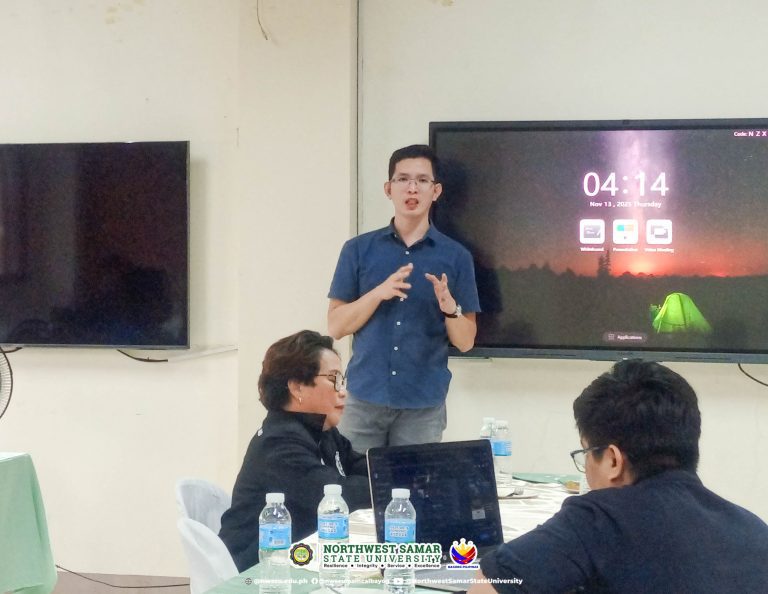
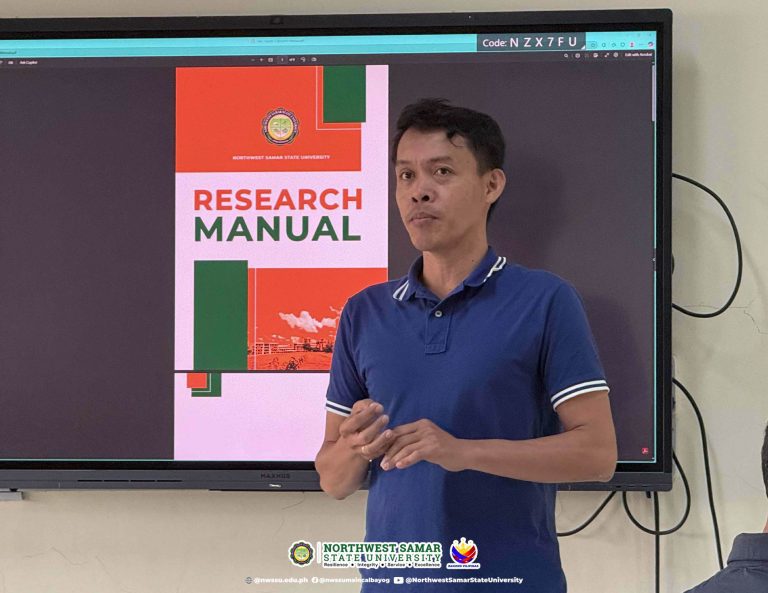
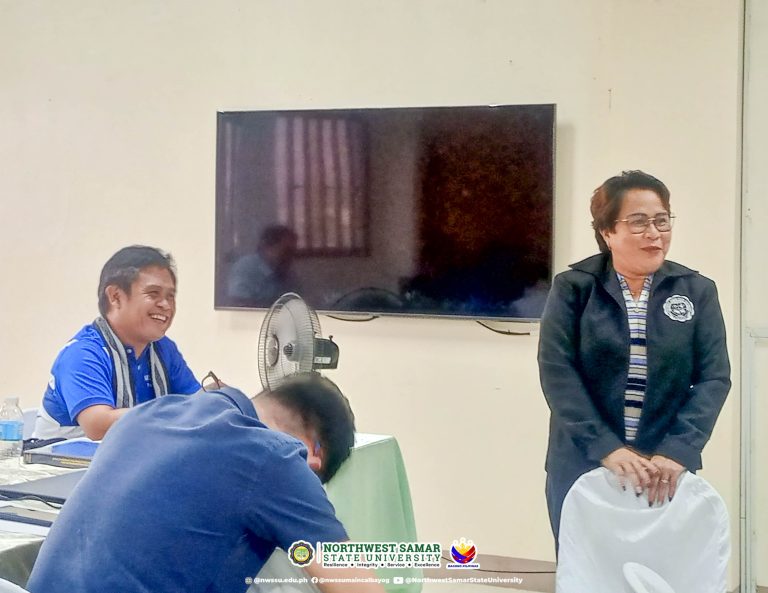
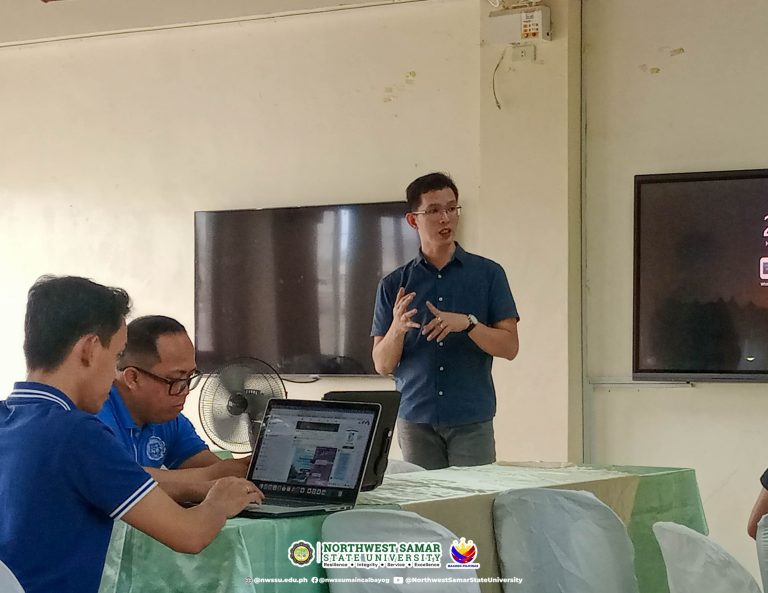
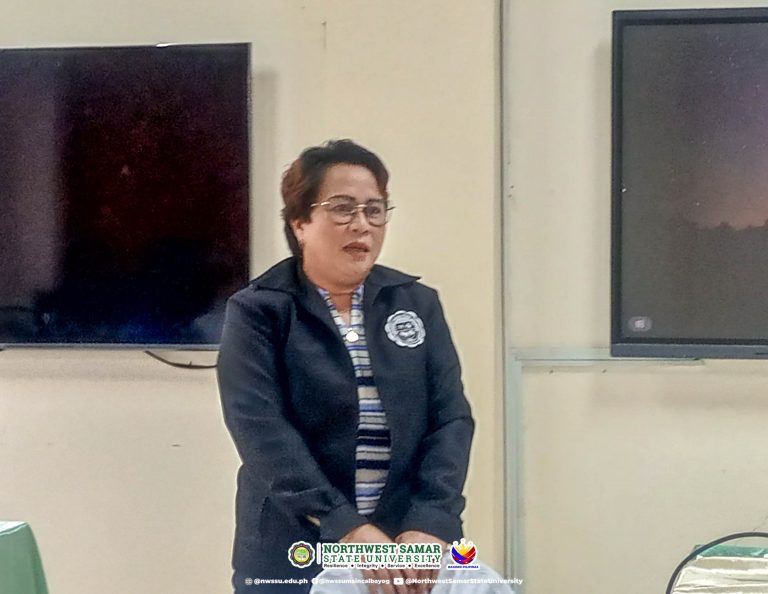
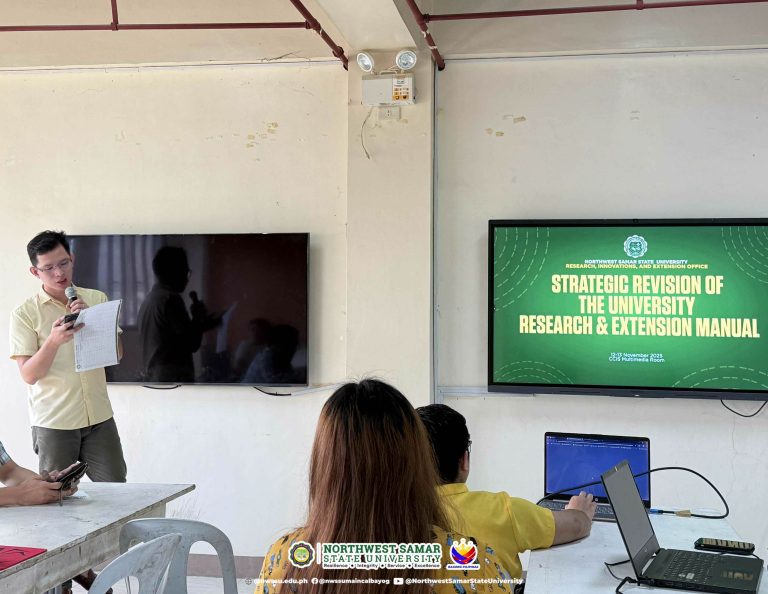
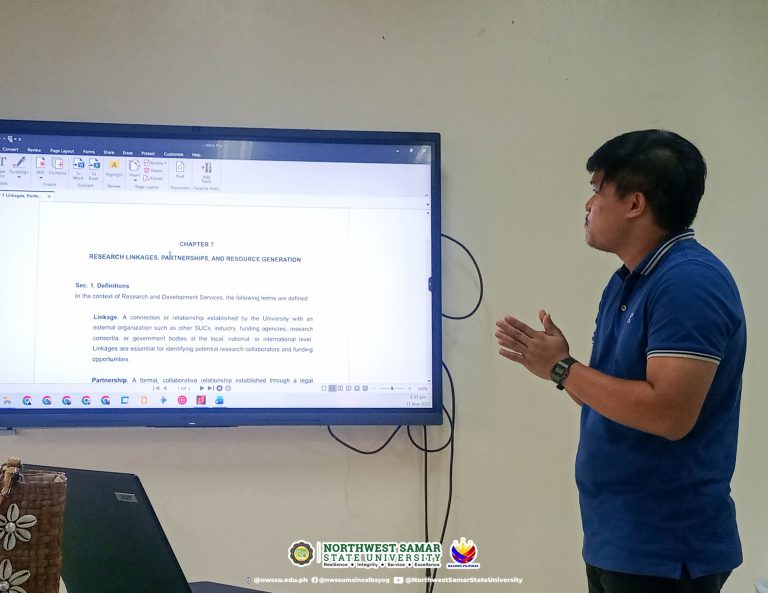
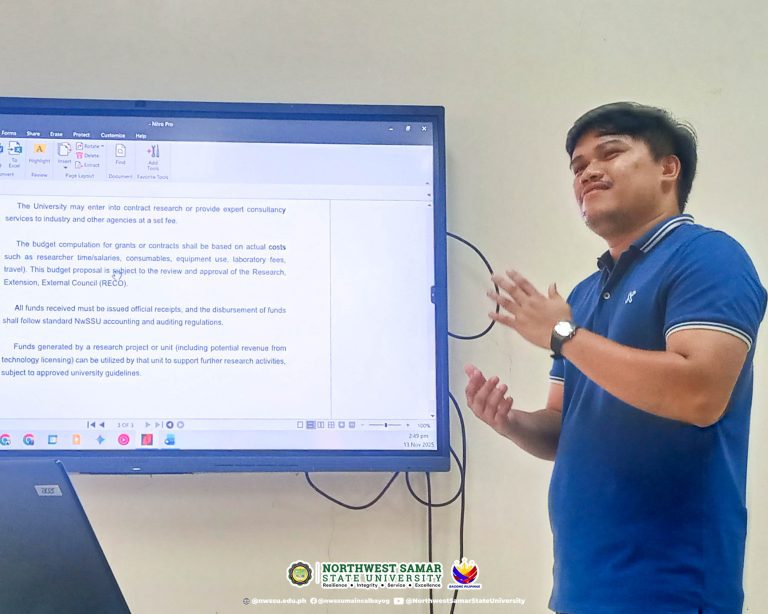
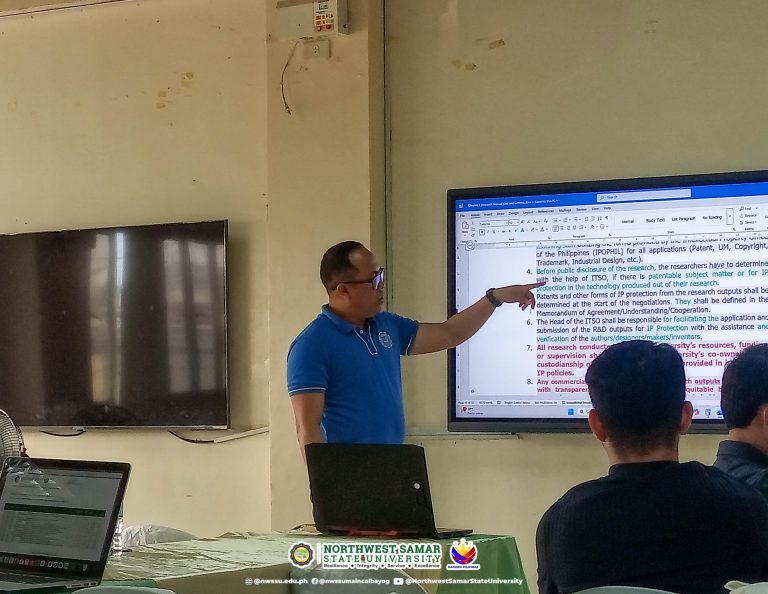
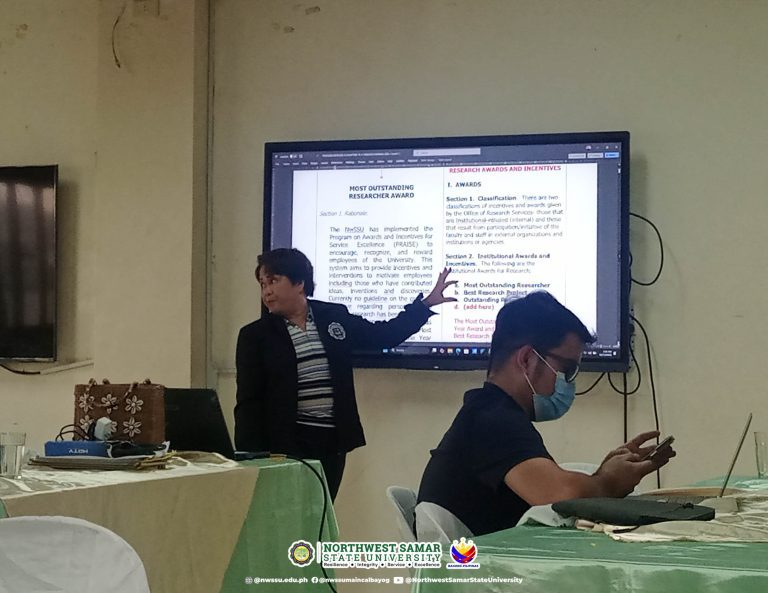
Northwest Samar State University (NwSSU) took a decisive step toward academic excellence as top administrators and teaching and non-teaching personnel gathered for a two-day Strategic Revision of the University Research and Extension Manual on November 12-13, 2025, at the College of Computer and Information Sciences (CCIS) Multimedia Room. Led by Dr. Riz Rupert L. Ortiz, Vice President for Research, Innovation, and Extension, the workshop brought together stakeholders to refine policies, rationalize processes, and connect the manual with the university’s progressing vision for industry impact and innovation.
The event commenced with a warm welcome from Dr. Ortiz, who emphasized the critical role of research and extension in NwSSU’s mission. Dr. Joseph Emil A. David, Director for Research and Development Services, then spearheaded the program overview, setting the room for intensive breakout sessions. Throughout the day, participants engaged in lively discussions, assessing existing protocols and analyzing revisions. The day 1 concluded with an open forum, where participants shared status updates and challenges, fostering transparency and collective problem-solving.
The continuation of the event happened in the second day witnessing transformative presentations as participants presented revised guidelines and policy outputs. Dr. Catherine B. Rodriguez, Director for Extension Services and as the Officer-In-Charge (OIC) of Dr. Riz Rupert L. Ortiz for the day, delivered the closing remarks, urging the participants’ dedication and sustained collaboration. As the event put to an end, the event culminated with the playing of the NwSSU Hymn through an audio-visual presentation, symbolizing pride in the institution’s mission.
This strategic workshop aimed to upgrade NwSSU’s research and extension frameworks, ensuring they meet global standards and local community needs. By consolidating the manual with current academic trends and institutional goals, the university strengthens its commitment to fostering innovation, ethical research, and innovative extension programs. The collaborative revisions are expected to pave the way for improved workflows, enhanced faculty support, and greater societal and global impact.