NwSSU Finalizes Futures Workshop; Produces HANDUM 2050 Roadmap

Northwest Samar State University (NwSSU) has successfully finalized its Strategic Futures Workshop: Futures Thinking Towards Sustainable Development Using the ACACIA Framework on May 21, 2026, at the Business Development Center. Spearheaded by the Research, Innovation, and Extension (RIE) Division through the Center for Futures Thinking and Strategic Foresight and in partnership with the Philippine Futures Thinking Society (PhilFutures), the activity gathered the entire university officials to embed anticipatory governance and innovation in its systems, culminating in the development of HANDUM 2050: The Futures of NwSSU under the theme “WE BUILD WHAT STORMS CANNOT BREAK.” Day 2 followed on May 12, 2026, continuing online with participants deepening their understanding of strategic foresight processes and engaged in collaborative visioning facilitated by PhilFutures Fellow Ms. Jalaine Joyce V. Malabanan. The activities produced refined, shared aspirations that became core building blocks for HANDUM (Hingyap, Andam, Naton, Dungog, Ungod, Marig-on) 2050, equipping the institution with a forward-looking foundation to guide its development and community impact. Held onsite on May 20, 2026, Day 3 opened with messages from Senators Pia S. Cayetano and Win T. Gatchalian, CHED Chairperson Dr. Shirley C. Agrupis, Dr. Tirso Ronquillo, President of the Philippine Association of State Universities and Colleges (PASUC), and PhilFutures’ Dr. Michville A. Rivera. Expert sessions included Dr. Bert J. Tuga’s analysis of trends in higher education, Dr. Michville A. Rivera’s discussion on the McKinsey 7S Framework, and workshops of Prof. Ramces M. Dili from the Polytechnic University of the Philippines (PUP) on reimagining the university’s VMOKRAPI and scenario planning, strengthening participants’ strategic capabilities and shared commitment. On May 21, 2026, the fourth and final day centered on presenting drafted vision and mission outputs from various units and division for the Samar community. Dr. Ruperto S. Sangalang presented the PATRES framework and the unified planning architecture linking VMOKRAPI (Vision, Mission, Objectives, Key Result Areas, and Performance Indicators), SPATRES (Strategy, Programs, Activities, Tasks, Resources, Evaluation System), and PATRES (People, Academics, Technology, Research, Extension, and Stewardship), while Mr. Ramces M. Dili critiqued outputs using the ACACIA Framework, recognizing San Jorge Campus for meeting the “Samar test.” The four-day futures workshop successfully equipped NwSSU officials with essential foresight tools, methodologies, and a cohesive strategic direction. With HANDUM 2050 as its flagship output, the university now stands positioned as a future-ready institution, fully prepared to drive sustainable development, transformative education, and responsive governance across Samar for decades to come.

Appointment of New NwSSU Key Officials

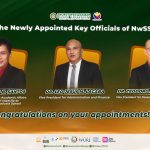
𝐀𝐩𝐩𝐨𝐢𝐧𝐭𝐦𝐞𝐧𝐭 𝐨𝐟 𝐍𝐞𝐰 𝐍𝐰𝐒𝐒𝐔 𝐊𝐞𝐲 𝐎𝐟𝐟𝐢𝐜𝐢𝐚𝐥𝐬 The NwSSU announces the appointment of the new university key officials effective May 13, 2026: DR. ROMEO B. SANTOS – Vice President for Academic Affairs in concurrent capacity as Dean of the Graduate School DR. LEO JESUS M. LACABA – Vice President forAdministration and Finance DR. TEODORO A. AMATOSA, JR.Vice President for Research, Innovation, and Extension Congratulations on your appointments!

NwSSU Concludes Strategic Futures Workshop, Defines Path Toward HANDUM 2050

MAY 12, 2026 — Northwest Samar State University (NwSSU) successfully wrapped up the two-day Strategic Futures Workshop: Futures Thinking Towards Sustainable Development Using the ACACIA Framework via Zoom. Organized by the Research, Innovation, and Extension (RIE) Division through the Center for Futures Thinking and Strategic Foresight (FTSF), and in partnership with the Philippine Futures Thinking Society (PhilFutures), the activity forms part of a broader series of capability-building initiatives. Attended by NwSSU key officials, deans, and heads of offices, this workshop aimed to institutionalize futures thinking and anticipatory governance within the institution, laying the groundwork for activities such as the Campus Futures Thinking Workshop and Research Caravan in collaboration with the Polytechnic University of the Philippines. Day 1 sessions featured Mr. Emmanuel De Guia, Resident Futurist of the Senate Committee on SDGs, Innovation, and Futures Thinking, who guided participants in shifting mindsets and rethinking assumptions about the future. Dr. Rupert S. Sangalang, Senior Fellow of PhilFutures, was also featured in the Day 1 sessions. He introduced the ACACIA Framework as a structured approach to align institutional identity, local values, and global development goals in crafting strategic plans. Meanwhile, Day 2 focused on deepening participants’ grasp of foresight methodologies and shaping the university’s envisioned future. The session began with an “Introduction to the Process of Strategic Foresight,” which broke down the systematic steps used to analyze trends, explore uncertainties, and prepare for long-term possibilities. ​The Day 2 session continued with “Future Possibilities: Ideate The Vision,” led by Ms. Jalaine Joyce V. Malabanan, Fellow at PhilFutures. She facilitated collaborative discussions and creative exercises, guiding participants to brainstorm, refine, and articulate shared aspirations—turning abstract ideas into concrete concepts that will serve as building blocks for the university’s long-term vision. ​Central to the entire initiative is defining the path toward Project HANDUM 2050: The Futures of NwSSU. Handum, a term widely used in the Hiligaynon and Waray-Samar dialects, translates to collective aspiration, shared vision, and purposeful imagination—values that serve as the philosophical foundation of the university’s futures initiative. With the conclusion of this workshop, the university now has a solid foundation to develop a comprehensive, inclusive, and forward-looking roadmap that will steer its growth, strengthen its community impact, and advance its contribution to sustainable development. ​This initiative equips NwSSU with the mindset and shared vision needed to navigate change confidently while ensuring that every plan and decision made every day aligns with the desired future it aims to build. #RISENwSSU

NWSSU Kicks Off Strategic Futures Workshop, Charts Vision Toward HANDUM 2050

Northwest Samar State University (NWSSU) Research, Extension, and Innovation (RIE) Division, through the Center for Futures Thinking and Strategic Foresight (FTSF), officially opened Day 1 of the Strategic Futures Workshop: Futures Thinking Towards Sustainable Development Using the ACACIA Framework via Zoom today, May 11, 2026. This activity marked the start of a series of capability-building initiatives aligned with the university’s goal to embed futures thinking, anticipatory governance, and innovation-driven research into its core systems. Held in partnership with the Philippine Futures Thinking Society (PhilFutures), the workshop sets the stage for broader activities including Campus Futures Thinking Workshop and Research Caravan with the Polytechnic University of the Philippines. On behalf of NWSSU OIC President Dr. Gil Leovigildo A. Ancheta, CPA, CSEE, Mr. Redem D. Tingzon, Expanded Tertiary Education and Equivalency Program (ETEAEP) Director, delivered the opening remarks. He emphasized that the university’s move toward futures-oriented planning is a strategic step to ensure it remains relevant, responsive, and resilient amid a changing world. Adding weight to the event, welcome messages were shared through recorded videos from Senators Pia S. Cayetano and Win T. Gatchalian of the Senate of the Philippines. Both senators commended NwSSU’s leadership in adopting forward-looking approaches, noting that institutional foresight is key to advancing sustainable development goals nationwide. Dr. Tirso Ronquillo, President of the Philippine Association of State Universities and Colleges (PASUC), also conveyed his full support via a recorded video, stating that such efforts set a benchmark for higher education institutions across the country. The technical sessions began with a compelling presentation titled Provocation and Reorienting the Institutional Mind, led by Mr. Emmanuel De Guia, Resident Futurist of the Senate Committee on SDGs, Innovation, and Futures Thinking, encouraged participants to question assumptions and imagine multiple possible futures for the university. This was followed by University Rootedness and ACACIA Framework for the Strategic Development Plan delivered by Dr. Rupert S. Sangalang, Senior Fellow of PhilFutures, who introduced the ACACIA Framework as a practical tool to structure foresight work, linking institutional identity, local culture, and global development goals to create meaningful, actionable strategies. At the heart of this whole undertaking is the flagship project HANDUM 2050: The Futures of NWSSU. Through this workshop and its activities, NwSSU aims to co-create a clear, inclusive, and forward-looking roadmap that will guide its growth, impact, and contribution to sustainable development over the coming years. Day 1 concluded with high engagement from participants, marking a promising start to the journey of turning shared dreams into tangible institutional action. #RISENwSSU

NwSSU Water Declared Safe After Thorough Quality Testing

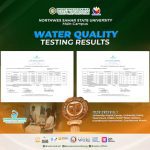
CALBAYOG CITY – The water supply across Northwest Samar State University (NwSSU) Main Campus has been given a clean bill of health following comprehensive water quality testing conducted on April 27, 2026. The results, released on May 6, 2026, indicate that water from seven key locations within the university grounds passed all necessary health standards, ensuring it is safe for consumption and general use by the university community. The testing initiative, managed by the University Health Center in collaboration with the SPFIDO, aimed to analyze the physical, chemical, and biological characteristics of the water supply to identify any potential contaminants and ensure compliance with established health regulations. The sampling sites, strategically chosen after a meeting with SPFIDO Repair and Maintenance Division Head Engr. John Dale E. Yabao and guided by Mr. Jerome S. Caliste, included the University Health Center, University Hotel, Food Court, Guardhouse Hamorawon, Guardhouse Rueda, COED, and the COOP Water Station (product). Ms. Janice Maribojoc, Operations Manager for Analytical Services from Calbayog Water Company, Inc., personally oversaw the water sampling at these designated sites. The collected water samples underwent thorough analysis using both the multiple tube fermentation technique and the pour plate method. These tests specifically looked for the presence of coliforms and thermotolerant coliforms, which are indicators of water purity. The findings from the analysis were overwhelmingly positive. All tested sites showed coliform and thermotolerant coliform levels of less than 1.1 MPN/100 ml, which were remarked as “passed.” This result provide assurance regarding the safety and quality of NwSSU’s water supply.

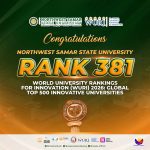
NwSSU Continues Global UpRISE, Secures Rank 381 in WURI 2026

Northwest Samar State University (NwSSU) has once again demonstrated its unwavering commitment to innovation and global impact, earning the 381st position in the World University Rankings for Innovation (WURI) 2026: Global Top 500 Innovative Universities. This achievement builds upon the university’s exceptional performance in previous rankings, solidifying its place among worldwide institutions dedicated to forward-thinking strategies and transformative contributions. NwSSU’s consistent position in these prestigious rankings highlights its dedication to fostering an institution of innovation, pertinence, and sustainable development. WURI is a global ranking system which evaluates universities by focusing on their real-world contributions and societal impact, emphasizing innovation, resilience, and responsiveness in its academic, research, and community engagement. NwSSU’s participation and continued recognition in WURI emphasize its success in adopting innovative practices that address contemporary global challenges. Reflecting on its performance in the 2025 WURI Rankings, NwSSU previously achieved remarkable placements, including 24th globally in the Environmental, Social, and Governance (ESG) Trend category. The university also secured 47th worldwide in Funding for Sustainability and 51st in Crisis Management. These past achievements exemplify NwSSU’s integrated approach to sustainability, ethical leadership, resourceful financial planning, and its agility in confronting disruptions and natural disasters. NwSSU’s sustained performance in the WURI rankings, now including its 381st spot in 2026, serves as a powerful testament to its UpRISE—progressive, inclusive, and impactful educational practices. By integrating sustainability, crisis resilience, and principled governance within its core, NwSSU continues to exemplify how state universities can drive transformative change, effectively serving both local communities and addressing broader global challenges. #WURI2026 #RISENwSSU

NwSSU Upholds Quality Excellence: Successful ISO Surveillance Visit Concludes

Northwest Samar State University (NwSSU) successfully concluded its SOCOTEC First Surveillance Visit on April 30, 2026, marking another significant milestone in maintaining its ISO 9001:2015 certification. The rigorous two-day audit, attended by key officials, faculty members, and non-teaching staff, emphasized the university’s steadfast commitment to quality management and adherence to international ISO standards. Led by Ms. Hannah Leah Bautista, Lead Auditor, and Ms. Harlene Vizcarra, Support Auditor, the audit aimed to ensure continuous improvement and operational excellence across all university functions. The surveillance visit commenced on April 29, 2026, with an extensive audit across both the NwSSU Main and San Jorge Campuses. On Day 1, auditors comprehensively reviewed Tertiary Education, including laboratory facilities, curriculum development, and library services at the Main Campus. A focused verification of NCm01 was also conducted for the Bachelor of Science in Nursing (BSN) program, alongside audits of the University Registrar’s Office, SPIFPDO, Security, and the University Motorpool. Concurrently, the San Jorge Campus also underwent a thorough review of its Tertiary Education, encompassing laboratory and curriculum development, with specific verification of NCm01 and NCm02 for the Bachelor of Science in Agriculture – Animal Science (BSA – ANSCI) program, highlighting NwSSU’s dedication to diverse academic excellence. Day 2 of the audit, April 30, 2026, continued with a meticulous review of key departments of NwSSU Main Campus. The auditors thoroughly examined the operations of the offices of Research and Extension, Management Information System (MIS), Student Affairs and Services (SAS), and Guidance Services. These audits are crucial in ensuring that all facets of the university’s administration and student support systems align with the rigorous requirements of the ISO 9001:2015 standard, reflecting a holistic approach to quality assurance. Prior to the culmination of the activity, the auditors engaged in an internal audit, a management review, and an auditor’s meeting to consolidate their findings. The outcome of these reviews was overwhelmingly positive, indicating that NwSSU’s quality management systems are strong and effectively implemented. This positive assessment reaffirms the university’s commitment to maintaining high standards in all its operations and services, which is vital for its continuous development and reputation. The successful surveillance visit concluded with a closing meeting held at the Business Development Center (BDC) third floor. The positive results of the audit not only secure NwSSU’s ISO 9001:2015 certification but also strengthen its commitment to providing exceptional education and services to its students and stakeholders.

Water Quality Testing

The University Health Center (UHC) requested Water Quality Testing to analyze the physical, chemical, and biological characteristics of water supply within the Main Campus last April 27, 2026. This will help determine if the water is safe for consumption and general use by identifying contaminants and ensuring compliance with health standards. Appropriate sampling sites were selected after a meeting with the SPFIDO Repair and Maintenance Division Head, Engr. John Dale E. Yabao. Further, the team was guided by Mr. Jerome S. Caliste to properly locate the water sampling sites within the University. Ms. Janice Maribojoc – Operations Manager, Analytical Services from Calbayog Water Company, Inc. conducted the water sampling and specimen collection at designated sites. As of this posting, UHC is awaiting the summarized report of the Water Quality Test for evaluation and recommendations.

MAGNAYE WINS FIRST PLACE BEST PAPER AND BEST ORAL PRESENTER IN INTERNATIONAL RESEARCH CONFERENCE ON SCIENCE EDUCATION

Lj Magnaye, faculty member and College Research Coordinator of the College of Education, Northwest Samar State University (NwSSU), earned international recognition after winning First Place Best Paper and First Place Best Oral Presenter (Cluster 1: Culturally Responsive and Contextualized STEAM Education) at the 2026 NOSTE International Research Conference and Training Workshops held on April 23–25, 2026 at St. Louis University, Baguio City. Magnaye’s award-winning study, titled “Teaching Indigenous Science through Culturally Responsive Pedagogy: Shaping Environmental Perception and Cultural Resilience in Science Education,” centers on culturally responsive science education and the integration of indigenous knowledge systems. His research stood out among a diverse pool of local and international participants, highlighting the importance of contextualized teaching approaches in fostering environmental awareness, cultural resilience, and meaningful science learning. The conference was organized by the National Organization of Science Teachers and Educators, Inc. (NOSTE) in collaboration with St. Louis University (SLU), Universitas Pendidikan Indonesia (UPI), Central Luzon State University (CLSU), and West Visayas State University – Center for Research in Science and Mathematics Education (WVSU CRISMEd). NOSTE is a professional organization dedicated to advancing science education in the Philippines through research, innovation, and capacity-building initiatives. Its international conference serves as a platform for educators, researchers, and practitioners to share scholarly work and best practices in science and STEAM education. Anchored on the theme “STEAM Education for Sustainable Futures: Empowering Teachers and Volunteers as Change Catalysts,” the conference gathered experts and scholars from across the globe to promote transformative and sustainable educational practices. This achievement highlights NwSSU’s continued commitment to research excellence and its growing presence in the international academic community.

The Northwest Samar State University (NwSSU) has taken a significant step toward advancing its priority development projects through a collaborative engagement with the Public-Private Partnership (PPP) Center of the Philippines.

On April 6, 2026, NwSSU held an online exploratory meeting with representatives from the PPP Center to discuss potential cooperation in preparing feasibility studies for the University’s key initiatives. The meeting was led by Dr. Gil Leovigildo A. Ancheta, OIC-University President, together with heads of offices from the General Services and Infrastructure Planning and Management Office (GSIPMO), Planning Office, and Project Development Office. Representing the PPP Center was Atty. Cyris Ann A. Ng-Santiago, joined by personnel from the Capacity Building and Knowledge Management Service and the Technical Advisory Division. The primary objective of the meeting was to secure collaboration with the PPP Center in developing feasibility studies for NwSSU’s top three PPP priority projects: the Student Centers and Business Incubation, the Development of an Eco-Tourism Park and Resort, and the NwSSU-SJ Farm Tourism project. These initiatives are intended for submission under the solicited PPP track. As an outcome of the discussion, both institutions agreed to conduct a collaborative feasibility study (FS) writing workshop. This initiative aims to strengthen project proposals and position them as high-priority, implementable PPP projects. The partnership is expected to enhance the University’s capacity to deliver improved services and facilities for its students, faculty, and stakeholders, while contributing to broader development in the education sector.