Low Carbon Energy (Solar) 2026 (Jan-Oct) – 3,288 kwh
Yes. NwSSU measures its energy use through monthly electricity billing and tracks the output of the rooftop solar PV system on the Administration Building, installed and monitored by the General Services and Infrastructure Project Management Office (GSIPMO). The solar system saved the university ₱320,402.70 on its 2024 electricity bill.
2024 – 969,500 kWh 2025 – 799,400 kWh 2026 – (to be completed after Dec 2026 billing)
Total electricity consumption of the university based on electricity billing records. Consumption fell by 170,100 kWh (about 17.5%) from 2024 to 2025, reflecting the energy reduction measures under Priority Area 5 (Alternative Energy) of the Environmental Conservation and Sustainability Plan.
13.2.2.2 – Total energy used from low-carbon sources
2024 – 23,290 kWh 2025 – 20,710 kWh 2026 – (to be completed after Dec 2026 billing)
Energy generated by the rooftop solar PV system on the Administration Building. Low-carbon sources supplied about 2.4% of total energy in 2024 and about 2.6% in 2025. The 2024 solar savings of ₱320,402.70 equal roughly ₱13.76 per kWh, consistent with local electricity rates.
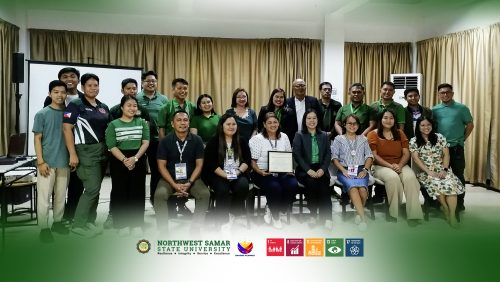
Yes. NwSSU provides climate education to the local community. Under the Flood Guard Calbayog MOA (Aug 15, 2025), NwSSU trains LGU personnel to use AWS-based flood risk maps. The College of Agriculture and Technology conducted a three-day GIS training on climate change adaptation and DRRM for the Calbayog CDRRMO and City Agriculture Office (Oct 24–26, 2023). NwSSU hosted the Gov-CDR workshop on climate and disaster resilience for community-based and women-led organizations from Gandara, Matuguinao, San Jorge and Pagsanghan (Sep 1–2, 2026), and joined the Provincial Nutrition Month on climate-resilient nutrition (Jul 10, 2026).
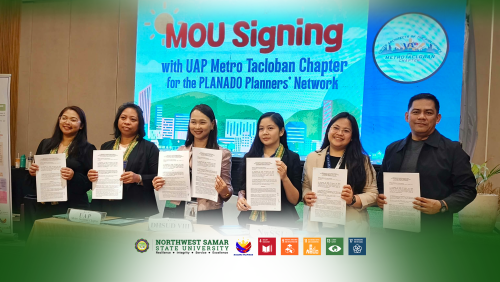
Yes. NwSSU’s Environmental Conservation and Sustainability Plan, published on the university website, sets Disaster Risk Reduction and Management–Climate Change Adaptation and Alternative Energy (reducing energy use and carbon footprint) as priority areas, developed with LGUs, government agencies, CSOs and NGOs. NwSSU, as academic partner of UST-CCCPET, supported data gathering for the Samar Island Natural Park Climate Change Action Plan with the Provincial Government (Apr 2025), and prepared the Climate and Disaster Risk Assessment of Almagro’s CLUP (Jul 2026). Supporting document to attach: BOR approval and transmittal of the plan to the LGU.
13.3.3 – Co-operative planning for climate change disasters
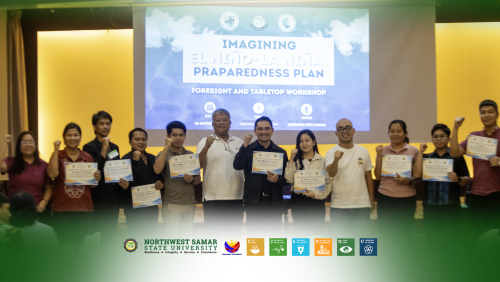
Yes. NwSSU plans jointly with local government for climate-related disasters. The Flood Guard Calbayog MOA with the City LGU (Aug 15, 2025) commits the LGU to integrate NwSSU’s flood risk maps into its disaster risk reduction plans. This builds on the May 27, 2024 MOA with the Calbayog CDRRMO on disaster preparedness training. In Oct 2026, the University DRRM Council and the Center for Futures Thinking and Strategic Foresight agreed with Calbayog and San Jorge to run El Niño–La Niña tabletop and scenario-planning workshops with the water, agriculture, energy and health sectors. NwSSU also prepared Almagro’s CLUP with its Climate and Disaster Risk Assessment, and partnered with DSWD on the Philippine Community Resilience Project.
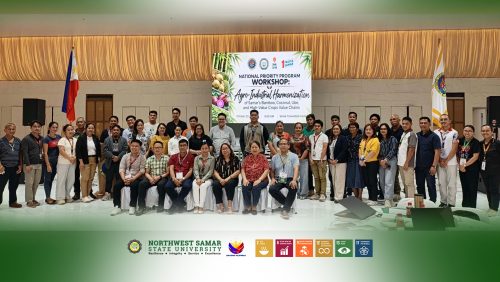
Yes. NwSSU informs and supports government on climate issues. It provided Automatic Weather Station heat-index data to the Calbayog CDRRMO during the PAGASA Extreme Caution heat alert (Apr 22, 2025). The VP for Research, Innovation and Extension represented NwSSU at the Provincial Government’s UNESCO Nomination and Climate Change Mitigation Conference for Samar Island Natural Park (Apr 28, 2025). NwSSU gave technical assistance to the LGU of Almagro on its CLUP and Climate and Disaster Risk Assessment (turned over Jul 8, 2026), and facilitated the PLGU-Samar Agro-Industrial Harmonization Workshop, which addressed farmers’ vulnerability to typhoons and drought (Oct 2026).
13.3.5 – Environmental education collaborate with NGO
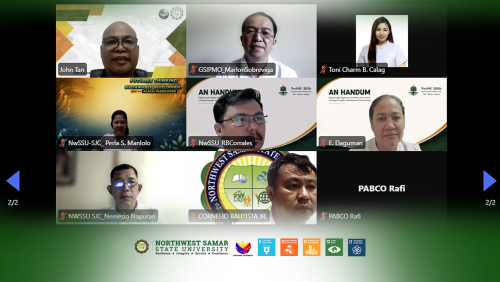
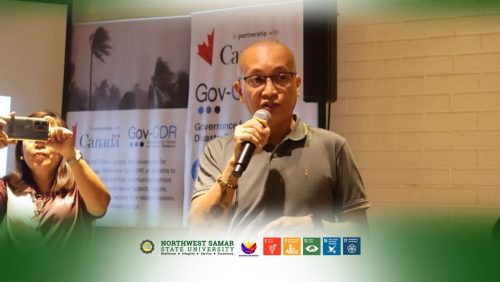
Yes. Development Communication faculty joined the Climate Reporting Workshop organized by VERA Files, a non-profit media organization, with Samar Chronicle and support from the European Union, the Danish Ministry of Foreign Affairs and International Media Support (Aug 13–16, 2025). Their pitch on renewable energy and nature conservation won one of three IMS Climate Reporting Grants (Sep 22, 2025). NwSSU also hosted and co-facilitated the Gov-CDR workshop implemented by Alinea International with the National Resilience Council (Sep 1–2, 2026).
The Sustainability Plan includes designing buildings with zero emissions in operations and reducing carbon footprints; rooftop solar saved ₱320,402.70 in 2024; two zero-emission E-Jeeps were acquired for campus transport (Oct 23, 2025); a tree planting and tree parenting activity was held by UDRRMO, Planning Office, GSIPMO, RIE and ROTC (Jul 24, 2025); and the 900-hectare San Jorge property is planned as SICENRRD for reforestation, watershed rehabilitation and climate-resilience research (Oct 17, 2025). Action needed: a Board of Regents resolution committing NwSSU to carbon neutrality.