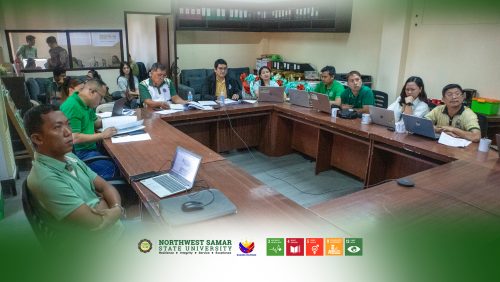
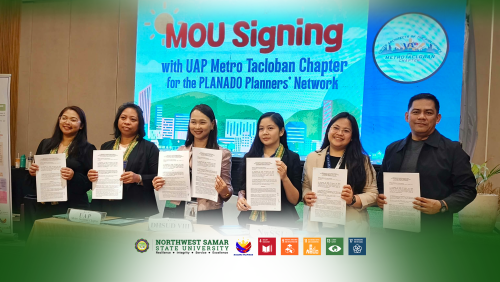
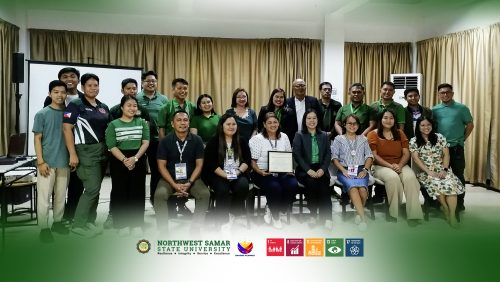
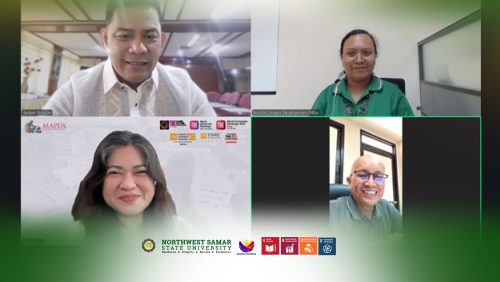
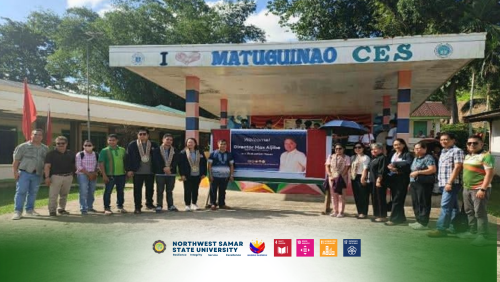
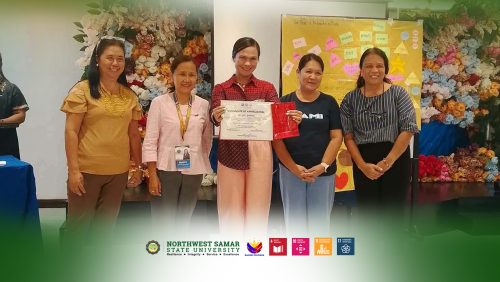
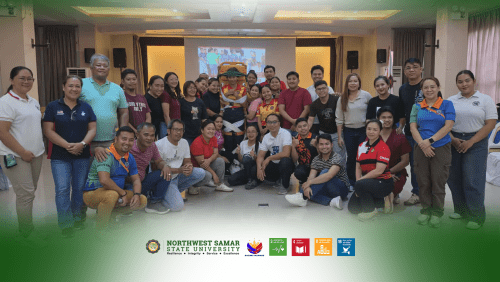
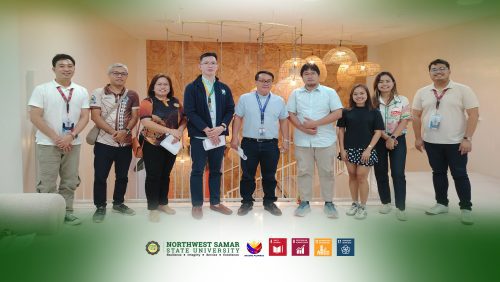
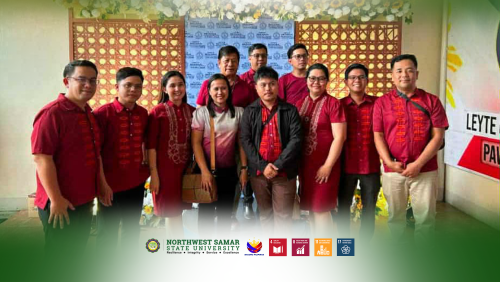
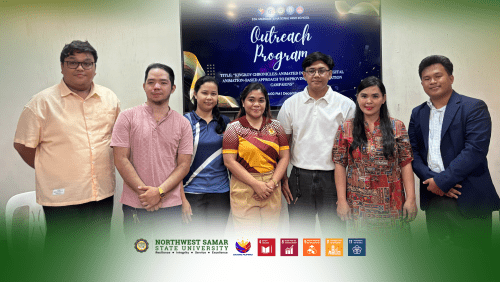
Calbayog City — Officials and faculty members of Northwest Samar State University (NwSSU) met with the Local Government Unit of Calbayog, led by Mayor Raymund Uy, to reinforce collaboration on the Bolongto Eco-Tourism Development Project.
Northwest Samar State University (NwSSU) partnered with representatives from the Provincial Government of Samar and other institutions for an event titled “Fortresses and Frontiers: Student Heritage Documentation and Interpretation Challenge”.
The challenge aims to engage college students in experiential learning through field immersion, research, and documentation of heritage structures. It challenges participants to compete in analyzing and creatively interpreting Samar’s defensive heritage using architectural documentation, storytelling, and insightful visualization into miniature models of the fortifications/sentinels.
Public access to libraries ensures that everyone, regardless of age, background, or income, can freely use library resources and services. Public libraries provide access to books, digital media, internet, educational programs, and community spaces. They promote literacy, lifelong learning, and equal opportunities for information, supporting both personal growth and community development.
The Bureau of Fire Protection (BFP) spearheaded the Bida Ka Fire Square Roadshow at Northwest Samar State University (NwSSU) RSU Socio-Cultural Hall on March 25, 2025, as part of the nationwide Fire Prevention Month campaign.
The event aimed to promote fire safety awareness and preparedness among the participants, including NwSSU criminology students, members of various organizations, and students from other schools in Calbayog.
Northwest Samar State University (NwSSU) proudly introduced “Trends in Waste Picking: A Bibliometric Analysis of Waste Pickers’ Impact on Solid Waste Management,” authored by Dr. Novlloyd E. Celeste of the College of Criminal Justice and Sciences (CCJS) and published in the Jurnal Kesehatan Lingkungan: Journal of Environmental Health, Volume 18, No. 3, July 2026.
Rather than examining waste management solely from a technical perspective, this research takes a broader view by mapping the evolution of global scholarship on waste picking. Through bibliometric analysis, it uncovers emerging research themes, influential publications, and international collaborations while highlighting the indispensable role of waste pickers in resource recovery, environmental protection, and sustainable solid waste management.
Northwest Samar State University (NwSSU) participated in shaping Samar’s Sustainable Strategic Tourism Development Plan 2025-2034 by joining a Site Attraction Evaluation across the province from February 18-22, 2025.
Representing NwSSU’s Tourism Management program, Assistant Professors Ghilson B. Amor and Mia Cheryl E. Casiracan assessed cities and municipalities, identifying and evaluating potential and existing tourist attractions that align with sustainable development goals.
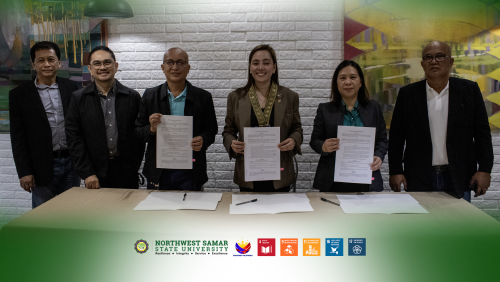
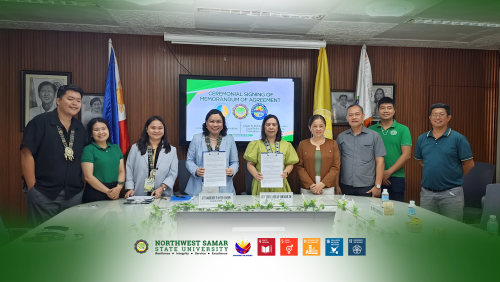
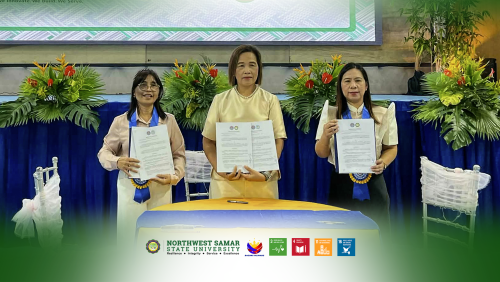
To drive the advancement of arts, culture, and community development, Northwest Samar State University (NwSSU) and the Calbayog City Arts and Culture Office (CACO) formalized a partnership with the signing of a Memorandum of Agreement (MoA) on May 7, 2025, at the University President’s Boardroom, setting the stage for a transformative cultural collaboration.
The MoA outlines shared objectives to promote artistic expression, provide platforms for talents, and promote cultural awareness in Calbayog City. The partnership establishes a framework for joint initiatives, including training programs, performances, cultural mapping, and publication of local heritage materials.
Northwest Samar State University (NwSSU) actively participated in a collaborative project aiming to conserve Samar’s historic fortifications, primarily the Sta. Rita, Bangahon, and Zumarraga fortification sites, last February 5-8, 2025. The initiative, titled “Safeguarding the Sentinels of the Seas: Conservation of Samar Fortifications,” funded through the Ambassadors Fund of Cultural Preservation of US Department of State through US Embassy in the Philippines and the Provincial Government of Samar is led by the University of Santo Tomas Graduate School Center for Conservation of Cultural Property and Environment in the Tropics (USTGS-CCCPET) headed by Ms. Beverly M. Bautista, in partnership with Northwest Samar State University (NwSSU), along with Samar State University (SSU) represented by Ms. Maria Rubi M. Parrocho, and Samar Provincial Tourism Office (SPTO) represented by Mr. Etelbert Conde.
Northwest Samar State University (NwSSU) held a blessing ceremony on Friday for two newly acquired electric jeepneys (E-Jeeps), marking a significant step toward safer and more sustainable campus transportation. The event took place at the university parking lot in front of the Business Development Center (BDC).
The E-Jeeps are set to serve as vital transport assets for students, especially during off-campus rotations, fieldwork, and shuttle services. Their inauguration reflects NwSSU’s ongoing commitment to student welfare, mobility, and eco-conscious innovation.
Northwest Samar State University aims to provide an affordable, accessible location and community-oriented faculty and employee housing project. This can help build employee loyalty and increase productivity through improved morale and an enhanced employee work-life balance. It is also geared towards increasing productivity, security, and property values. These housing benefits can improve employee access to a permanent tangible asset – making such a program an important employee asset-building tool.
Northwest Samar State University (NwSSU) provides affordable, institutionally governed housing for its students. To ensure these accommodations remain safe, low-cost, and aligned with national student welfare standards, the university institutionalized its housing framework through a formal, multi-stage governance process. The NwSSU Dormitory lower overall living costs for students from low-income and remote communities across Samar.
The Land Use Development and Infrastructure Plan (LUDIP) is a strategic framework mandated by Republic Act (RA) in the Philippines, designed to guide the comprehensive development of university land and infrastructure. It encompasses detailed strategies for optimal land allocation, efficient infrastructure utilization, and sustainable development practices within the university’s jurisdiction.
11.4.7 – Local authority collaboration regarding planning and development
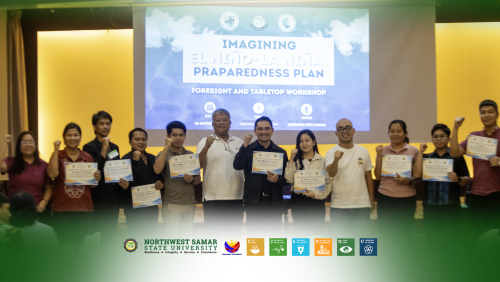
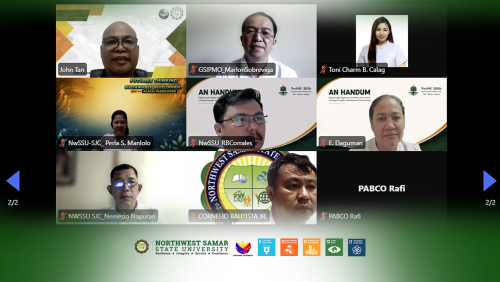
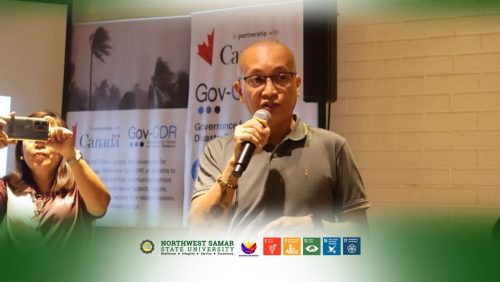
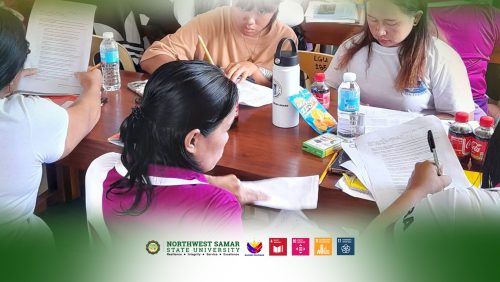
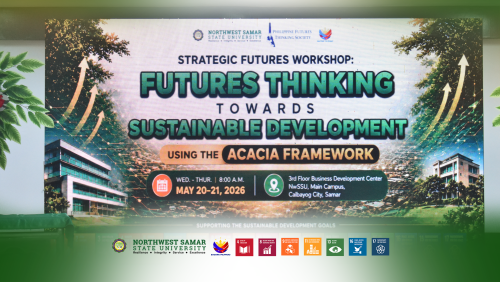
University DRRM Council and the Center for Futures Thinking and Strategic Foresight agreed with two LGUs to run tabletop and scenario-planning workshops on drought and flood.
11.4.8 – Planning development – new build standards
The Land Use Development and Infrastructure Plan (LUDIP) is a strategic framework mandated by Republic Act (RA) in the Philippines, designed to guide the comprehensive development of university land and infrastructure. It encompasses detailed strategies for optimal land allocation, efficient infrastructure utilization, and sustainable development practices within the university’s jurisdiction.
The university strictly adheres to the National Building Code of the Philippines under the Presidential Decree No. 1096. Section 214 of the said code states that dangerous buildings are those which are herein declared as such or are structurally unsafe or not provided with safe egress, or which constitute a fire hazard, or are otherwise dangerous to human life, or which in relation to existing use, constitute a hazard to safety or health or public welfare because of inadequate maintenance, dilapidation, obsolescence, or abandonment; or which otherwise contribute to the pollution of the site or the community to an intolerable degree.