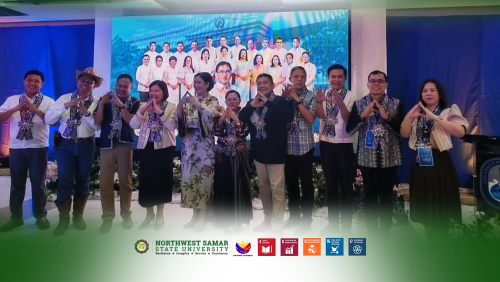
The University Board of Regents (BOR) serves as the highest governing body of Northwest Samar State University (NwSSU). Its membership reflects a balanced combination of appointed and elected representatives from both internal and external sectors. The BOR includes representatives from the Commission on Higher Education; the Senate Committee on Higher, Technical, and Vocational Education; the House of Representatives Committee on Higher and Technical Education; the Department of Budget and Management; and the Department of Science and Technology. It also includes the presidents of the Federation of Faculty Associations, Federation of Alumni Associations, and Federation of Student Councils, along with private-sector representatives.
Elected representation is an integral part of this governance structure. The presidents of the faculty, alumni, and student federations are selected through formal university-wide elections. They represent the concerns and interests of their respective sectors, helping ensure that university policies and decisions are developed through inclusive and participatory processes.
This structure promotes shared governance and accountability by incorporating diverse perspectives into the university’s highest-level decision-making processes. The University Charter and institutional bylaws clearly outline the procedures for electing these representatives, and the university makes election results publicly available to support transparency and strengthen institutional trust.
NwSSU has written policies and procedures to identify and engage local stakeholders as stipulated in its Implementing Rules and Regulations (IRR) of the Republic Act establishing the university and detailed in the Citizen’s Charter 2026 Edition. These documents outline systematic processes for consultation, collaboration, and partnership with external stakeholders, including local government units, industries, communities, and civil society organizations. Through these established mechanisms, the university ensures transparent, inclusive, and accountable engagement that aligns institutional programs with local and regional development priorities.
16.2.4 – Participatory bodies for stakeholder engagement
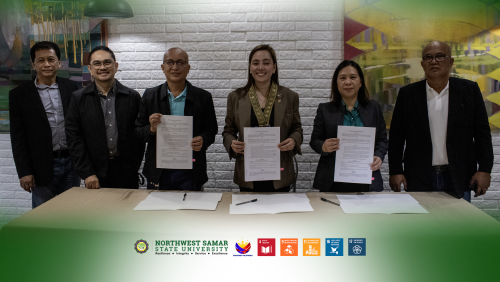
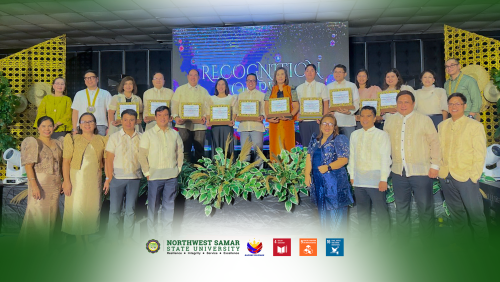
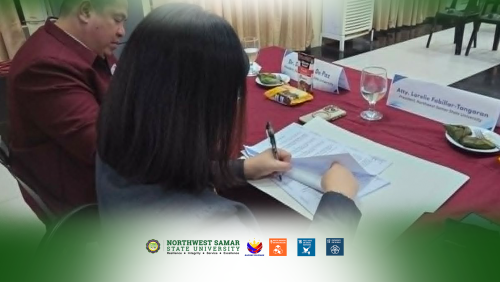
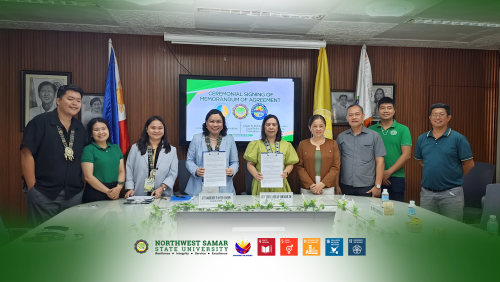
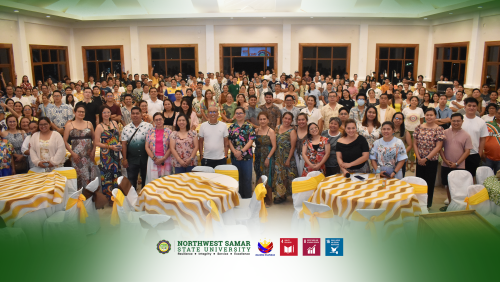
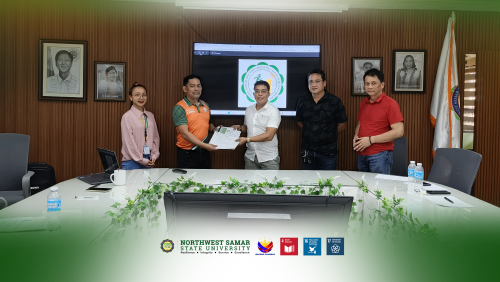
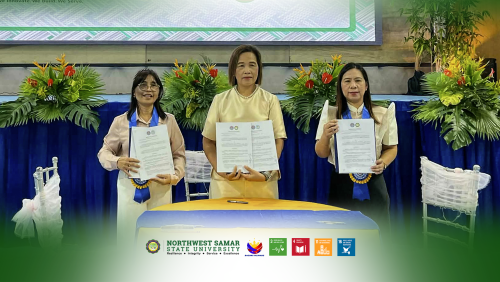
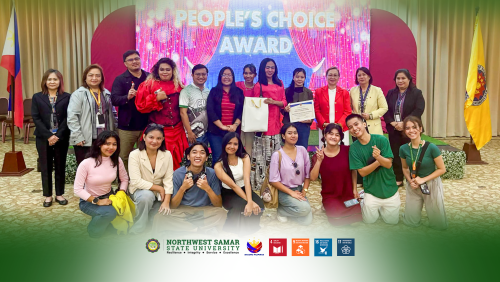
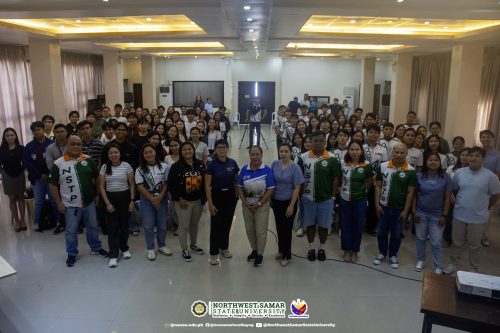
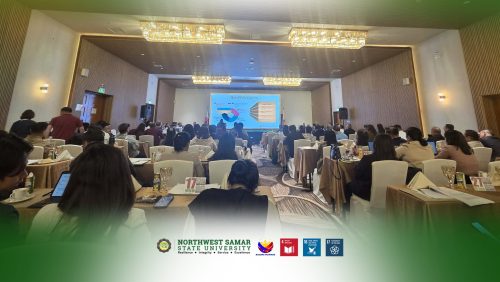
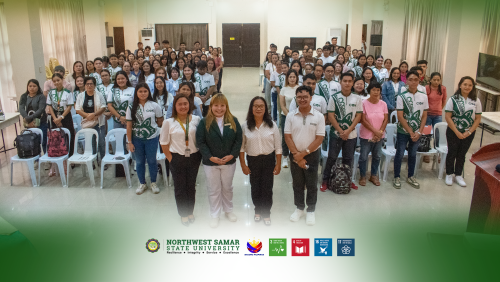
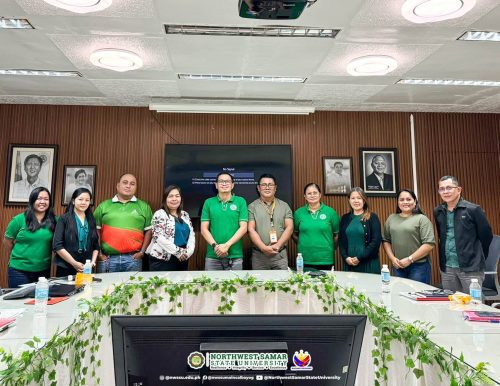
The university ensures meaningful stakeholder participation through regular Consultative Assemblies involving local government units, civil society organizations, and community representatives. In the 2025 Civil Society Organization (CSO) Consultative Assembly, the university presented its FY 2026 Budget Proposals, gathered feedback for FY 2027 priorities, and formalized partnerships through a Budget Partnership Agreement.
This platform allows local stakeholders to review and recommend university Programs, Activities, and Projects, reinforcing transparency and shared governance. Such initiatives institutionalize community involvement in planning and decision-making, aligning university programs with societal needs and fostering accountability in public resource management.
16.2.5 – University principles on corruption and bribery
Northwest Samar State University (NwSSU) has formally documented and made publicly available its institutional stance against organised crime, corruption and bribery through its governance framework and published policies. The university’s General Mandate states that “officials and employees … shall at all times be accountable to the people and shall discharge their duties with utmost responsibility, integrity, competence, and loyalty, act with patriotism and justice, lead modest lives, and uphold public interest over personal interest.”
Additionally, the Legal Office page affirms the University’s role in promoting a culture of compliance, accountability and institutional integrity. While this demonstrates an explicit commitment by the university, there is potential to strengthen the publication by making a dedicated anti-corruption policy document that explicitly refers to organised crime, bribery and corruption, and also specifying preventive mechanisms, sanctions, monitoring and reporting channels.
Northwest Samar State University (NwSSU) explicitly recognises academic freedom in its General Mandate, stating that “academic freedom is the right of the teacher to teach the subject of his specialization according to his best lights; … and to express his opinions on public questions …” (General Mandate, Article 8, Section 1.1). The policy further clarifies that this freedom does not extend to discussing in the classroom topics unrelated to the course of study being pursued. In effect, the university provides its faculty the institutional guarantee to choose their teaching and research focus within their specialization, and to publicly engage with their work, thereby promoting freedom of inquiry, expression and scholarship. At the same time, the policy sets a clear boundary to maintain academic relevance and disciplinary coherence.
A pearl buried inside a tightly shut shell is practically worthless. Government information is a pearl, meant to be shared with the public in order to maximize its inherent value. The Transparency Seal, depicted by a pearl shining out of an open shell, is a symbol of a policy shift towards openness in access to government information. On the one hand, it hopes to inspire Filipinos in the civil service to be more open to citizen engagement; on the other, to invite the Filipino citizenry to exercise their right to participate in governance.
This initiative is envisioned as a step in the right direction towards solidifying the position of the Philippines as the Pearl of the Orient – a shining example of democratic virtue in the region.
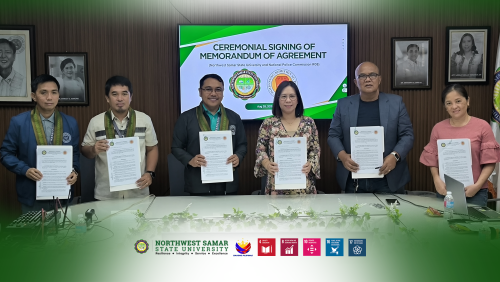
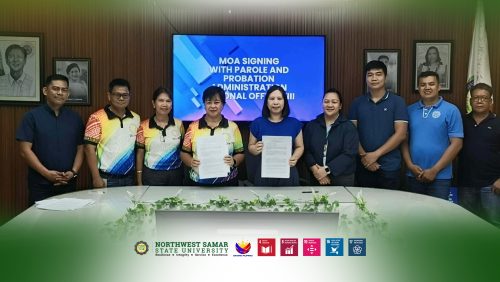
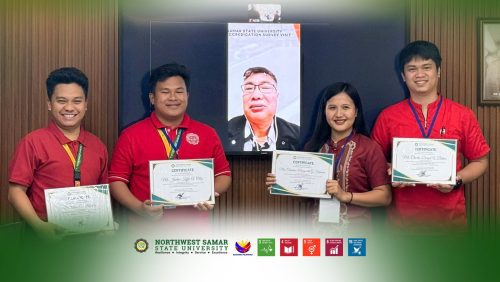
Demonstrates direct policy engagement with the Parole and Probation Administration in designing and implementing rehabilitation programs an example of providing evidence-based inputs for justice and reintegration policies.
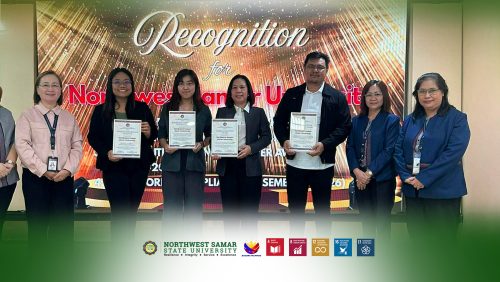
The NwSSU Hotel and Restaurant was accredited by DOT Region 8.
16.3.2 – Policy- and lawmakers outreach and education
Northwest Samar State University (NwSSU) explicitly recognises academic freedom in its General Mandate, stating that “academic freedom is the right of the teacher to teach the subject of his specialization according to his best lights; … and to express his opinions on public questions …” (General Mandate, Article 8, Section 1.1). The policy further clarifies that this freedom does not extend to discussing in the classroom topics unrelated to the course of study being pursued. In effect, the university provides its faculty the institutional guarantee to choose their teaching and research focus within their specialization, and to publicly engage with their work, thereby promoting freedom of inquiry, expression and scholarship. At the same time, the policy sets a clear boundary to maintain academic relevance and disciplinary coherence.
The university ensures meaningful stakeholder participation through regular Consultative Assemblies involving local government units, civil society organizations, and community representatives. In the 2025 Civil Society Organization (CSO) Consultative Assembly, the university presented its FY 2026 Budget Proposals, gathered feedback for FY 2027 priorities, and formalized partnerships through a Budget Partnership Agreement.
This platform allows local stakeholders to review and recommend university Programs, Activities, and Projects, reinforcing transparency and shared governance. Such initiatives institutionalize community involvement in planning and decision-making, aligning university programs with societal needs and fostering accountability in public resource management.
16.4 Proportion of graduates in law and civil enforcement
16.4.1 – Proportion of graduates in law
* Number of graduates * Number of graduates from law and enforcement related courses
In 2026, Northwest Samar State University (NwSSU) produced 2,442 graduates, of which 283 were from law and civil enforcement–related programs such as Criminology and Public Administration. These programs develop competencies in justice, governance, and public safety, contributing directly to national efforts in strengthening peace and institutional integrity. This represents 11.59% of the total graduates for the year.