Menu
image-viewer

8.2 Employment practice

8.2.1 – Employment practice living wage

– NwSSU Employment Practice Living Wage UPDATED

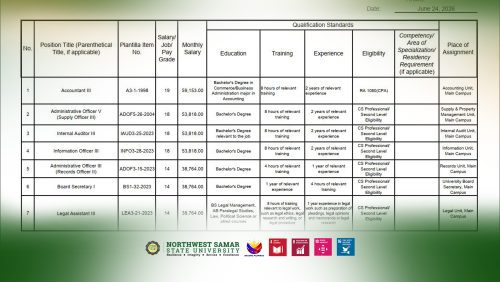
Based on the guidance of National Budget Circular No. 597, series of 2025, which implements the second tranche of the updated salary schedule for civilian government personnel under Executive Order No. 64, s. 2024, and pursuant to Wage Order No. RB VIII-24 issued by the Regional Tripartite Wages and Productivity Board (RTWPB) for Region VIII, the University ensures that all its staff and faculty are paid at least the living wage.

Wage Order No. RB VIII-24 mandates an increase in the regional minimum wage to enable workers to cope with the rising cost of living, aligned with poverty threshold data for a family of four. In compliance with both the national salary standard for government personnel and the regional wage order, the University as a body guarantees that the compensation of all staff and faculty meets or exceeds the local living wage benchmark.

8.2.2 – Employment practice unions

– NwSSU website: NwSSU – TESDA PTC – Samar Skills Training and Employment Partner

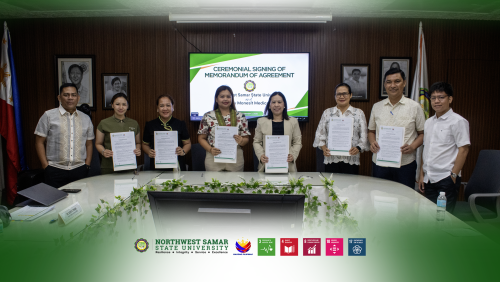
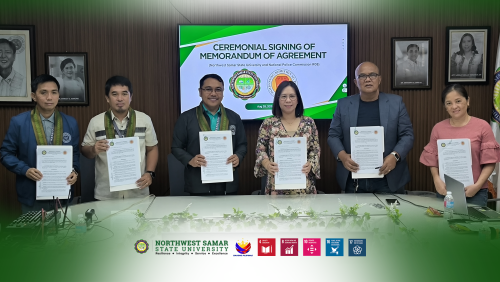
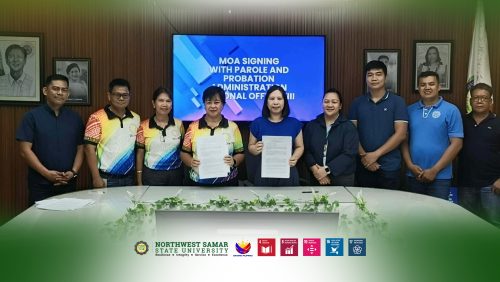
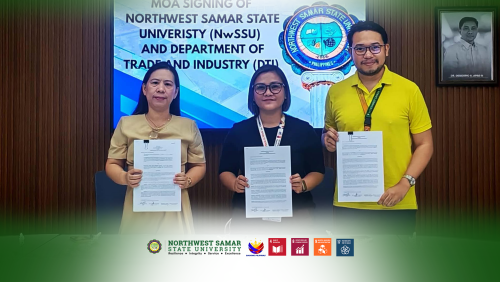
Five-year agreement with the TESDA Provincial Training Center–Samar to widen access to skills training and jobs for students and communities.

8.2.3 – Employment policy on discrimination

– NwSSU Employment Policy on Discrimination

The document presents NwSSU’s Policy on Ending Discrimination in the Workplace, which establishes the university’s commitment to ensuring an inclusive, respectful, and equitable work environment. The policy explicitly prohibits discrimination on the basis of religion, gender, age, and other personal attributes, and affirms equal opportunity in all aspects of employment—from recruitment to professional advancement. It provides clear institutional guidelines that promote fairness, protect employee rights, and reinforce NwSSU’s dedication to fostering a safe and nondiscriminatory workplace.

8.2.4 – Employment policy modern slavery

– NwSSU Employment Policy Modern Slavery

The NwSSU Policy on Modern Slavery serves as institutional evidence for SDG 8.2.4, demonstrating the university’s commitment to preventing and addressing modern slavery within all employment processes. The policy explicitly prohibits forced labor, human trafficking, and any form of exploitative or involuntary work. It ensures that all employees of NwSSU engage in work freely, voluntarily, and with dignity. By establishing clear standards for ethical labor practices and safeguarding workers’ rights, the policy reinforces the university’s responsibility to provide a safe, fair, and humane working environment.

8.2.5 – Employment practice equivalent rights outsourcing

– Labor Code of the Philippines

Northwest Samar State University (NwSSU) upholds established administrative policies that ensure fair and lawful treatment of all personnel involved in university operations, including those engaged through third-party service providers. While the Administrative Manual outlines guidelines on human resource mechanisms, compensation, employee benefits, and standards of employment, it also reinforces compliance with national laws such as the Government Procurement Reform Act (RA 9184). Through these policies, the University guarantees that outsourced workers receive rights and protections consistent with existing labor standards, ensuring equitable conditions even when services are contracted to external providers.
(kindly modifiy discussion here)

8.2.6 – Employment policy pay scale equity

– NwSSU Employment Pay Scale Equity

Northwest Samar State University (NwSSU) upholds a transparent and equitable salary administration system that ensures fair and just compensation for all employees. Guided by the Administrative Manual and national government pay standards, the University implements a uniform pay scale where no employee receives less than the mandated hiring rate or minimum wage. Clear salary rules for hiring, promotion, and step adjustments guarantee consistency, while periodic reviews safeguard compensation from inflation and uphold competitiveness with private sector benchmarks.

8.2.7 – Tracking pay scale for gender equity

– NwSSU Tracking for Gender Equity UPDATED

The university upholds pay scale gender equity by strictly implementing the standardized national government salary schedule, as reflected in the National Budget Circular and the Administrative Manual. All personnel receive compensation based solely on their position’s Salary Grade and Step, ensuring that no difference in pay exists between male and female employees holding the same rank. Because the salary structure is fixed, transparent, and uniformly applied, the university is able to consistently measure and maintain equity in compensation across all genders.

8.2.8 – Employment practice appeal process

– NwSSU Employment Practice Appeal Process

The university has a formal and structured process that allows employees to appeal concerns related to their rights and pay. Under the Grievance Policy, employees may file complaints involving issues such as salaries, incentives, work conditions, and other employment-related matters. The procedure begins with the immediate supervisor and may be elevated step-by-step up to the University Grievance Committee and ultimately to the University President if unresolved. The policy outlines clear timelines, investigative steps, and decision-making processes, ensuring that grievances are addressed fairly and through due process.

8.2.9 – Employment practice labour rights
– UNIVERSITY LABOUR RIGHTS

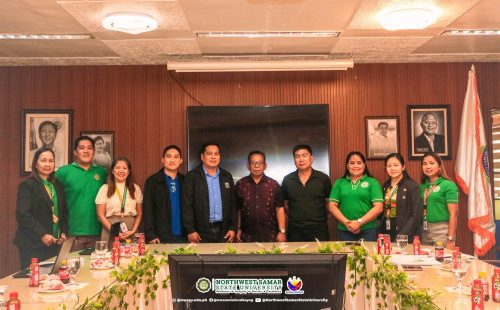
The university formally recognizes labor rights, including freedom of association and collective bargaining for its employees. The attached Board Resolution (Resolution No. 41, S. 2024) confirms the approval and adoption of a Collective Negotiation Agreement (CNA) between Northwest Samar State University (NwSSU) and the Faculty Association of NwSSU. The agreement is valid for three years (2024–2027) and reflects the institution’s acknowledgment of workers’ rights to organize, negotiate, and engage in collective representation.

8.3 Expenditure per employee

8.3.1 – Expenditure per employee

* Number of employees
* University expenditure

8.4 Proportion of students taking work placements

8.4.1 – Proportion of students with work placements

* Number of students
* Number of students with
work placements for more
than a month

– NwSSU Percentaged of Students with Work Placements 

“The data shows that out of 1,209 graduates, 518 students secured work placements more than a month after graduation, representing 42.84% of the total batch. While some colleges—such as CCJS (54.49%) and CCIS (71.19%)—show higher proportions of graduates finding work after this period, others like COED (31.72%) and CAT (32.14%) recorded lower percentages.

However, it is important to note that a significant portion of the graduates—636 individuals—remain under the “Not Tracked” category, which means the current figures do not yet provide a complete picture of overall employment outcomes. Further data collection may still change the trends and proportions across colleges.”

8.5 Proportion of employees on secure contracts

8.5.1 – Proportion of employees on secure contracts

* Number of employees
on contracts of over 24
months

– NwSSU Proportion of Employees on Secure Contracts UPDATED

Out of the 578 total employees of Northwest Samar State University, 58.3% are on secure contracts, specifically those under the Teaching and Non-Teaching categories. This indicates that more than half of the university’s workforce hold stable and long-term employment positions. Additionally, 15 employees have been on contracts extending beyond 24 months, reflecting a portion of the workforce with sustained service despite not being fully regularized.

Related Articles

Client's Feedback